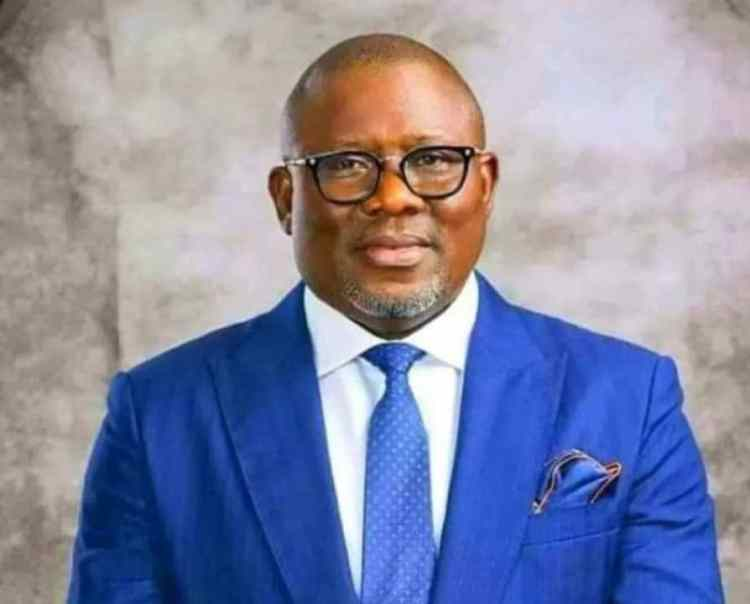
Oborevwori
*What Ibori, Uduaghan, and Okowa saw
By Emma Amaize, Regional Editor, South-South
SINCE 1965 when the multinational oil company, Shell Petroleum discovered crude oil in Warri, known as the Oil City in Delta State, the Federal Government and several other oil companies that bonded afterward in the explorations, have persistently told the people, edgy about the degradation of their communities, and glaring underdevelopment that things were “in the pipeline.”
Warri, the commercial capital of Delta state, and oil nucleus in the Niger Delta serves as a melting pot for the Ijaw, Urhobo, and Itsekiri ethnic nationalities, fastened, over the years, in hope for the things “in the pipeline.”
However, youths from Delta state, and other oil states, who grew worried about the destitution and deprivations in their communities grumbled aloud, and following their protestations, the authorities invited them to Abuja, probably to cool off their temper.
This was in the late 90s, and while in Abuja, which officially became the Federal Capital Territory, FCT, on December 12, 1991, they saw how the authorities deployed the riches derived from the “pipeline” in their backyards in the Niger Delta to build skyscrapers and intimidating infrastructure that transformed the once- thick Abuja jungle to a modern- day splendor.
When they demanded why they did not replicate what they saw in Abuja in Warri and other parts of the Niger Delta, the government officials, who played host to them, politely responded: “It is in the pipeline.”
Back home in the Niger Delta, the youths, who had their eyes opened at Abuja, asked their political leaders, led by the governors, including lawmakers and local government chairs, whether they had stumbled on the things “in the pipeline”, and if not, how long would it take them to uncover them.
The leaders swore they had searched to no avail, over the years. They recalled that s Isaac Adaka Boro and others of blessed memory lost their lives during the search. The youths opted for what many know today as Niger Delta struggle with both intellectual and militant wings.
The elders, and the intellectual wings dialogued with the authorities in Abuja, while the aggravated youths in the creeks burst the “pipeline” themselves to unearth what was inside.
In response to the bombs, explosions, not forgetting the insistence of the elders of the region, the authorities approved a 13 percent derivation fund for oil states, especially to fast- track development in the oil- producing communities.
Since then, it has remained complicated for all sides – federal, state, oil companies on one side, the youths, and other stakeholders on the other, as the governors, who collected the funds on behalf of the oil communities have their different styles of administering the fund.
Ibori had little time to find out
Counting 24 years in the new political dispensation, which started in 1999 in Delta state, the oil city of Warri, and its twin cities of Effurun and Udu, portray a bizarre and cheerless picture of what an oil city should look like in terms of development.
Compared to Houston, Texas, and other oil cities, it is embarrassing why and how people call Warri an oil city.
The roads in Warri are rickety and full of potholes, and when the rains come, flood washes away the roads because of the topography.
The relocation of the headquarters of Warri South-West local government area from Ogbe-Ijoh, an Ijaw town to Ogidigben, an Itsekiri town, sparked an ethnic war in 1997 between the Ijaw and Itsekiri, which raged until 1999 when former governor, Chief James Ibori, took over power, amid gunshots.
He imposed a curfew, but it was one trouble to the other among the different ethnic groups until the end of his tenure in 2007.
Managing the troubles was so complicated that even when he (Ibori) and other South-South governors championed the battle for resource control, he did not have a breathing space to poke around the “pipeline”, and the people did not really control their resources.
Though he set up the Delta State Oil Producing Areas Development Commission, DESOPADEC, to manage the fragile peace, as development could not ensue in the creeks without peace, harmony remained elusive in Warri during his tenure.
Conduit too elongated, Uduaghan could not see the end
His successor, Dr. Emmanuel Uduaghan, took over in 2007, setting up the Delta Waterways and Land Security Committee, DWLSC, made up of ex-militant leaders, warlords, and intellectuals from the three warring ethnic groups and intellectuals from other parts of the state, to forge the much- needed peace.
In the after- effects of the tempest, oil companies, including Shell, fled the oil city, but Uduaghan, who continued the search for the things “in the pipeline” constructed a 447-meter flyover dual carriageway in Effurun Roundabout, reconstructed the Warri—Sapele, Refinery, and other internal roads in Warri and Effurun that brought a temporal relief.
He contemplated a Bus Rapid Transit System, BRTS, which the government dumped later.
The oil communities differ on the contention that DESPOPADEC under his administration justified the management of the 50 percent of 13 percent derivation fund, which the state House of Assembly allows the oil commission to administer.
Dr. Uduaghan is one governor, who saw and tried to find out what was “in the pipeline,” but he could not see the end of the tunnel, which was quite elongated.
Okowa saw nothing in the channel
The current governor, Senator Ifeanyi Okowa, assumed power in 2015, and to the best of the knowledge of the residents of the oil city, he discussed nothing “in the pipeline” with them from 2015 to 2023, as there was really nothing
Elder state leader, Chief Edwin Clark, who publicly fell out with Okowa, in February, over the alleged underdevelopment of Warri, and utilization of the 13 percent derivation fund, described his administration as a “reign of unaccountability”
The break into pieces of many Warri roads, traced to the landscape and rampaging flood, which damaged the main roads, including the new ones reconstructed by Uduaghan, provoked Wafarians (slang for Warri people), who poured their indignation on the Okowa government.
Deputy Senate President and the All Progressives Congress, APC, governorship candidate in the March 18 governorship poll, in the state, Senator Ovie Omo-Agege, and his party also saw the “unacceptable” state of things in Warri as grounds to tear to pieces Okowa and the Peoples Democratic Party, PDP, during the campaigns.
However, a calm and collected Okowa, who turned Okerenkoko, the hometown of his second-in-command, Barrister Kingsley Otuaro, in Warri South-West local government area into, perhaps, the creek community with the best internal road network in the Niger- Delta, said, last month, that the problem of Warri roads was the flood- prone location.
Unparalleled groundwork
He said that his government commissioned experts to study the road quandary in Warri, and they advised that if the government did not tackle the flooding in the oil city, constructing and reconstructing roads would amount to waste, as the flood would wash them away, eventually.
Okowa said he did the correct thing by embarking on a multi- billion Storm Water Drainage project in Warri, which took almost two years of study.
He added that roads in Asaba, the state capital, faced a similar challenge, but because of the financial implication, the government first tackled the Asaba flood before embarking on the gigantic Warri flood control project.
Reiterating that “tarring any road in Warri without proper drainage, and discharge point would have amounted to a waste of resources,” he said with the project nearing completion, the government had awarded the contract for the total rehabilitation of the Township Stadium, typically waterlogged whenever it rained, and construction of some major roads.
His words: “We have done over 1,000 kilometers of drains and underground across the state. The same thing we did in Asaba, we started in Warri.
“We have done a lot and Warri will be better. Having realized that the storm drainage project in Warri was nearing completion, we awarded the contract for the total rehabilitation of the Warri township stadium, last year,” Okowa said.
Okowa just started a storm water project on the flood -ravaged Agbor, which the new government is expected to complete.
The task before Oborevwori, gov-elect
Only those, who look at the pros and cons, would agree with Okowa and his treatment of Warri in the interim, but with his just one month and a week to go for his administration, Wafarians are more interested in what the governor- elect, Sheriff Oborevwori, who, incidentally is a Warri boy, has “in the pipeline” for them.
Oborevwori, a man with street credibility, who grew up and has lived most of his life in Warri, had operated as a special emissary to two former governors, Ibori and Uduaghan, on security and peace in Warri.
With Okowa, he first functioned as a legislator, and later as a Speaker of the state House of Assembly, understudying, and accumulating experience for several years.
Therefore, now, seems his time to translate what he had learned under three governors to good roads, urban renewal, and other workable projects that befit the status of Warri as an oil city, since Okowa has laid the foundation with the water storm drainage project.
Oborevwori had boasted that he would want Deltans to hold him accountable for his promises, and so, Wafarians would want to know the things in the “pipeline” for Warri.
He has to declare the “things in the pipeline” without which they cannot hold him to his words.
On the shoulder of the governor- elect lie the future of his party, PDP, and the people of Warri/other riverside communities in the state.
If he fails to hit the ground on his promises, and change the face of Warri, in the next four years, he may find it difficult to reclaim victory for his party in 2027.
Disclaimer
Comments expressed here do not reflect the opinions of Vanguard newspapers or any employee thereof.