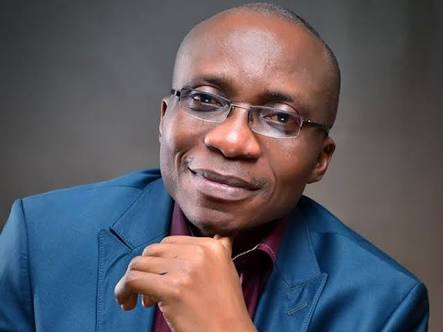
Ebiseni
BY SOLA EBISENI
THE role of the military in the political life of Nigeria is no doubt controversial, admitting diverse interpretations. My aim is not to reopen old wounds about what initially motivated the military incursion into the nation’s politics, whether it was for patriotic reasons or to share morbid political ambitions.
What is undeniable is the monumental role of the military, whose footprints will remain indelible in the nation’s sands of time. So great is the impact that of the 62 years of Nigeria’s independence, military men, in uniform or elected, have ruled the country for about 45 years.
In particular, for the 24 years of civil rule since 1999, both Generals Olusegun Obasanjo and Muhammad Buhari have had a combined 16 years as elected presidents.
The overwhelming majority of Nigerians today were either toddlers or not born at the end of the 30 months of civil war in 1970 and are thus unfamiliar with the names of the dramatis personae on both sides except only as presented by authors and commentators.
Suffice it to say that most of the problems bedevilling the country have been attributed to military rule, which altered the structure of the country that it is everything but the federal arrangement agreed to by the founding fathers. Nonetheless, Nigerians endured military dictatorship from 1966, the devastating civil war of May 30, 1967 to January 15, 1970, and beyond the civil war till October 1, 1979, when General Obasanjo handed over to Shehu Shagari as civilian President.
From the benefit of hindsight, the most significant revelation of the Shagari era would appear to be the practical demonstration of the processes of reconstruction, rehabilitation and reconciliation.
Dr. Alex Ekwueme of the secessionist Biafra enclave was elected Vice President of the Federal Republic just nine years after the civil war, and the Nigerian Peoples Party, dominated by the Igbo, had already formed government at the national level in alliance with the National Party of Nigeria.
But then, the Nigerian military moved in a mysterious way such that by December 31, 1983, just two months into its second term of four years, the government of Shagari was torpedoed on the usual claims to superior patriotism; but Nigerians are there in the millions who would swear that the propelling factor was not unconnected with lusts for political power.
Besides, there are schools of thought, as was recently revealed, that the coup was meant to stop the eventuality of an Igbo, Ekwueme, emerging the President after Shagari.
What is most evident, however, is that after the Buhari coup that ousted Shagari, military coups became virtually fashionable and commonplace among military officers. It was said that the reason General Ibrahim Babangida could not hand over to Moshood Abiola as elected president was his inability to explain to General Abacha why his own chance of ruling Nigeria should be compromised.
As earlier stated, the return to civil rule since 1999 has been dominated by the military, where retired generals and former military heads of state, Obasanjo and Buhari will both have 16 of the 24 years. The 2023 election is the only one in which no one with a military background will be on the ballot.
It also appears that Buhari would be the very last of the military politicians, among the young and earlier sets of officers, to ever seek to directly participate in the Nigerian democratic processes as presidential aspirants. This should, therefore, give these Nigerians, most of whom are now, in the very least, advanced septuagenarians, a sense of duty and responsibility “to keep Nigeria one as a task that must be done”.
Of course, this is not going to be achieved any longer through the barrel of the gun but by strategic thinking on how to peacefully organise the diverse nations of the Nigerian State to give each of them genuine sense of belonging.
Though many of them abound who have benefited so spectacularly from Nigeria in diverse ways, Generals Obasanjo and Buhari stand out and will be used as points of contact to mobilise their retired colleagues to join other compatriots to rescue Nigeria.
Incidentally, both of them are on either side of the Nigerian Southern or Northern geopolitical divide. In addition, they are both, respectively, of Yoruba and Fulani extraction, which, though not in equal proportions, have most benefited from ruling Nigeria. I make the bold claim that there is no such thing as a detribalised Nigerian; if such a thing exists, it is most likely among the smaller ethnic nationalities who are realistic enough to see the futility of any exit from the federation.
Experience has shown that at different times in the nation’s history, every one of the three major ethnic groups—the Hausa/Fulani (with undoubtedly Hausa assimilation), Yoruba and Igbo has demonstrated the capacity to hold Nigeria to ransom in their quest to make Nigeria reason with them.
In the race towards 2023, Obasanjo has finally joined forces with the agitators for a Southern president after Buhari completes his eight years of Northern slot by May 29, 2023. Obasanjo is in agreement with the Southern and Middle Belt Leaders Forum, which includes the Afenifere, Pan Niger Delta Forum, Ohaneze Ndigbo, and the Middle Belt Leaders Forum, all of which have defined the South as a Nigerian President of South-East extraction in the interest of equity and fairness.
Several Nigerians from other parts of the country have also bought into the idea, making Peter Obi’s presidential candidature now a national phenomenon. The body language of President Buhari is difficult to interpret, but if his sudden policy of changing the colour of the Naira notes, coupled with the strict censorship of the amount of cash available to the individuals, even from his own deposit, is anything to go by, it is obvious Buhari is not likely to be of the same mind with those whose stock-in-trade is uncompromising determination to compromise the will of the people by pecuniary inducement. Nigerians know those with such a modus operandi.
If keeping Nigeria one is a task that must be done and of which we are daily reminded by the military guys of the civil war era of having shed their blood while many of their comrades-in-arms paid the supreme price, such sacrifices would only be meaningful if Nigeria is truly a nation where no nationality or citizen is oppressed.
It cannot survive as a nation where the Igbo are openly insulted, as in Anambra, home of the Great Zik of Africa, Odimegwu Ojukwu, Alex Ekwueme, Emeka Anyaoku, Chinua Achebe, and even Soludo, that Ndigbo can only be helped by one man from Northern Nigeria after his own election and tenure.
Using Obasanjo and Buhari as points of reference, as the last of the civil war generals exit the nation’s partisan political platform, it is no time for pretentious statesman neutrality; it is no time for the oppressive theory of no morality in politics in favour of the ruinous Darwinian survival of the fittest; it is time for national survival.We must put the vestiges and memories of the civil war behind us. It is the South-East’s turn to produce the next president of Nigeria in 2023.
Nigeria, we hail thee.
Ebiseni is the Secretary General, Afenifere.
Disclaimer
Comments expressed here do not reflect the opinions of Vanguard newspapers or any employee thereof.