By Victoria Ojeme
In economics, a substitute good is an item consumers will purchase in lieu of another product. The demand for substitutes derives from the scarcity of preferred goods or an increasing price of preferred goods.
The substitution of one good for another is typically driven by price. As consumer incomes fall, less discretionary income becomes available, forcing consumers to find cheaper goods. This scenario is often driven by external forces that consumers cannot overcome. Another issue that affects the price of goods and services can be inflation.
Consumer economic theory defines a substitute good as either perfect or imperfect. With perfect substitutes, consumers will simply purchase a product very similar in nature to the other with few reservations.
Imperfect substitute goods are those that do not take the place of the preferred goods, although the price is lower or the product has more availability. Therein lies the problem. As the Nigerian economy bites harder because of galloping inflation, consumers are more likely to be exposed to substandard products in their search for cheaper alternatives.
It is not in doubt that there are some fake products in the Nigerian market which are produced both within and outside Nigeria. It is important to ensure quality control of manufactured and imported products in Nigeria as the high rate of substandard products either manufactured or imported into the country have continued to have deadly implications on the health and safety of Nigerians and in some cases, resulted in loss of life and property. The Standard Organisation of Nigerian (SON) is the Nigerian government agency responsible for preparation of standards relating to products, measurements, materials and processes, certification of industrial products, assistance in the production of quality goods, improvement of measurement accuracy and circulation of information relating to standards.
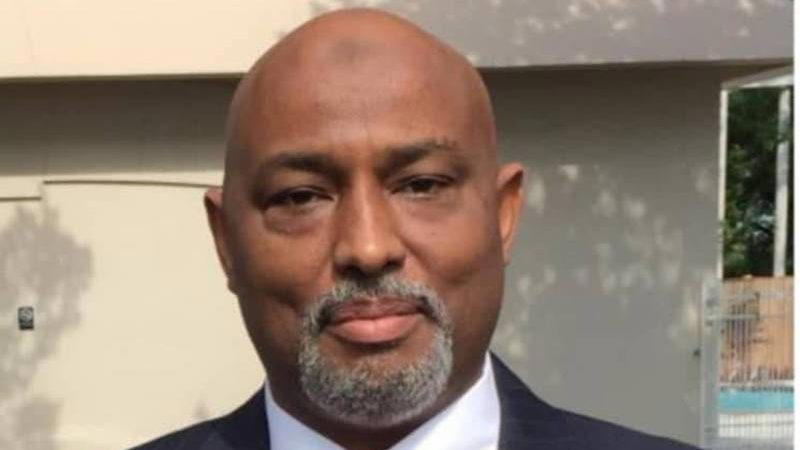
The Director-General of SON, Mallam Farouk Salim, during a recent visit to the Nigerian Customs headquarters in Abuja emphasised the strategic role played by the Customs in the fight against the importation of substandard products.
Salim acknowledged the historical support given to his organisation while requesting more strategic engagement in the light of their recent return to the ports.
“One of the biggest challenges we face is that both the highly educated and non-educated persons are patronising these fake products for their desired interest.
“Such individuals or importers bringing in substandard products are criminal-minded without considering the damage being done to our country.
“We are doing everything possible to address the issues and also ensure that our jobs are very efficient. We created nine directorates for people to get information without going to the headquarters,” he said.
According to Salim, the negative effects of substandard products in our society cannot be over emphasized. When people import substandard goods that means that there are original good in the market that are more expensive than substandard goods
“Real standard goods that are in the market, people are not buying them, which means if the factories should be closed, more than 10000 people will lose their job.”
Nigeria operates a top-down government-driven standards system. In Nigeria the two primary government agencies which regulate product standards are the Standards Organization of Nigeria (SON) – the apex standardization body in Nigeria, and the National Agency for Food and Drug Administration and Control (NAFDAC) which controls the production, trade and sale of food, drugs, cosmetics, chemicals, detergents, medical devices and packaged water.
It would be recalled that the SON was established by an enabling Act Number 56 of December 1971 – the Standards Organisation of Nigeria CAP 412 of the Laws of Federal Republic of Nigeria, which commenced on the 1st January 1970, when the Organisation started to function. The Act has three amendments: Act Number 20 of 1976, Act Number 32 of 1984 and Act Number 18 of 1990.
As a result of fake products circulating in the Nigeria market there was an outcry by the stakeholders to amend the Standard Organisation of Nigeria (SON) Act 2004. The cry for an amendment of the act was due to the fact that the SON Act, 2004 as it was, did nothing to ensure that standards relating to products are being met. This was due to the fact that the Law did not impose strict penalties for offences and also saddled the officers of the Organisation with minimal functions and powers.
It was in a bid to cure the ‘defects’ in the SON Act, 2004 that the Standards Organisation of Nigeria Act of 2015, was enacted which repealed the Standards Organisation of Nigeria Act, 2004. The SON Act 2015 was enacted with the aim and responsibility of providing additional functions for the organization, increasing the penalty for violation, and for related matters. The Act also repeals the Standards Organisation of Nigeria Act Cap 59 Laws or the Federation of Nigeria, 2004.
The SON in 2005 also introduced the Standards Organisation of Nigeria Conformity Assessment Programme to address the problem of substandard and unsafe products imported into the country. Under the Program, certain imported products are required to be inspected to ensure conformity with essential requirements, technical regulations and approved industrial standards before it will be imported in Nigeria.
Despite these government initiatives, most Nigerian businessmen or traders indirectly or directly instruct the foreign producers to give them substandard products that look like the real ones. Majority of the Nigerian traders will travel to China and produce fake phones and will come to Nigeria and sell them at a very high rate. Some of the Nigerian pharmaceuticals companies have perfected in producing adulterated drugs that are harmful to the body. Most of these drugs when consumed can lead to death.
The media is flooded with news of harmful and substandard products in Nigerian markets. Just one container of fake products can cause havoc in the whole country. It can claim so many lives and even wipe out a whole State. Despite these happenings, the Nigerian manufacturers do not register with SONCAP.
The production and trafficking of counterfeit goods poses a significant health and safety threat to consumers. It also impacts the economic growth of legitimate businesses and consumers through lost revenue, downtime, and replacement costs.
Operations to combat the manufacture and distribution of counterfeit goods help ensure public safety and national security by preventing dangerous and harmful goods from entering the market and promoting the integrity of legitimate trade systems.
There is a need to have a written agreement from different countries on the type of products being exported to Nigeria, with a condition that any product being imported into Nigeria must be of the best quality.
Nigerians should develop the habit of utilizing locally manufactured products, this way; influx of substandard products into the country will reduce drastically. There is also a need to have a new ‘SONCAP’ logo that every product must carry.
There is a need to have a product liability introduced in the SON, which means that everybody who introduces a product or commodity in the market must be responsible for that product introduced. Every manufacturer must show evidence that there is credible insurance behind the product being introduced in the market.
There is also a need to speed up resource allocation to the agency and increase its human resource base. It is regrettable to note that combined effects of poor funding account for the high prevalence rate of substandard products in Nigeria. This is evidenced by the shameful scene of all kinds of poor quality goods and products that litter our open markets, shops, super markets, chemists and other retail shops. These fake and adulterated products span across all classes and categories of items including but not limited to drugs, household electrical/electronic appliances and equipment, building materials, automobiles and machine parts, food and beverages. It is the job of the SON to stop this menace and both the government and the citizens must get on board this project.
Disclaimer
Comments expressed here do not reflect the opinions of Vanguard newspapers or any employee thereof.