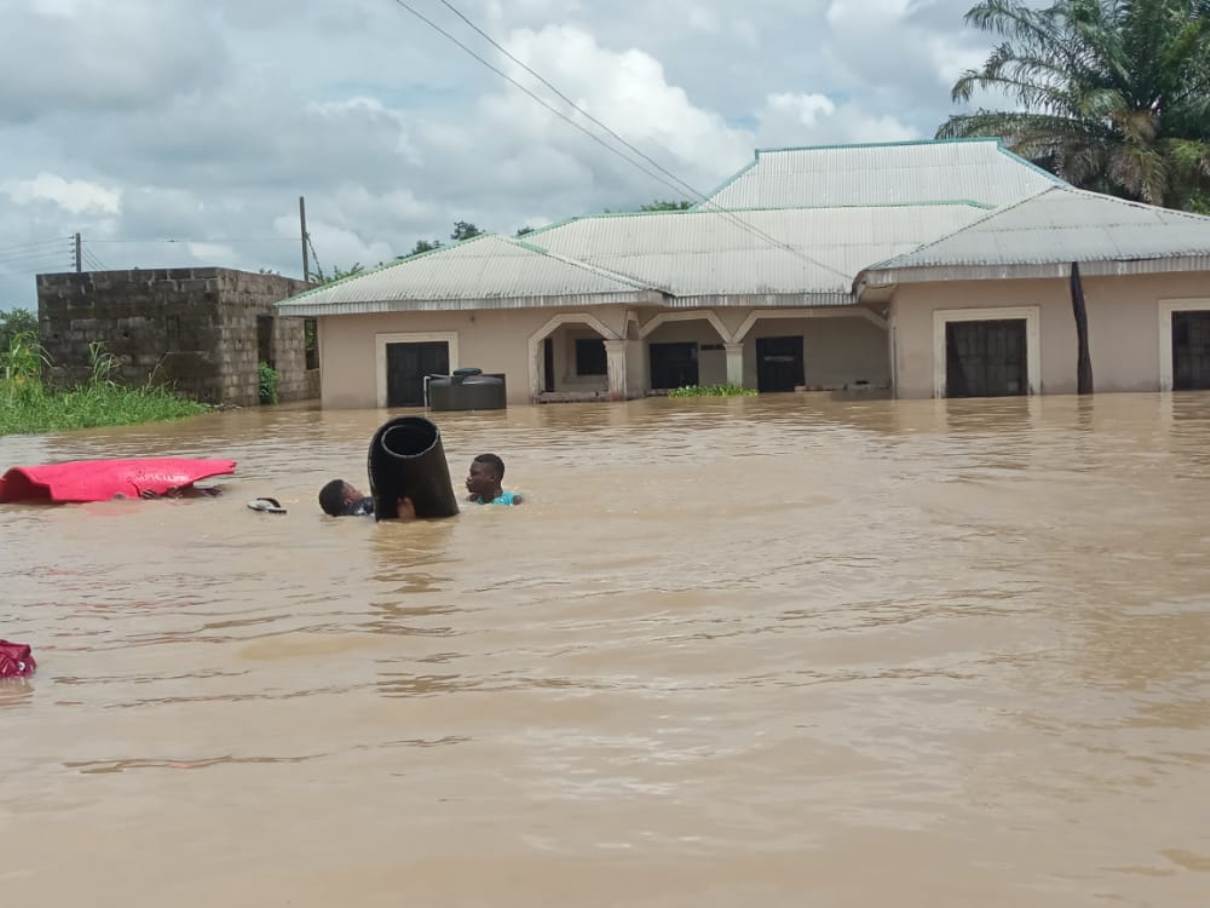
File image of a flooded house.
Advocates integrated flood management approach
By Joseph Erunke
ABUJA–THE federal government has begun moves aimed at emplacing measures to effectively manage to flood for the benefit of not only agriculture but also electricity generation among others.
To this end, relevant stakeholders are in Abuja brainstorming on the emergency response plan to effectively manage to flood using multi-sectoral expertise.
The development came on the heels of the inauguration of an Inter-Ministerial Technical Working Group that was tasked with the responsibility of drafting a National Multi-Sectoral Flood Emergency Preparedness and Response Plan after President Muhammadu Buhari directed the Ministry of Humanitarian Affairs, Disaster Management, and Social Development to work with the Federal Ministry of Water Resources and other relevant MDAs as well as relevant stakeholders to develop a national plan that will coordinate various flood management responses and interventions across the country, to reduce the impact of floods.
READ ALSOBarca complete signing of Man City legend, Sergio Aguero
In this order, a technical group with members drawing from the Nigeria Hydrological Services Agency,NIHSA, Nigerian Meteorological Agency,NiMet,and National Emergency Management Agency,NEMA,drafted the plan.
In her opening remark on the occasion, Monday, Minister of Humanitarian Affairs, Disaster Management and Social Development, Sadiya Umar Farouq, announced that the government agencies endorsed an integrated flood management approach.
“In carrying out the presidential directive, the Ministry hosted an Inter-Ministerial Committee meeting with the Ministers and Heads of Agencies of over 17 ministries, departments, and agencies in September 2020.
“Therefore, we are advocating for an Integrated Flood Management approach where flooding is effectively managed using multi-sectoral expertise, and floodwaters are harnessed for beneficial purposes such as agriculture, electricity, etc,” she said.
According to the minister,”The Plan identifies that flooding risks are cross-cutting and multi-sectorial and was, therefore, developed as an inter-ministerial, inter-agency, inter-governmental and multi-sectoral collaboration, and coordination framework necessary for the successful implementation and execution of the plan.”
“This is to paint a picture of how cross-cutting flood issues are in Nigeria and why we are holding a stakeholder review today.
“However, we know that there are many stakeholders involved in managing floods; i.e. communities at risk, traditional and religious leaders, dam managers and town planners, the media, private sector, government MDAs, State Emergency Management Agencies and many more. Hence you have been invited to study the plan and make your inputs,” she added.
The minister, who said she was delighted to welcome stakeholders to the “Technical Stakeholder Meeting to review The Draft National Multi-Sectoral Flood Emergency Preparedness and Response Plan”, added:” As you are aware that each year many people lose their lives, their homes, and sources of livelihood due to flooding.”
” For instance, in 2012, which is arguably the worst flood incident in the country, over 7,000,000 persons were affected.
“Flooding has also been exacerbated in both frequency and magnitude due to climate change, other humanitarian crises, and quite frankly poor coordination of flood risk management cycle from a policy and operational point of view,” she said.
Farouq said the objective of “this technical review is to enable all relevant stakeholders (especially state and community levels) make input into the draft document which will serve as a national framework and guideline for ‘all-things flood in Nigeria’; including implementing risk reduction strategies, clarifying roles and responsibilities of stakeholders, and designating a funding mechanism for flood management activities in Nigeria.”
Disclaimer
Comments expressed here do not reflect the opinions of Vanguard newspapers or any employee thereof.