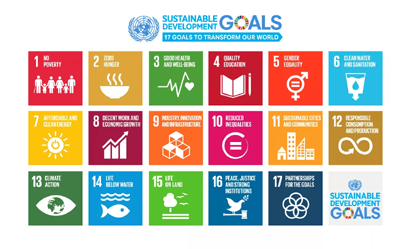
Chief Festus Awoniyi, a community leader in Omu-Aran, Kwara, on Monday called for specific roles for traditional rulers in the country in order to achieve the Vision 2030 United Nations Sustainable Development Goals (SDGs).
Awoniyi, a retired administrator and the Petu Atayero of Omu-Aran, made the call in an interview with the News Agency of Nigeria (NAN) in Omu-Aran, Irepodun Local Government Area.
He said the role of the traditional institution in bringing about the desired good governance, especially at the grassroots, could not be over-emphasised.
READ ALSO: SDG: 2020 Budget and education in Nigeria
According to him, traditional rulers, from history, were highly revered as the custodian of culture, tradition, and heritage of the people, especially at the grassroots.
“Most of our traditional rulers today are respected people in their various fields; they are well educated and well exposed, with vast knowledge in terms of administration and governance.
“The high infrastructure decay and other challenges the SDGs are set out to confront, as they affect education, transportation, health, and climate change, are well pronounced at the grassroots.
“While the majority of the developmental projects being executed by states and the Federal Government nowadays are concentrated in urban centres, especially state capitals.
“It will, therefore, be a great service to the nation if our traditional rulers with their subjects are given the deserved recognition with special roles in formulating policies toward achieving the Vision.
“In defining, designing, implementing and evaluating the Vision 2030 processes, the government needs to place a special emphasis on workable partnership with the traditional institution,” he said.
Awoniyi also stressed the need for government at all levels to exhibit a high sense of patriotism, political will, and commitment toward achieving set objectives.
He maintained that the justification for Vision 2030 SDGs was the ineffectuality of the country’s past development efforts, mismanagement of resources and the failure in the socio-economic environment.
The retired administrator said the Vision was already faced with challenges such as the widespread public criticisms arising from frustration with leaders.
READ ALSO: Nigeria won’t meet UN SDG 2030 health target unless – Prof. Soludo
“Generating an idea or vision is one thing, having a strong political will to actualise it is another.
“In getting the people re-orientated and sensitised on the workability of the Vision the government needs to work in tandem with traditional rulers,” he said.
He described Goal 4 of the 2030 Vision as having the potential of addressing the rot in the nation’s education system, if well planned and implemented.
NAN reports that the 17-agenda SDGs were adopted by all United Nations member states in 2015.
It was a universal call to action to end poverty, protect the planet and ensure that all people enjoy peace and prosperity among others.
Disclaimer
Comments expressed here do not reflect the opinions of Vanguard newspapers or any employee thereof.