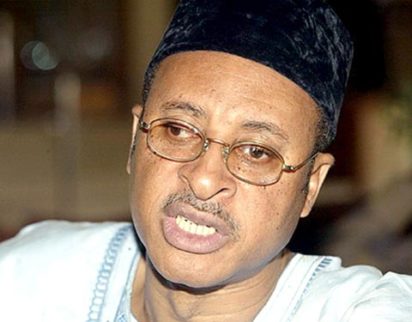
Prof. Pat Utomi
Academic, educationist, management consultant, good governance expert, social entrepreneur, lately, politician, Prof. Pat Utomi, is a chieftain of the All Progressives Congress, APC.
Utomi is presently in the process of consultations to challenge for the governorship ticket of his party. Ahead of his formal declaration, he fielded questions on his latest project, the challenges ahead and explains why he should be believed that he could change Delta State in four years. Prof. Utomi was a presidential adviser at the age of 27, has held several positions in the private sector. Excerpts:
By Emmanuel Aziken, Political Editor
What is the inspiration behind your reported governorship aspiration?

Prof. Pat Utomi
I do not think aspiration is the right word. Reaction to call of duty is more like it. The story of my life’s journey clearly shows a person pleased with the simple life with little care for titles but with a strong sense of duty, a passion for impactful existence and social justice. My conscience pushes and providence determines the vehicle of impact.
Even with the watershed career positions I have been privileged with, in none did I target and seek a position. At 18 years, I got into students politics in the University of Nigeria, Nsukka, UNN. As a 19-year- old student leader, I argued for a place for the voice of students in national policy formulation and in a dramatic move, got then Foreign Minister, Joseph Garba to commit to coming to Nsukka to engage us. It’s interesting that 35 years after, I return to UNN and someone shows me a page in a book on SUG at UNN that shows my record was yet to be rivalled, largely on account of that commitment to students affecting policy. I chased no title and got that kind place in history.
Two years after, as an NYSC person serving at Newbreed (the leading Newsmagazine in the country at the time), Chief Chris Okolie, the publisher, named me editor as I was leaving for Graduate school and even with people who graduated before I was born, on the staff. Another five years after, just done with Blitzkrieg graduate studies with a few degrees, I am again named to a Presidential advisory position many more qualified were lobbying for, without my even suggesting I was interested.
The bottom line is that I think leadership is service and duty. Those who ask for positions with force are often unworthy. People know who is who and I believe that when people come to you to urge you, then duty should propel. This belief is evident in my own roles in public life.
Let us take the example of what happened when it was the turn of Anioma people to present a President-General of Ohaneze Ndigbo. Those elections had a history of rancour, such that I thought it was my duty to make Anioma set example.
I flew to Asaba and requested the Asagba trust me with managing the process. I outlined the criteria from both the strategic needs of the Anioma people and then the personal attributes of the PG. I listed and ranked possible contestants. My number one choice from a strategic point of view was an Ika person. I called and visited him and spent several hours discussing the assignment but concluded for certain personal and business reasons it was not an ideal time for him to take on such an assignment.
Next on my list was Ambassador Ralph Uwechue. I called him and requested time to visit, flew to Abuja and broached the subject. I persuaded him and he agreed. Once he said yes, I flew to Asaba and briefed the Asagba. He then came to Lagos for a meeting with leading Anioma elite at his home in Ikoyi. My moves, all at my cost, were applauded. Uwechue would become PG in one of the most trouble –free Ohaneze transitions. Chief Ralph Uwechue told the story of how I “made him PG” at the World Igbo Congress in Orlando, Florida six years ago with people like Peter Obi present.
So when groups, including one of the current aspirants began to pressure me that I owed Delta my last tango, I was quite troubled in my spirit of duty. What finally broke my resistance, even though I fully understood the pain of Deltans at the current direction (or lack of it) of their state and an understandable desperation to transcend from professional politicians to a so-called “Technocrat with a clear vision,” but remained worried that the people were still easily driven by the tricks of politricks than a good understanding of their duty to the future of their children, an unusual group came.
They were old boys of Government College, Ughelli and all from an ethnic stock different from mine (which appealed to my Nigerian ideal). That factor more than anything else, aroused my sense of duty.
Given your well known national profile, one would be surprised at the level at which you are offering to serve. Why the governorship and not the presidential?
A person driven by service and a desire to advance the common good of all does not look at levels. I have repeatedly said that if local government administration were not so badly messed up in Nigeria, my ideal level of government would be the local government. When people raise questions of this nature, I remind them that I had the great fortune of being acquainted with a former Prime minister of France, Raymond Barr. He finished as Mayor of Lyons. The current Governor of California, Jerry Brown was Governor there when I was a student in the late 1970s. In the nearly 40 years since then, he has been an Alderman (equivalent of a local government councillor). For me, it is about whether your life had impact on other lives rather than the sound of the title.
But is this not because of the perceived disappointments you got in your past presidential runs?
Each run I have had a go at was with specific purpose. In 2007, I ran largely to purge myself of the guilt of not taking the suggestion of Donald Duke and the late Waziri Mohammed that after we, as the Concerned Professionals, forced the military out of politics, stayed back.
Some of us preferred the traditional politicians to return. The followers of Awo, Zik, Okpara, Balewa, Ahmadu Bello and Aminu Kano did not trust the military had gone for good. They stayed back and people with far less noble intentions stepped in and Nigeria is still paying the price of that error of judgement.
But as we all know and the international community attested to, the 2007 elections were anything but elections. The powers of the day raped democracy.
In 2011, I was expressly asked by the leaders of the progressive opposition to contest for the express purpose of moderating the concert of opposition presidential candidates to find a consensus candidate all would back. Yes that too was disappointing and I was more minded to find alternative platforms for impact like Mahatma Ghandi and Martin Luther King jnr. did.
At the end of the first four years of a possible Pat Utomi administration in Delta State, in what specific way do you think Delta State would have changed?
What should be visible after four years, the maximum period I am interested in, like Nelson Mandela, is irreversible course of progress put in place by a three-point agenda to End Absolute Poverty by creating wealth and jobs; Accelerate pace of infrastructure surge and Empower local communities for peace, security and prosperity.
To end poverty, relevant education rooted on Teacher quality must be elevated to new levels. Healthcare anchored on an insurance scheme would ensure the educated can produce optimally. A transition of conditional public service jobs beautifying the environment, managing traffic and doing social housing, will mitigate current depressing conditions. This will be in addition to conditional cash transfers to poor young mothers.
Our infrastructure thoughts include a Turnpike circuit (huge motorways) around the perimeters of the state, connecting three organically growing cities based on industry clusters and massive development of Burutu into a transportation hub.
The intermodal nature of the investments will involve ocean-going transport, river transport down the Forcados River and rail transport from Burutu to the industrial parks in the three production cluster communities that become the new organic cities.
I think that after three years of this plan, Delta State will be a full employment economy attracting labour from other states.
Given the perception of the Delta State political terrain being rough, do you, professor, have the capacity and confidence to jump into the fray?
The roughness of Delta is over-exaggerated. Do not forget that I have marched on the streets against the military and survived assassination attempts when I was in the prime of life in my thirties. If I did not fear to dare them, can you imagine me having fear now that my life’s work is more or less done?
What is your assessment of the present administration in the state?
The present administration in the state is challenged. I do not know the root of the challenge but something about the ways of professional politicians makes it more difficult to focus on the people. I see challenged policy choices and limitation on creativity. People can only give what they have.
But in what specific areas do you think the administration has positively impacted on the state?
You can commend them, better late than never, for remembering the drainage system in Asaba but the pace of work in Asaba, Ozoro and many other places remains painfully slow and the work of extreme quality.
And in what ways do you think the administration has failed? Can you identify how you as governor will address the perceived failures of the administration?
The government has not been able to mobilise that lost spirit of greatness and reform the civil service. The service is demoralised and angry. This needs to be made right. The wealth at the bottom of the pyramid has also not been explored and local government remains a joke.
Given assumptions of zoning, do you not think that your run and possible two terms in office will dislocate the framework of zoning in the state?
I am not interested in two terms. Zoning favours an Anioma condition but my promise to engage has to be that my background and capacity make it more likely that I can help lead the rescue effort than any of the currently active aspirants no matter what zone they come from.
You are entering the fray on the platform of the All Progressives Congress, APC, at a time that the party is deeply factionalised. Is this not a setback ?
Since 2016, I have been active trying to heal wounds and prevent factions in the party in the state. We need unity and my role recommends me as the one most suited to getting all to sheathe their swords.
Which of the factions do you belong to? Prophet Erue or Mr. Cyril Ogodo? Who do you identify with?
I belong to all. The watchword is unity.
Your party, the APC, has been relatively mute on the incidents of herdsmen attacks on farmers and other communities in Delta State. Are you comfortable with that?
I have not been mute. The party machinery has not been organised enough to stake out position on issues. My own farm was burnt by herdsmen four years ago. Still I think the phenomenon is a complex one that involves stout engagement by real professionals. My views are well expressed here, including on Patito’s Gang few months ago.
In what way do you think the issue of herdsmen attacks in Delta State can be resolved?
I think modernisation will give us abattoirs and ranches that will help resolve the issue.
What do you think is your strength entering this contest?
I have been around long enough for a fate judge to discern that. Having been active in industry as an executive, civil society as a social entrepreneur, academia as a noted educator and administrator and more importantly, as a student of development economics with global exposure and network, you can judge for yourself.
What specific competencies are you bringing into the campaign and how can they rub off on the state?
I was active in 2015 and I have been in several others. I also have around me many veterans from several campaigns. The old like Engr. Moses Kragha and the young like Debola Williams and Chude Jideonwo, not to talk of the Zik Zulu Okafors.
Who among your competitors for the APC ticket, Dr. Odikpo, Dr. Cairo Ojougboh, Chief Great Ogboru, Engr. Victor Ochei among others, would you support in the event you change your mind?
Anyone who proves more worthy than the others.
You were an advocate of change four years ago. In what ways do you think Nigeria has changed for good or for worse?
We are in an evolutionary process. People who leave Egypt often, in the desert, ask to return to Egypt. Also, those who lead change can make mistake.
The personality cult nature of our politics perverts early internal frank discussion that would have corrected rough edges. But hope is not lost and changing parties like shirts will not solve the problem because they make our democracy a laughing stock.
Disclaimer
Comments expressed here do not reflect the opinions of Vanguard newspapers or any employee thereof.