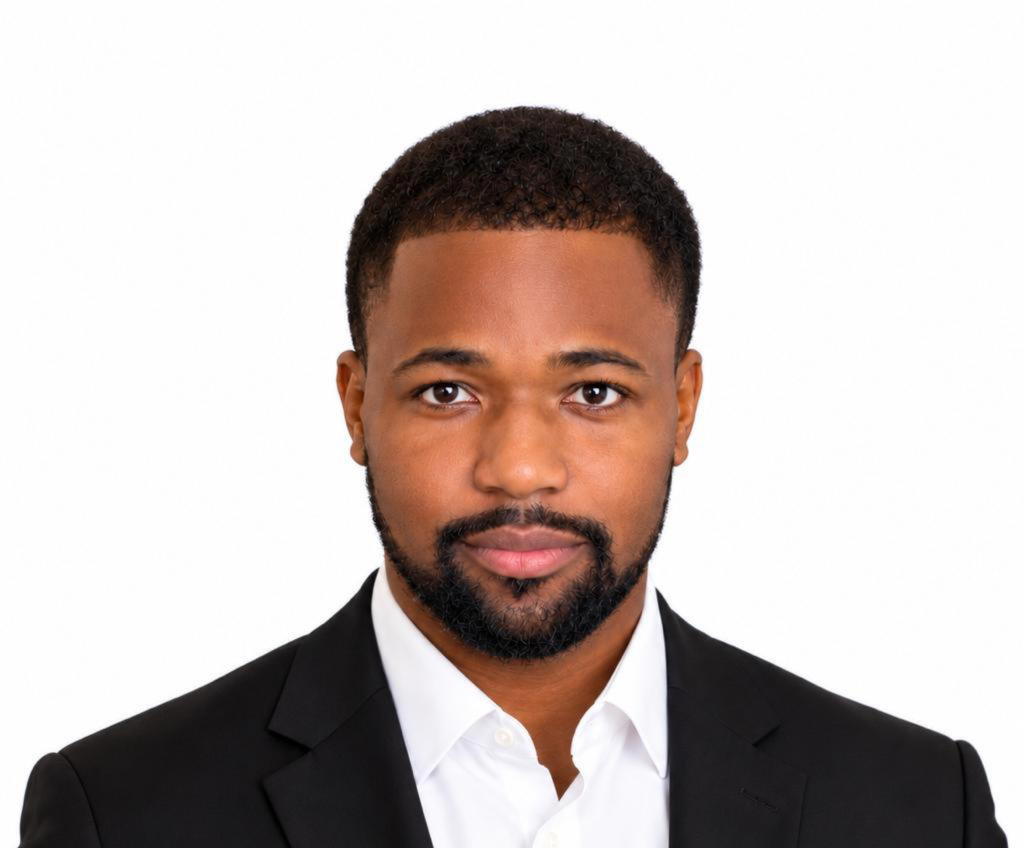
By Ayo Taiwo
From learning Python in Kaduna, Nigeria, to publishing research and co-inventing patented artificial intelligence systems, David Excel Ozowara has built a career around a central question: how can complex technology be made reliable, secure and accountable?
His journey began with computer science studies and technical support work at Western Illinois University in Macomb, United States, where he developed a methodical approach to solving problems that continues to shape his work in fintech, cybersecurity, software engineering and artificial intelligence.
At the university’s technology help desk, Ozowara helped students resolve account access problems, maintained backend systems and investigated technical failures. Rather than simply fixing an issue, he documented solutions to prevent similar problems from recurring.
“Documentation is how one person’s fix becomes everyone’s knowledge,” he said. “If the next person has to rediscover the problem, you have only solved it once.”
That approach became a defining feature of his engineering philosophy, influencing his research into software assurance, his work on AI-powered inventions and his contributions to academic publishing.
Ozowara completed his secondary education at Zamani College in Kaduna before undertaking a 42-hour Python certificate programme at the NIIT Kaduna Center in 2021. That year, he enrolled in Western Illinois University’s computer science programme, where he combined academic study with practical technical responsibilities.
Over four years, he worked on the university’s website backend, deployed updates, debugged server problems and supported laboratory systems used by more than 30 students per session. He also developed troubleshooting guides for technical staff and non-technical users.
Beyond technology, he served as a Resident Assistant, Vice President of the African Student Association and student representative of the Phi Beta Delta international honour society. He was also a member of the university’s Honors College and Computer Science Club.
He graduated in May 2025 with a 3.899 grade point average and magna cum laude distinction, having established a research portfolio spanning cybersecurity, financial technology, cloud computing, enterprise software architecture and AI governance.
Ozowara has published more than 30 peer-reviewed works, examining how organisations can improve the security, reliability and accountability of their digital infrastructure.
His research has explored data analytics and audit quality in financial institutions, ransomware risks affecting hospital networks, zero-trust security in healthcare infrastructure, and data privacy compliance in digital health. He has also examined the pricing of cyber risks for health technology platforms.
Another strand of his work focuses on enterprise software development, including continuous integration and continuous delivery pipelines, Salesforce platform governance in regulated healthcare environments, and data extraction, transformation and loading architectures.
His publications have examined tools such as Copado, Flosum and Salesforce DX, alongside Git-based version control, code review governance and MuleSoft integration patterns in multi-cloud environments. In 2022, New Telegraph reported on his contributions to research on enterprise software governance and Salesforce architecture.
Across these fields, Ozowara’s work repeatedly returns to a common concern: ensuring that technology can be examined, verified and trusted.
That concern has become particularly relevant as organisations increasingly incorporate generative artificial intelligence into software development.
Working in the fintech industry, Ozowara has investigated how institutions can establish the reliability of software written with the assistance of large language models, especially where regulatory compliance and security are critical.
In September 2026, he published a systematic review in Science, Education and Innovations in the Context of Modern Problems, examining the challenges of assuring the quality and security of AI-assisted code.
“Working in fintech, I see every day how much depends on being able to show why software can be trusted,” he said. “That is the question this research tries to answer.”
The paper argues that measuring the quality of code generated by an AI model is not enough to establish whether the resulting software is dependable. In regulated environments, the more consequential question is whether defects survive the review, testing and change-control processes that precede deployment.
“Generated code is never shipped directly,” Ozowara said. “It goes through review, testing and change control, so the question that matters is how many defects survive that process.”
His review also examines security risks associated with AI-generated code, including package hallucination, in which a model recommends software libraries that do not exist. Such recommendations can expose developers to supply-chain attacks if malicious actors register those package names and exploit developers who mistakenly install them.
To address gaps in software assurance, Ozowara proposes a framework called the Generated Code Assurance Frame. It organises five areas of the development process, including authorship and intent, reliability evidence, review effectiveness, provenance and dependency integrity, and accountability.
He presents the framework as a set of hypotheses requiring further testing rather than as a validated solution. He identifies a particularly important research question: whether code reviews detect defects in AI-generated code as effectively as they do in human-written software.
Beyond academic research, Ozowara has contributed to patented inventions applying AI to industrial wastewater treatment and privacy-preserving computing.
In March 2026, a utility model was registered in Nigeria under the Patents and Designs Act for an invention titled “Artificial Intelligence Driven Smart Adsorption System for Real Time Industrial Wastewater Purification Using Biochar Composite Materials.”
The system combines engineered biochar composite materials with machine learning-based adaptive controls to automate industrial wastewater purification in real time.
Ozowara served as Lead Engineer for Adaptive Control Infrastructure, helping develop sensor pipelines that monitor water quality indicators, including pH, turbidity and conductivity. Its control system adjusts operating parameters and schedules backwashing to reduce membrane fouling.
His co-inventors are Oluwagbemisola Cynthia Falegan, Chukwudera Anunagba and Zamathula Queen Sikhakhane-Nwokediegwu.
According to the project’s technical dossier, pilot-scale testing at the Aqua Palace and Chemical Resources Process Modeling Laboratory in Kaduna recorded 98.7 per cent chemical oxygen demand removal, 97.3 per cent total dissolved solids removal and 99.7 per cent turbidity reduction. Lead removal exceeded 99.9 per cent.
The dossier also reported a reduction in energy consumption from a conventional baseline of 3.8 kilowatt-hours per cubic metre to a pilot average of 1.14 kilowatt-hours per cubic metre, representing a reported improvement of 69.7 per cent.
TechBullion reported on the invention in July 2026, highlighting Ozowara’s contribution to the AI-powered wastewater purification project.
His second patent, sealed in September 2026, addresses a different challenge: how to run complex AI workflows on devices with limited computing resources without exposing sensitive information to cloud services.
Titled “Systems and Apparatus for Secure Execution of Agentic Workflows Via Transient Local Distillation and Privacy-Gated Routing,” the invention is designed for devices such as smartphones, wearables and embedded hardware.
The architecture uses temporary, quantised Low-Rank Adaptation modules to support task-specific AI processing on the device. A privacy-gating network determines where individual tasks should be executed based on data sensitivity and computational requirements, while a hardware-enforced memory interrupt is designed to purge the temporary modules independently of application software.
Ozowara is a co-inventor alongside Stanley Nwakamma, Chukwudera Anunagba and Godfrey Akpakwu.
Although the two inventions address different industries, both emphasise autonomous decision-making, controlled processes and safeguards intended to function without constant human supervision.
“A wastewater plant and a phone look nothing alike, but both have to make sound decisions on their own,” he said. “The safeguards have to hold when nobody is watching.”
His contributions have also attracted professional recognition. In December 2025, the Nigeria Technology Awards named him Most Promising Software Development Professional of the Year in the Tech Professionals and Entrepreneurs category. The ceremony took place in Lagos.
In June 2026, the Global Association for Research and Innovation elected him a Fellow, granting him the designation FeGARI. He is also a Fellow of the Chartered Institute of Information and Strategy Management, having been admitted in 2024, and became an ACM Professional Member in October 2026.
Alongside his research and engineering work, Ozowara contributes to the academic community through editorial and peer-review responsibilities. He serves as a section editor for several publications, including the Computer Science & IT Research Journal and the Engineering Science & Technology Journal, as well as three Gulf Journals.
His responsibilities include overseeing peer review, coordinating calls for papers and contributing to publication decisions. He also sits on the editorial board of the Finance & Accounting Research Journal and reviews submissions for other journals. In early 2026, FE Gulf Publishers named him Reviewer of the Year for the Gulf Journal of Computer Sciences.
Away from his professional commitments, Ozowara enjoys soccer, tennis, chess and badminton. He also cooks, cycles, runs and reads, activities he says reinforce the patience required for long-term progress.
“Chess and running teach the same lesson, which is patience,” he said. “You plan a few moves ahead and accept that progress is slow.”
From his early programming lessons in Kaduna to his research and patented inventions, Ozowara’s career has centred on making technology more dependable. His work spans financial systems, enterprise software, AI-generated code, industrial water treatment and privacy-preserving computing, but the underlying objective remains consistent: building systems whose performance and safeguards can be demonstrated rather than simply assumed.
For Ozowara, the principle dates back to his time at the university help desk, where solving a technical problem meant more than restoring access or getting a system running again.
“Find the root cause, write it down and make sure it doesn’t happen again,” he said. “I learned that at the help desk, and I still work that way.”
Disclaimer
Comments expressed here do not reflect the opinions of Vanguard newspapers or any employee thereof.