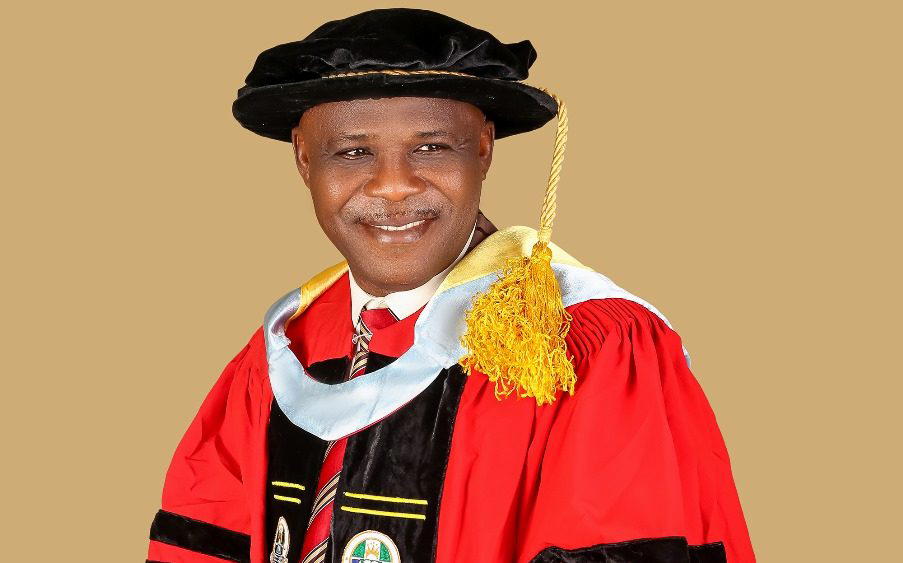
Prof. Odibo
…warns other foreign investors may follow
By Theodore Opara
The Federal Government must urgently investigate the circumstances surrounding Uber’s decision to quit Nigeria and sanction any individual or agency found to have contributed to the development, automobile marketing communications expert and Professor of Marketology at Delta State University, Abraka, Prof. Oscar Odibo, has said.
Odibo described the exit of the global ride-hailing giant after 12 years of operations as a major blow to Nigeria’s investment image, warning that failure to uncover and address the reasons behind the decision could send a dangerous signal to other international companies operating in the country.
His warning came as he expressed disbelief that Uber, which had overcome the initial challenges of establishing its operations in Nigeria, would suddenly withdraw from what he described as one of its biggest potential markets.
“This is not good for the image of the country. The Federal Government should urgently investigate why they took such a decision and find a way to resolve it,” Odibo said.
He expressed suspicion that political considerations, excessive charges or taxes may have contributed to Uber’s decision, arguing that the company’s experience at Nigerian airports deserved particular scrutiny.
According to him, airport operations are critical to the survival of e-hailing companies, making restrictions on Uber’s operations at the Murtala Muhammed International Airport, Lagos, difficult to understand.
He recalled an incident involving a tourist who was charged about N30,000 for a journey from the Lagos airport to Ikeja because Uber vehicles were not permitted to pick passengers from the airport.
The passenger, he said, subsequently stepped outside the airport and secured an Uber ride for about N8,000 for the same journey.
“Airport business is the real business for any e-hailing company. It could be politically motivated and there is no need telling Uber to leave the airport in the first place,” he said.
Odibo warned that Uber’s departure would reverberate far beyond the ride-hailing sector, affecting thousands of drivers and businesses along the automotive value chain.
He estimated that about 2,500 Uber drivers operate in the South-West alone, saying the number of people who could lose their source of income following the exit would be significant.
“Uber is estimated to have 2,500 drivers in the South-West alone. You can imagine the number of drivers who will lose their source of livelihood. It is unfortunate,” he said.
He noted that the consequences would extend to automobile dealers, mechanics and other businesses providing vehicles and services to Uber drivers.
According to him, some automobile companies had introduced vehicle models specifically suited to the ride-hailing market, while mechanics and other service providers also depended on the steady stream of vehicles operated by Uber drivers.
He cited Suzuki as an example of an automobile brand that had introduced models for the Uber business, warning that the company’s exit could weaken demand within that segment of the automotive market.
“There are workers who rely on Uber as a second source of income. With their Uber vehicles, they pick passengers while going to work and coming back to make extra money,” he said.
The professor further said churches, companies and private individuals had increasingly relied on ride-hailing services for transportation and logistics, warning that Uber’s departure could trigger a chain of negative economic consequences.
He therefore urged the Federal Government to engage Uber and address whatever grievances prompted its withdrawal, stressing that the company’s international status made its departure particularly damaging to Nigeria’s investment reputation.
“This is the time companies are returning to the country. Government should do everything within its powers to bring back the company because it is an international company,” he said.
Odibo also called for accountability, saying officials or agencies whose actions contributed to the exit should be identified and sanctioned.
He warned that if the government failed to properly investigate the matter and take corrective measures, other foreign companies could draw similar conclusions about Nigeria’s business environment.
He described Uber as a company that had become an important part of Nigeria’s transportation and automotive ecosystem, saying its exit should therefore be treated as more than a mere corporate decision.
Disclaimer
Comments expressed here do not reflect the opinions of Vanguard newspapers or any employee thereof.