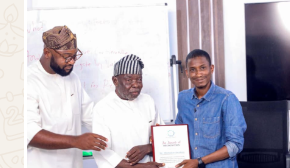
…Abubakar urges Nigeria to rethink policy framework
By Our Reporter
Poverty and economic insecurity are weakening citizens’ ability to make independent political choices and demand accountability from leaders, sociologist Dr Ibrahim Abubakar has said.
Abubakar, of the Department of Sociology, Ahmadu Bello University, Zaria, made the submission at a conclave organised by the Cachet Community.
Speaking on the theme, “Weaponisation of Poverty and the Crippling of the Main Beneficiaries of Democracy in Nigeria,” the sociologist argued that poverty should not be viewed solely as an economic problem, but also as an issue with implications for democratic participation.
“Poverty should not be treated as an isolated economic statistic. It sits inside Nigeria’s development trajectory and has been shaped over time by the decisions of leaders and policymakers,” he said.
Drawing on modernisation theory, Abubakar said Nigeria’s poverty situation was influenced by policy choices and institutional arrangements, arguing that policy inconsistency had contributed to the coexistence of elite prosperity and widespread economic vulnerability.
He said the challenge was not merely to formulate new policies, but to review how policies were designed, implemented and evaluated.
According to him, economically vulnerable citizens may be more susceptible to political patronage because immediate material needs can take precedence over longer-term concerns about governance and accountability.
“When money and material benefits are distributed at election time, citizens find it harder to choose independently and to demand accountability from those who seek their votes,” he said.
Abubakar also linked poverty to limited access to education and exposure to opportunities beyond citizens’ immediate environments.
He argued that such limitations could affect how people understood social and political issues and contribute to polarisation along ethnic, religious or other identity lines.
According to him, politicians could exploit such divisions by mobilising citizens around identity rather than development.
“Development must mean more than economic growth. It must create the education, economic security and social exposure that allow citizens to participate meaningfully in democratic life,” he said.
The sociologist called for what he described as a fundamental re-engineering of Nigeria’s policy machinery to address economic vulnerability and strengthen citizens’ capacity to participate meaningfully in democratic processes.
He said policies should be designed and implemented in ways that improve economic security, education and social inclusion.
The Cachet Community said discussions from the conclave would be developed further at subsequent editions, with Abubakar expected to participate in the next session focusing on poverty, public policy and democratic participation.
Disclaimer
Comments expressed here do not reflect the opinions of Vanguard newspapers or any employee thereof.