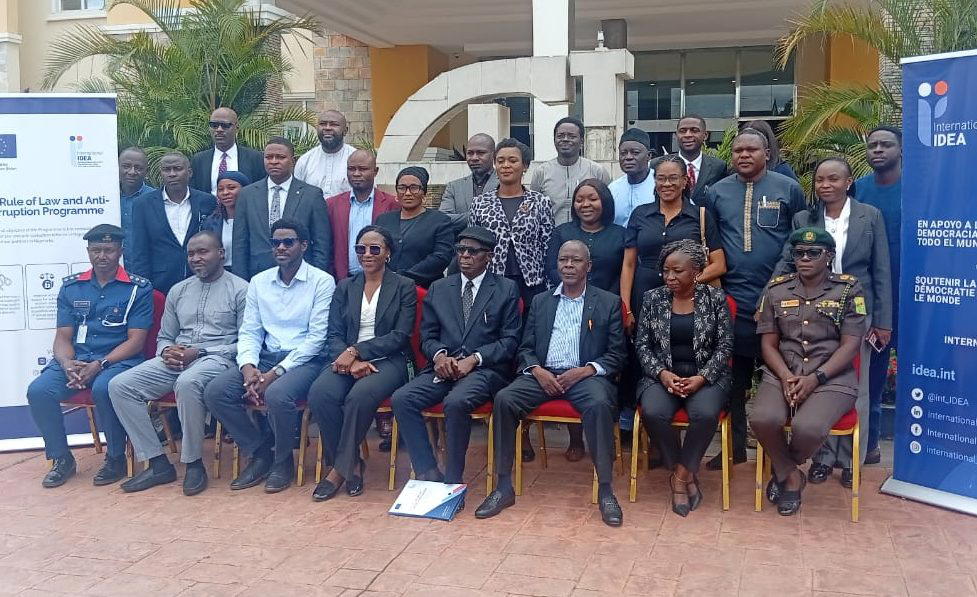
…trains stakeholders on evidence-based decision making
Jos – Plateau State is seeking to make criminal justice decisions more evidence-driven by improving how institutions collect, manage and use data on cases and other justice-related activities.
The focus formed the basis of a two-day training for judges, magistrates, legal officers, security personnel and other stakeholders held in Jos on Monday and Tuesday, September 28 and 29.
Organised by the Plateau State Justice Sector Reform Team JSRT, with support from the Rule of Law and Anti-Corruption, ROLAC II programme, implemented by International IDEA and funded by the European Union, the training examined ways of strengthening criminal justice data collection, analysis and reporting.
Declaring the exercise open, the Chief Judge of Plateau State and Chairman of the JSRT, Justice David Mann, represented by Justice Arum Ashom, said reliable data was necessary for identifying weaknesses within the justice system and addressing them.
“Quality justice planning and reform cannot be achieved without reliable, accurate and dependable data,” he said.
Mann said institutions must move beyond simply keeping figures to ensuring that data was accurate, consistent, complete, timely and properly analysed, while maintaining confidentiality and responsible use.
Plateau Coordinator of ROLAC, Mantim Dala, stressed that data-driven justice systems could only function when relevant institutions consistently supplied the information required.
“Applications, dashboards and beautiful data representation don’t appear themselves. You can’t wish them; people need to feed those systems with information,” he said.
Acting Secretary of the JSRT, Shetak Becklang, said the exercise would help address gaps in the implementation of the state’s central criminal records registry.
“Once you are able to collate data, you are able to make evidence-based decisions with that data. Data is life, data is key,” she said.
The training also examined priority criminal justice indicators, the state’s criminal justice data system, reporting templates, inter-agency data sharing, confidentiality and records management, with consultant Oludotun Babayemi leading the sessions.
Disclaimer
Comments expressed here do not reflect the opinions of Vanguard newspapers or any employee thereof.