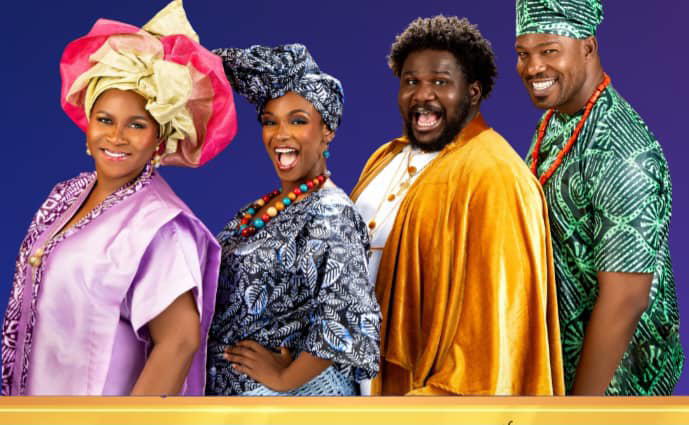
Cast of The Trials of Brother Jero
By Prisca Sam-Duru
In Nigeria’s theatre landscape, the month of May is expected to turn out as one of the most exciting periods in 2026, as theatre lovers prepare for an exhilarating performance of one of Noble Laureate Professor Wole Soyinka’s plays, “The Trials of Brother Jero.”
From the stable of Vesta Sound and Events Strategists, the production is a breath of fresh air in the Nigerian theatre industry and an inspiring innovation into the creative industry which ultimately, serves as a boost to the economy.
The Trials of Brother Jero is a one-act play by Wole Soyinka, which critiques religious hypocrisy and the commercialization of faith. Set in post-colonial Nigeria, the core message in the play is communicated to the public through a charlatan preacher.
Premiering on Saturday, May 16, 2026, the audience wouldn’t be watching just a stage adaptation of the play. It will be presented as an African opera never seen or heard before.
The show on May 16 is a 50-man orchestra, with chorus, soloists, music, and fun at the theatre. It was produced and directed by Rosalyn Aninyei, with music composed by Seun Owoaje.
The musical satire scheduled to take place at the National Arts Theatre, Iganmu, Lagos with professor Wole Soyinka in attendance, also has Libretto/Songs being handled by Kehinde Oretimehin and stars Captain Gibbs, Ige, Johnpaul Ochie, Abiola Lepe.
The production which also celebrates the Vesta Orchestra’s 10th anniversary, is designed to transform the famed satirical play into a musical experience, exposing the pranks of the character Brother Jero, as a manipulative preacher in Lagos.
Speaking ahead of the performance, Rosalyn Aninyei said adapting the classic play by Soyinka into an opera was long overdue, noting, “I felt it’s time we iterated our literature in different ways, and why not opera. The Trials of Brother Jero has been produced as plays in schools and theatres. So, we thought we could take it up a notch and show the kind of talents that exist in Nigeria.”
Explaining further, she said, “In this production, instead of speaking, the dialogues are presented as songs all through. It’s not just acting or talking, but the actors are singing, and the songs stick. That’s what makes opera so beautiful.
“The first act runs for about 40 minutes, and the second act lasts for 45 minutes, making the performance last for about 100 minutes.”
“Opera’s origin is Italian. Nigerians are very similar to Italians; we are very dramatic. The way we live is operatic. So when I talked about going into opera, using our Nigerian and African works, iterating them as opera, my father advised me to begin with works by Wole Soyinka. And because “The Trials of Brother Jero” is so widely read across generations, we decided to begin with it,” She added.
Unlike the typical Italian opera where you hardly pick out the lyrics of the songs, the director assured that this operatic adaptation of Soyinka’s play has been produced by Nigerians (Vesta Orchestra), for Nigerians and beyond, to enable audiences to enjoy the conversations while immersed into the exotic songs.
Disclaimer
Comments expressed here do not reflect the opinions of Vanguard newspapers or any employee thereof.