By Chioma Obinna
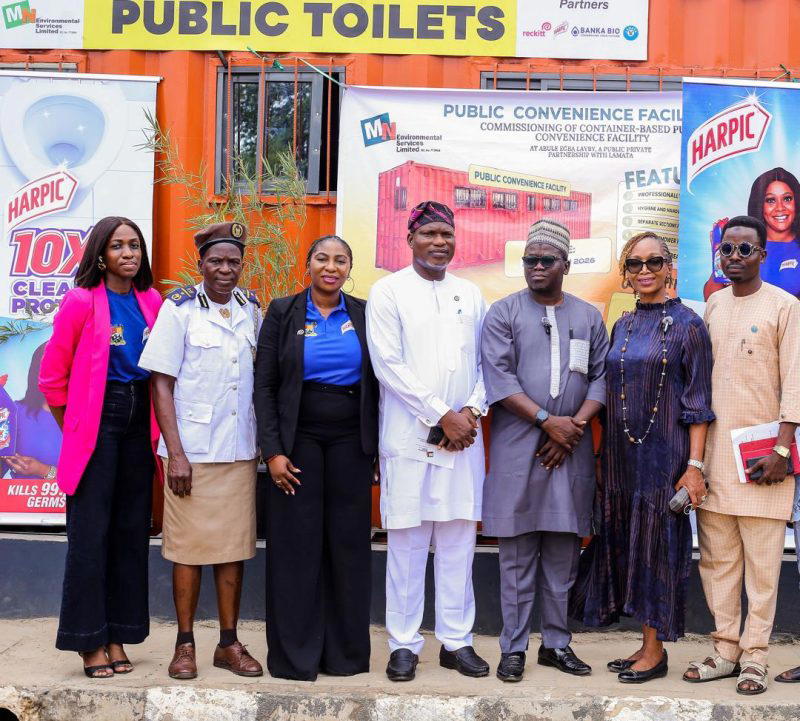
Efforts to address Nigeria’s worsening sanitation crisis received a boost as Reckitt launched a new public sanitation facility in Abule Egba, Lagos, expected to serve more than 30,000 commuters each month.
The project, carried out by MN Environmental Services under the Reckitt Catalyst program, aims to increase access to water, sanitation, and hygiene (WASH) services in one of the busiest transit corridors in the state.
Speaking at the opening, Head of External Communications, Media, and Partnerships for Reckitt West and East Africa, Cassandra Uzo-Ogbugh, said the initiative demonstrates the company’s commitment to supporting community-driven solutions to sanitation issues.
“We launched the Reckitt Catalyst Program to bring projects like this to life. The quickest and most effective way to make an impact is to empower people within communities who understand the problems and can create practical solutions,” she explained.
Uzo-Ogbugh also highlighted that through its hygiene brand Harpic, the company remains dedicated to reducing open defecation and improving public health.
“This facility shows what’s possible when government, corporations, and local businesses work together to meet urgent needs,” she said.
Nigeria’s sanitation figures still paint a bleak picture.
Sector data shows over 179 million Nigerians lack access to basic sanitation, and about 46 million still practice open defecation. In Lagos, the situation is especially serious, with most residents lacking access to safely managed sanitation and essential hygiene services.
The new Abule Egba facility is designed as a sustainable model, featuring a biodegradable, waterless system, a modular structure, and separate male and female toilets and shower areas.
Jife Williams, co-founder of MN Environmental Services, called the project a vital intervention.
“Access to clean and safe sanitation is a fundamental human right. This facility offers a hygienic, accessible, and well-managed environment, and we are committed to maintaining its sustainability,” she said.
Williams emphasized that collaboration is key to closing Nigeria’s sanitation gap.
“No single organization or government agency can handle this challenge alone. This project, delivered through a Public-Private Partnership with the Lagos Metropolitan Area Transport Authority, demonstrates what’s achievable when stakeholders collaborate,” she added.
The Reckitt Catalyst program, a five-year global initiative launched to accelerate access to health and hygiene solutions, has supported 10 Nigerian social enterprises since 2023, offering mentorship, training, and over N85 million in seed funding, primarily targeting female and underrepresented entrepreneurs.
Dignitaries at the event included Dr. Hassan Sanuth of the Lagos State Ministry of Environment and Water Resources, and Abiodun Ishola Ejigbadero, represented by Vice Chairman Shobayo Kehinde, along with community stakeholders.
Stakeholders stated that the project highlights the increasing role of locally driven innovations, supported by global partnerships, in delivering sustainable sanitation solutions and enhancing public health across Nigeria.
Disclaimer
Comments expressed here do not reflect the opinions of Vanguard newspapers or any employee thereof.