By Olalekan Adigun
It is no longer news that journalism is taking heat for political influence, and the compromise is increasingly becoming difficult to ignore among those who are meant to uphold the practice in Nigeria. The media, expected to be at the forefront of holding politicians accountable for the promises made to citizens, has in many respects grown complacent, at least as many would argue. Others will say the old practice of the “brown envelope” has not only persisted but evolved, in a landscape where influence is now more structured and, at times, obviously transactional.
At the same time, the rise of social media and the emergence of a new generation of influencers, many of whom have assumed the role of journalists almost overnight, has created a parallel flow of information. For all its flaws, this shift has meant that many Nigerians are no longer entirely cut off from what is truly happening.
Yet, within this complexity, there remain a few journalists who must be acknowledged from time to time. For the purpose of this piece, one such example has recently come into sharper focus through a talk show on Channels TV, Inside Sources. What makes the programme particularly compelling is the host’s deliberate focus on the future of Nigeria.
The calibre of guests reflects this intent. From Chief Bisi Akande, widely regarded as a political godfather to President Bola Ahmed Tinubu and a foundational figure in the APC, to General Ibrahim Babangida, to activists like Omoyele Sowore and Fela Durotoye, to key figures within the current administration such as Bayo Onanuga, to voices like Aisha Yesufu, heads of agencies including the ICPC and NAFDAC, private sector leaders, generals, and elder statesmen, many have answered to Laolu Akande’s call as he convenes conversations around Nigeria’s future in a profound and deliberate manner.
The very opening of Akande’s show often throws up an uncomfortable but necessary question, whether Nigeria is headed in the right direction, and it is always revealing to see how differently that question is answered.
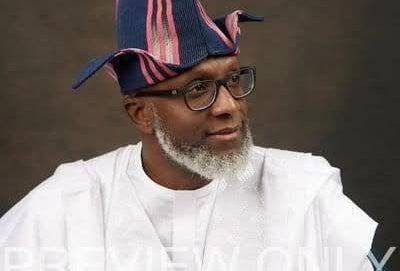
Laolu Akande is a former presidential aide whose career trajectory adds a distinct layer of depth to the conversations he convenes.
He began his journalism career in 1989 and by the early 1990s was already reporting at The Guardian, where his coverage of the ASUU strikes exposed contradictions within government and forced a level of transparency that shaped public understanding. He later joined The News and Tempo during the Abacha years, reporting under intense pressure as both publications were banned and journalists were targeted. By 1997, he had become the youngest editor of a national newspaper in Nigeria at the Nigerian Tribune, where his column CITADEL gave voice to civic resistance at a time when dissent carried real consequences.
In late 1997, as editor of Tribune on Saturday, Akande published a screaming headline, WHO WANTS DIYA DEAD? soon after the then Chief of General Staff and number two citizen under the Abacha junta escaped a plot to blow up his official aircraft. A few months after that in April 1998, Akande left the country for the US on self exile. Rather than silence him, exile expanded his reach. He worked with Newsday in New York, contributed to The Philadelphia Inquirer, Philadelphia Daily News, and The News Journal of Delaware, and became part of the Tribune Minority Editorial Training Program. He also wrote widely for platforms such as Chatafrik and Nigeriaworld, sustaining scrutiny on Nigeria from abroad.
His journalism in exile evolved into global access. He became a long serving correspondent at both the White House and the United Nations, and remains the only Nigerian journalist to have interviewed a sitting United States President in the White House, President George W. Bush. He also interviewed Donald Trump, Colin Powell, Bill Gates, and several African heads of state. In 2004, he founded Empowered Newswire, a New York based agency focused on Nigeria and Africa. His work during this period extended beyond reporting into influence, contributing to international attention on issues such as Boko Haram. Alongside this, he lectured for over a decade at the State University of New York, Stony Brook.
In 2015, he moved from reporting power to working within it, serving for eight years as Senior Special Assistant on Media and Publicity to Vice President Yemi Osinbajo. In that role, he gained direct insight into how information is filtered at the highest levels of government and how narratives are shaped before reaching the public. Yet even within that structure, he maintained a posture that acknowledged public sentiment, and notably spoke publicly in defence of citizens’ right to protest, reinforcing a consistent alignment with public interest even from within government. He was later conferred with the national honour of Officer of the Order of the Niger and received special recognition from the University of Ibadan Alumni.
His return to journalism in 2023 with Inside Sources reflects a convergence of all these experiences, newsroom, exile, global reporting, and government. The programme itself is structured around clarity and accountability, with segments like My Take setting the tone for direct, unfiltered engagement with national issues. The show has quickly gained traction, with several clips ranking among the most viewed on Channels TV platforms, reinforcing its relevance in a crowded media space.
Through the programme, Akande has taken clear positions on issues of insecurity, governance, and economic reality, consistently pushing for accountability while amplifying the gap between official narratives and lived experience. He has also used the platform to humanise national crises, shifting conversations from abstract numbers to real lives and consequences.
A consequential journalist does more than tell stories, they shape outcomes, influence decisions, and compel those in power to answer. By that measure, Laolu Akande’s career has consistently gone beyond reporting to creating impact.
*Olalekan Adigun, journalist and researcher based in Abuja
Disclaimer
Comments expressed here do not reflect the opinions of Vanguard newspapers or any employee thereof.