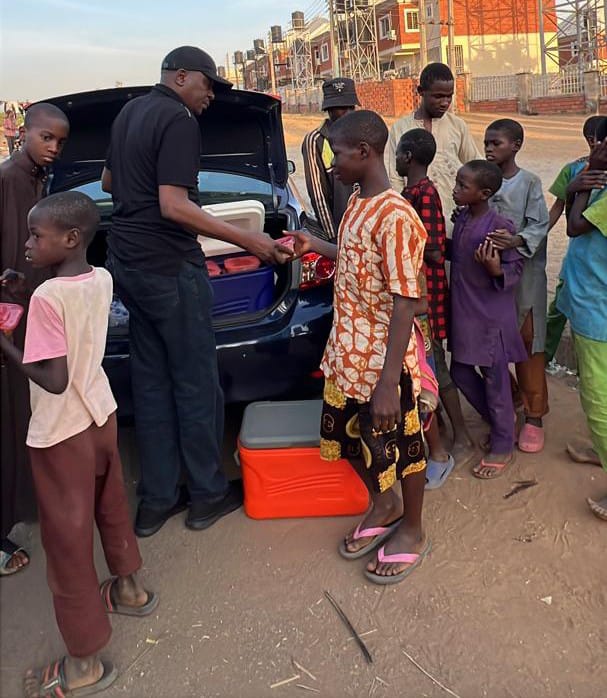
Hundreds of Nigerians observing Ramadan have received daily meals through a grassroots charity initiative aimed at promoting compassion, dignity, and unity.
The Pzafaama Helping Hand Foundation has, over the past month, moved across communities providing iftar meals—the evening meal used to break the fast—immediately after the Maghrib prayer.
Over the 30-day Ramadan period, which began around February 18 and is expected to end on March 19, the foundation said it supported more than 1,547 orphans and vulnerable persons, in addition to hundreds of other residents affected by rising food costs.
In many of the benefiting communities, economic hardship and inflation have made it increasingly difficult for families to afford daily meals, with fasting individuals facing uncertainty about access to food at sunset.
The founder of the foundation, Princess (Dr.) Hauwa P. Usman Dimka, described Ramadan as a significant period for Muslims and said the outreach was driven by both faith and social responsibility.
“This is a sacred time for reflection and giving. We believe no one should be left behind, especially the poor and vulnerable,” she said.
She was supported in the distribution by her husband, ACP (Dr.) Usman Ahmed Abdul-Dimka, alongside volunteers who delivered food packages and cooked meals across various communities.
Beyond Ramadan, the foundation also extended its support to Christian communities observing Lent, distributing food as part of efforts to promote inclusivity and interfaith harmony.
Organisers said the initiative reflects a broader commitment to supporting people regardless of religion, particularly in a period marked by economic challenges.
The foundation has pledged to continue its outreach through the Lenten season, even as Ramadan concludes with the Eid-el-Fitr celebration expected around March 20.
Residents who benefited from the programme described it as a relief amid economic strain, noting that it not only addressed hunger but also fostered a sense of care and belonging.
As food insecurity continues to affect many Nigerians, charity-driven interventions such as this are increasingly playing a critical role in supporting vulnerable populations.
Disclaimer
Comments expressed here do not reflect the opinions of Vanguard newspapers or any employee thereof.