By Ibrahim Hassan-Wuyo
Key stakeholders from Nigeria’s private sector, civil society and development finance institutions have called for innovative, market-driven approaches to building economic resilience and countering violent extremism in the country’s most fragile regions.
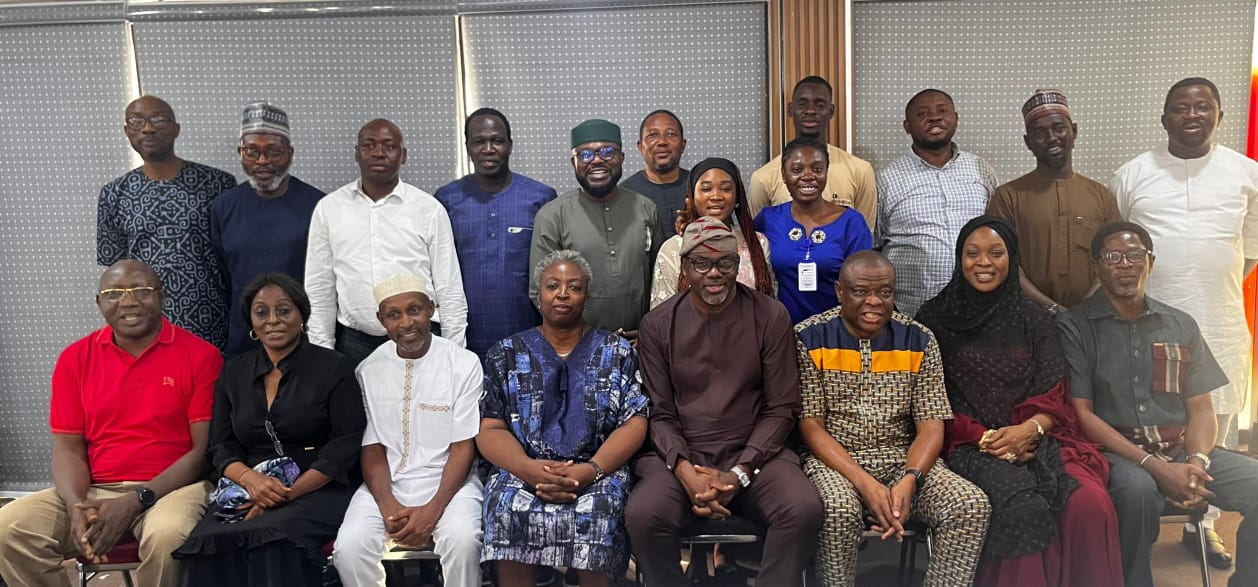
The call was made during a high-level roundtable held in Abuja and convened by the Preventing and Countering Violent Extremism (PAVE) Network in collaboration with the Global Community Engagement and Resilience Fund (GCERF).
According to a statement issued on Wednesday by Senator Iroegbu, National Coordinator of the Media Against Violent Extremism (MAVE) Network, the dialogue brought together participants from across sectors, including the Chairman of PAVE Network, Jaye Gaskia; GCERF Nigeria National Coordinator, Yetunde Adegoke; CEO of Nehemiah Foundation, Emmanuel Nehemiah; Director of Research at Green Legacy Nigeria, Umar Saleh Anka; CEO of Agroxchange Group, Adenale Adegoke; and Investment Coordinator at Robust International Commodities Limited, Ilyasu Ishak, among others.
In his opening remarks, Gaskia said the engagement was aimed at mobilising not only financial resources but also technical expertise, ideas and partnerships from the private sector to support resilience-building efforts in conflict-affected communities.
He explained that a major highlight of the roundtable was the unveiling of the Preventing and Countering Violent Extremism – Knowledge, Innovation and Resource Hub (PCVE-KIRH), a digital platform developed by the PAVE Network to consolidate research, tools and expertise for community-level interventions.
According to him, the platform is designed to function as both a knowledge repository and a community of practice, linking practitioners within and outside Nigeria to share innovations, incubate solutions and scale effective initiatives.
Discussions also focused on the adoption of value-chain cooperatives as a livelihood model for communities affected by conflict. Unlike traditional cooperatives, participants noted that the proposed approach integrates producers, transporters, processors, packagers and distributors into a single economic structure aimed at improving resilience and access to markets.
Gaskia said the model also seeks to address social and emotional recovery needs while connecting communities to secondary markets.
Speaking on practical applications, Adenale Adegoke of Agroxchange Group highlighted initiatives such as in-grower agricultural schemes, youth-focused digital agriculture programmes and end-to-end value-chain coordination. He said the approach is intended to balance social, economic and environmental outcomes while promoting employment and sustainable practices.
Access to development finance also featured prominently at the roundtable, particularly opportunities under the African Development Bank (AfDB) Fragility, Conflict and Violence (FCV) Support Facility. AfDB consultant, Jumobi Fashola, explained that the facility supports projects linking peacebuilding with economic development through structured funding to state governments and private sector actors.
Fashola said projects are assessed based on factors such as governance challenges, climate impacts, resource-based conflicts and unemployment risks, with eligibility dependent on state government requests, project viability and due-diligence requirements.
Ilyasu Ishak of Robust International Commodities Limited said access to finance was less of a challenge than the capacity to develop bankable projects, noting the need for stronger risk mitigation and innovative structures to attract investors.
Umar Saleh Anka shared insights from Green Legacy Nigeria’s research on the proposed Kano–Maraki Rail Line Project, which seeks to transform a 400-kilometre corridor into a productive green zone through agroforestry, environmental restoration and reintegration of displaced persons.
GCERF Nigeria National Coordinator, Yetunde Adegoke, disclosed that the organisation is engaging the AfDB to explore de-risking mechanisms for community-based, out-grower business models in Nigeria. She said the goal is to develop strong concept notes capable of attracting private sector participation and development finance.
Participants agreed on the need to strengthen institutional frameworks, align projects with state development plans, conduct feasibility studies and build capacity for developing investment-ready proposals. They also underscored the importance of accounting for political and governance realities in project design.
Stakeholders expressed optimism that combining private sector innovation, development finance instruments and community-centred cooperative models could help transform Nigeria’s fragile states into centres of sustainable growth and stability, moving away from isolated interventions toward more comprehensive and scalable solutions.
Disclaimer
Comments expressed here do not reflect the opinions of Vanguard newspapers or any employee thereof.