By Ibrahim Hassan-Wuyo & Evelyn Usman
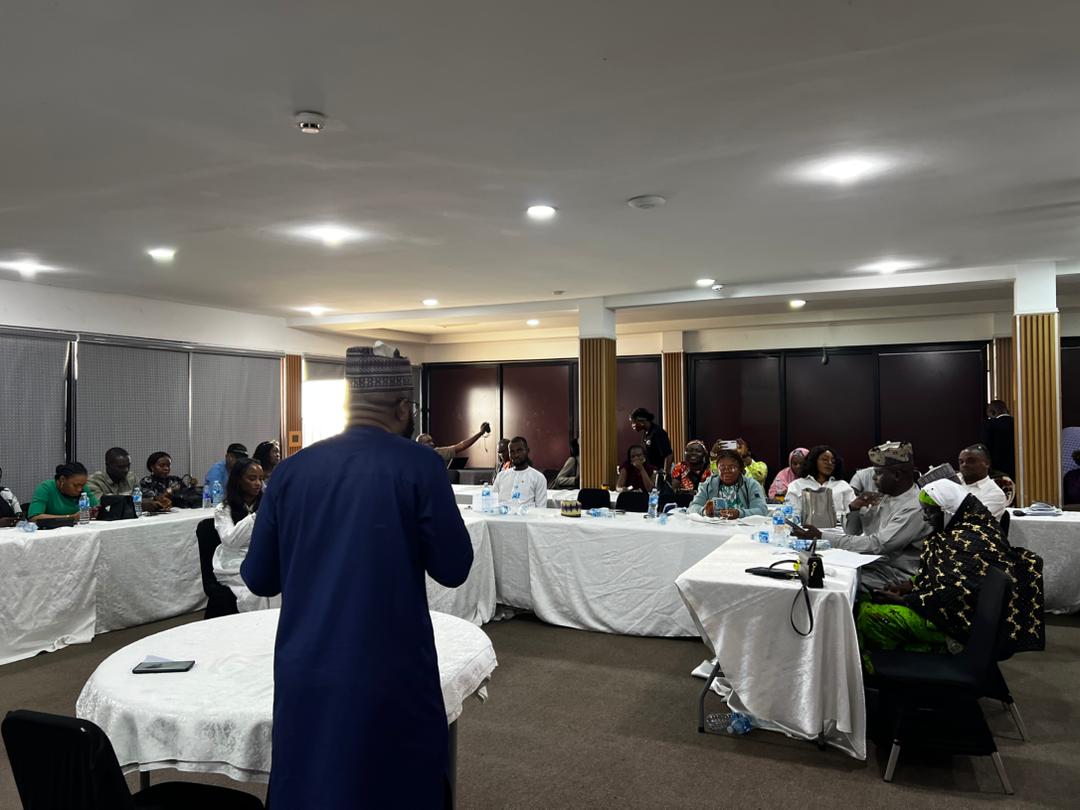
Abuja – A pivotal two-day training session in Abuja has equipped journalists across Nigeria with practical tools for conflict-sensitive reporting and countering violent extremism.
The programme, organized by the Partnership Against Violent Extremism (PAVE) Network in collaboration with the Office of the National Security Adviser, ActionAid Nigeria, and funded by the Global Community Engagement and Resilience Fund (GCERF), highlighted the media’s critical role in fostering peace, resilience, and public trust.
Mr. Jaye Gaskia, Chairman of PAVE’s National Steering Committee and Head of the PCVE Knowledge, Innovation and Resource Hub (KIRH), flagged off the event, unveiling a three-track strategy: co-creating state and local PCVE action plans, operationalizing KIRH, and strengthening media engagement through the Media Against Violent Extremism (MAVE) Network.
Delivering a paper titled “Conflict-Sensitive Journalism and Responsible PCVE Reporting”, Senator Iroegbu, a PCVE media consultant and security expert, cautioned against sensationalism in news coverage. He warned that irresponsible reporting can inadvertently aid extremists, stressing that “publicity is the oxygen and lifeblood of terrorism.” He urged journalists to remain objective, factual, and culturally sensitive.
GCERF’s National Coordinator, Yetunde Adegoke, emphasized sustainable local ownership of peace initiatives. “As donors, we can only ever be catalysts … this is about building resilient communities,” she said.
Speaking on behalf of ActionAid Nigeria’s Country Director, Project Coordinator Aliyu Adamu reflected on the media’s power to shape perceptions. He recounted once believing that all of Maiduguri was engulfed in violence, based solely on media portrayals. He urged reporters to consider the wider societal impact of their narratives.
The training combined roundtable dialogues with practical sessions on conflict-sensitive journalism frameworks, Nigeria’s PCVE Policy Framework, and the National Action Plan.
Panel discussions on “Building Collaborative Narratives” stressed early warning systems, justice for victims, reintegration of ex-combatants, community rehabilitation, human-centered storytelling, and active citizenship. Participants also called for harmonized communication from security agencies to prevent contradictory narratives that erode public trust.
Beyond reinforcing Nigeria’s Media-Peacebuilding Ecosystem, the initiative builds on earlier efforts to integrate PCVE principles into media practices nationwide.
From Gaskia’s strategic roadmap and Iroegbu’s ethical guidance, to Adegoke’s focus on sustainability and Adamu’s reflections on bias, the training delivered a clear message: Journalists are not mere observers—they are architects of peace. By championing accuracy, context, and community-driven storytelling, they can transform Nigeria’s response to violent extremism from alarm-driven to solution-oriented.
Disclaimer
Comments expressed here do not reflect the opinions of Vanguard newspapers or any employee thereof.