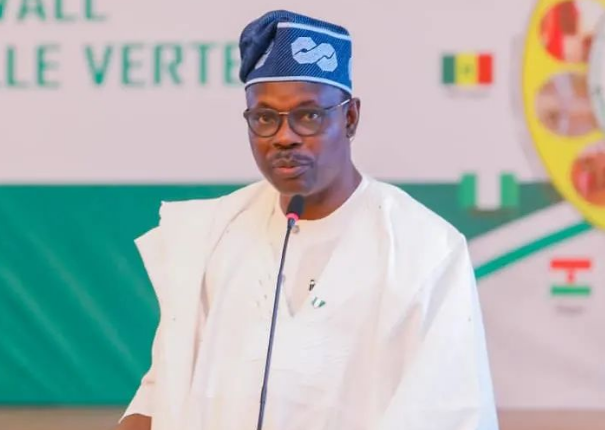
Minister of State for Health, Dr Iziaq Salako
By Gift ChapiOdekina,Abuja
The Minister of State for Health and Social Welfare, Mr. Iziaq Salako, on Tuesday said that Nigeria must embrace creative arts not only as a cultural asset, but as a strategic tool for social integration, healing, and national development.
Speaking at the Myth Exhibition and Policy Discourse organised by the Kanyeyachukwu Autism Society in collaboration with the National Assembly Library, Salako said Nigeria stands at a defining moment where art can help dismantle long-standing stereotypes, elevate neurodiverse talents, and strengthen the country’s health and social welfare systems.
The event honoured 16-year-old Master Kanyeyachukwu Okeke, a teenager living with autism whose Guinness World Record holding art piece has become a global symbol of creativity without boundaries.
Salako stressed that the government is now prioritising multisectoral partnerships to break barriers affecting persons with autism and other neurodevelopmental conditions, adding that creative expression is a powerful vehicle for communication, healing, and empowerment.
“Today’s exhibition shows that inclusion is more than policy it is a lived experience we must deliberately nurture,” he said.
“Art forces us to confront our biases, reject labels, and appreciate the beauty of difference. It expands empathy and inspires the social change needed to build the Nigeria we want.”
The minister assured stakeholders that government reforms in mental health, disability inclusion and social welfare will increasingly accommodate community-led initiatives that use art to promote understanding and belonging.
He commended parents, caregivers and advocates for their resilience in creating safe and supportive environments for neurodiverse persons, insisting that their efforts remain the backbone of inclusive nation-building.
National President of the Society of Nigerian Artists, Mr. Muhammad Sulaiman, described young Okeke as “a remarkably gifted creative whose life and work challenge society’s assumptions about disability.”
He noted that Okeke’s famed artwork The Myth Impact “breaks the walls of myth and stigma” surrounding disability and underscores art’s transformative power.
“Kanyeyachukwu proves that impairment is not incapacity; it is simply a different lens through which the world is interpreted,” Sulaiman said.
For Mr. Tagbo Okeke, father of the celebrated artist, the exhibition is both celebration and call to action. He lamented the financial and structural gaps that continue to limit access to therapy, diagnosis, and early intervention for children with autism across Nigeria.
“There are countless children who need therapy their parents cannot afford,” he said.
“To fight stigma, society must first be aware. Without widespread awareness, families will continue to suffer in silence.”
He urged government and stakeholders to expand social support systems to reach underserved communities, emphasising that autism and other special needs require sustained national attention, funding, and public enlightenment.
The Myth Exhibition continues to attract policymakers, artists, disability advocates and young creatives, reinforcing the message that an inclusive Nigeria is possible if the country chooses to value every talent, embrace every perspective, and build systems that leave no one behind.
Disclaimer
Comments expressed here do not reflect the opinions of Vanguard newspapers or any employee thereof.