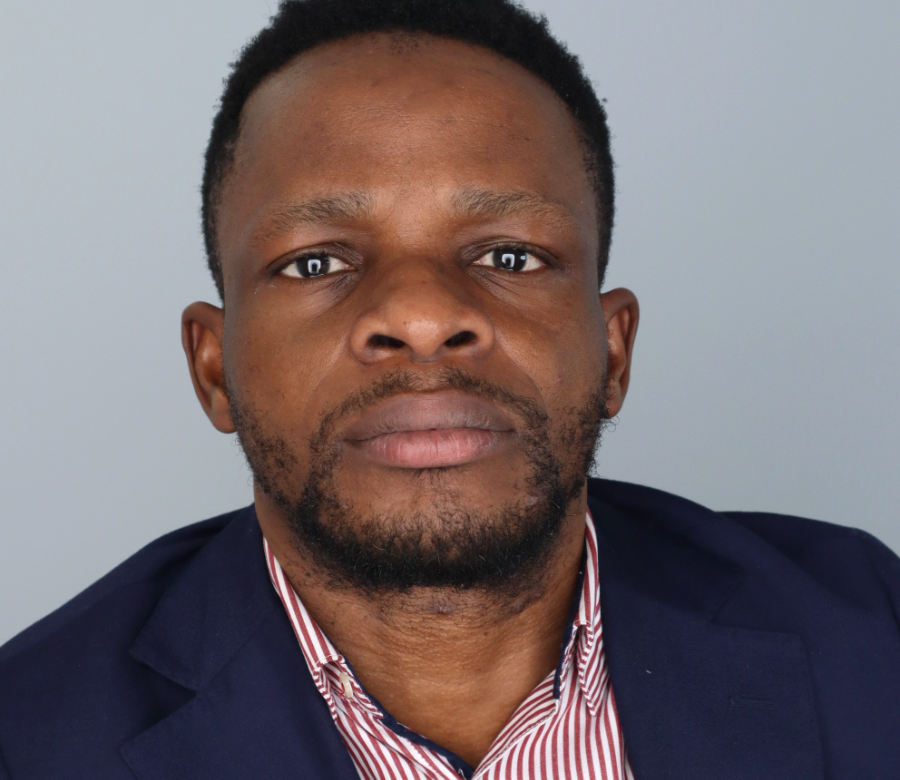
Dr. Oladimeji Mudele, an expert in remote sensing and public health, is using satellite imagery and AI at Harvard to predict and monitor disease outbreaks, aiming to create healthier cities, especially in Africa. In this interview with Vanguard, he discussed how his research is influencing global health.
Can you tell us about your current research focus at Harvard University regarding linking environmental changes to public health outcomes and health policy?
At Harvard University, my research is at the forefront of uncovering how environmental changes impact health outcomes and inform health policy through the lens of geospatial science and satellite imagery. I’m employing causal inference methods to unpack the link between specific environmental factors—like heat exposure, air pollution, and drought—and critical public health concerns, such as diarrheal diseases, malaria, cardiovascular conditions, malnutrition, and food security. This work not only deepens our understanding of these relationships but also guides the development of effective, evidence-based health policies.
How do you use geospatial information, satellite imagery, big data, and statistical methods in your research to make connections between environmental changes and public health?
In my research, I harness geospatial information and satellite imagery to capture a comprehensive picture of the environment. Big data analytics enable me to sift through these vast datasets, finding patterns that indicate environmental changes. I then apply statistical methods, especially causal inference techniques, to these patterns to establish connections with public health outcomes. For instance, by correlating variations in air quality derived from satellite data with healthcare records, I can identify the impact of air pollution on respiratory health issues. Through this integrative approach, I aim to build a solid foundation for informed health policy that anticipates and mitigates the health impacts of our changing environment.
What motivated you to pursue a career specializing in this field?
My motivation to specialize in this field was driven by the urgent need to address the tangible impacts of environmental change on health. Witnessing the global challenges posed by climate change, and the gap in using advanced geospatial analysis to inform health policy, I felt compelled to use my expertise to make a difference. The potential to improve countless lives by directly linking environmental data to health outcomes, and to provide evidence-based recommendations for public health interventions, fuels my commitment to this area of study.
What inspired you to develop an artificial intelligence tool to measure urban green spaces using satellite images?
The inspiration to develop an AI tool for measuring urban green spaces came from recognizing the crucial role these areas play in public health and urban ecosystems. Urban greenery not only improves air quality and mitigates heat islands but also enhances mental well-being. With satellite images offering a bird’s-eye view of our urban landscapes, AI becomes the perfect complement to interpret this data accurately and efficiently, providing valuable insights for urban planning and environmental policy. This tool aims to bridge the gap between the availability of high-resolution satellite imagery and actionable environmental intelligence for healthier, more sustainable cities.
How do you envision your research contributing to early warning systems for disease spread in urban areas?
I envision my research playing a pivotal role in enhancing early warning systems for disease spread in urban areas by providing precise, geospatially informed risk assessments. By integrating satellite imagery with AI analysis, we can monitor environmental factors that contribute to disease vectors, such as stagnant water bodies for mosquito-borne diseases or heatwaves exacerbating conditions for disease transmission. These insights can inform public health actions, enabling targeted interventions and resource deployment, potentially preventing outbreaks or reducing their severity. Ultimately, this research aims to make environments and health systems more resilient through proactive, data-driven, and spatially precise monitoring.
What was your experience like working as a visiting scholar at the Argentinean Commission for Space Activities, particularly in monitoring disease spread?
My tenure as a visiting scholar at the Argentinean Commission for Space Activities was a defining moment in my career, marked by intensive research and collaboration. The commission is at the vanguard of utilizing satellite imagery in the modeling and monitoring of infectious diseases—a field that aligns with my own research interests. During my two-month stay while pursuing my Ph.D., I had the opportunity to develop an advanced AI methodology for classifying urban vegetation using high-resolution satellite images. This work was not only about mapping green spaces but also about creating high resolution data input for predicting the spread of disease through urban environments, leveraging the Commission’s leading-edge satellite technology.
Could you elaborate on the new method you created for detailed vegetation classification from satellite images during your time in Argentina?
During my time in Argentina, I created a nuanced method for classifying urban vegetation using Sentinel-2 satellite imagery provided by the European Space Agency (ESA). This method utilized the machine learning algorithm Random Forest to analyze Sentinel-2’s multi-spectral data, which offers rich information across various wavelengths. By harnessing the depth of data available from Sentinel-2, the method could distinguish between different types of vegetation with high accuracy, as well as identify non-vegetated surfaces. This classification is crucial for urban planning and environmental monitoring, as it helps in understanding the distribution of green spaces, which is key to managing urban heat islands and monitoring disease vectors.
How do you approach statistical modeling of disease risk using satellite data, as demonstrated during your time at the Institute of Computing at the Federal University of Alagoas, Brazil?
While at the Institute of Computing at the Federal University of Alagoas in Brazil, my approach to statistical modeling of disease risk using satellite data involved several steps. First, I acquired relevant satellite data that could serve as proxies for environmental risk factors, such as temperature, precipitation, and vegetation indexes, which are influential in the spread of many diseases. I then preprocessed this data to align it with the temporal and spatial scales of the disease incidence data for our study site in Brazil.
The core of the modeling involved selecting appropriate statistical or machine learning techniques that can handle the spatial and temporal autocorrelation present in the data, ensuring that the models accurately reflect the complexities of disease transmission dynamics. Techniques such as a novel weighted generalized linear model were employed to analyze relationships between environmental variables and disease vector population.
The models were calibrated and validated using historical vector population data, allowing them to predict the risk of disease spread under current or future environmental conditions. The aim was to provide actionable insights to health authorities for targeted interventions.
From your experience, what roles do you see your technology (like Python library, Pylandtemp) play in computing global land surface temperature from Landsat satellite imagery?
The Python library I developed, Pylandtemp, plays an instrumental role in democratizing the process of analyzing land surface temperatures globally using NASA’s Landsat satellite imagery. It enables researchers, irrespective of their coding proficiency, to accurately compute land surface temperature and emissivity, key indicators in climate change studies, urban heat island research, and environmental monitoring. By providing a simple API with methodologies like Single-Channel and split window techniques, it simplifies complex calculations, facilitating more efficient and widespread research in various fields such as public health, disease ecology, meteorology, and climate science. As Pylandtemp evolves, it will incorporate additional methodologies, further expanding its utility and impact in the scientific community.
How have your international experiences in countries like South Africa, Madagascar, and Nepal influenced your research and perspectives on global health priorities?
My international experiences in South Africa, Madagascar, and Nepal (still a remote collaboration) have been profoundly influential, enriching my research and shaping my perspective on global health. These diverse contexts, including my experiences in Brazil, Argentina, England, and Italy, each with unique environmental and health challenges, have highlighted the critical importance of tailoring health interventions to specific local needs while also considering the global interconnectedness of public health issues. They’ve taught me the value of cultural sensitivity, the need for strong community involvement, and the importance of building local capacities. These insights have guided me to focus on creating scalable and adaptable health solutions that are informed by local realities but can be applied broadly across different global health landscapes.
How do you balance your research, teaching, and outreach activities to contribute to knowledge transfer, particularly in Africa, from world-class institutions around the world?
In addition to my US/Europe-focused work, I try to prioritize projects that align with both my research goals and the needs global south countries including African countries in building public health resilience, ensuring that my work is relevant and can be applied practically. In teaching, I incorporate case studies from my research to provide students with real-world examples, preparing them to tackle global health challenges. I often get invited to present at workshops organized by notable African institutions which I most try to honor and use as a platform to educate and talk about my work.
Disclaimer
Comments expressed here do not reflect the opinions of Vanguard newspapers or any employee thereof.