By Efe Onodjae
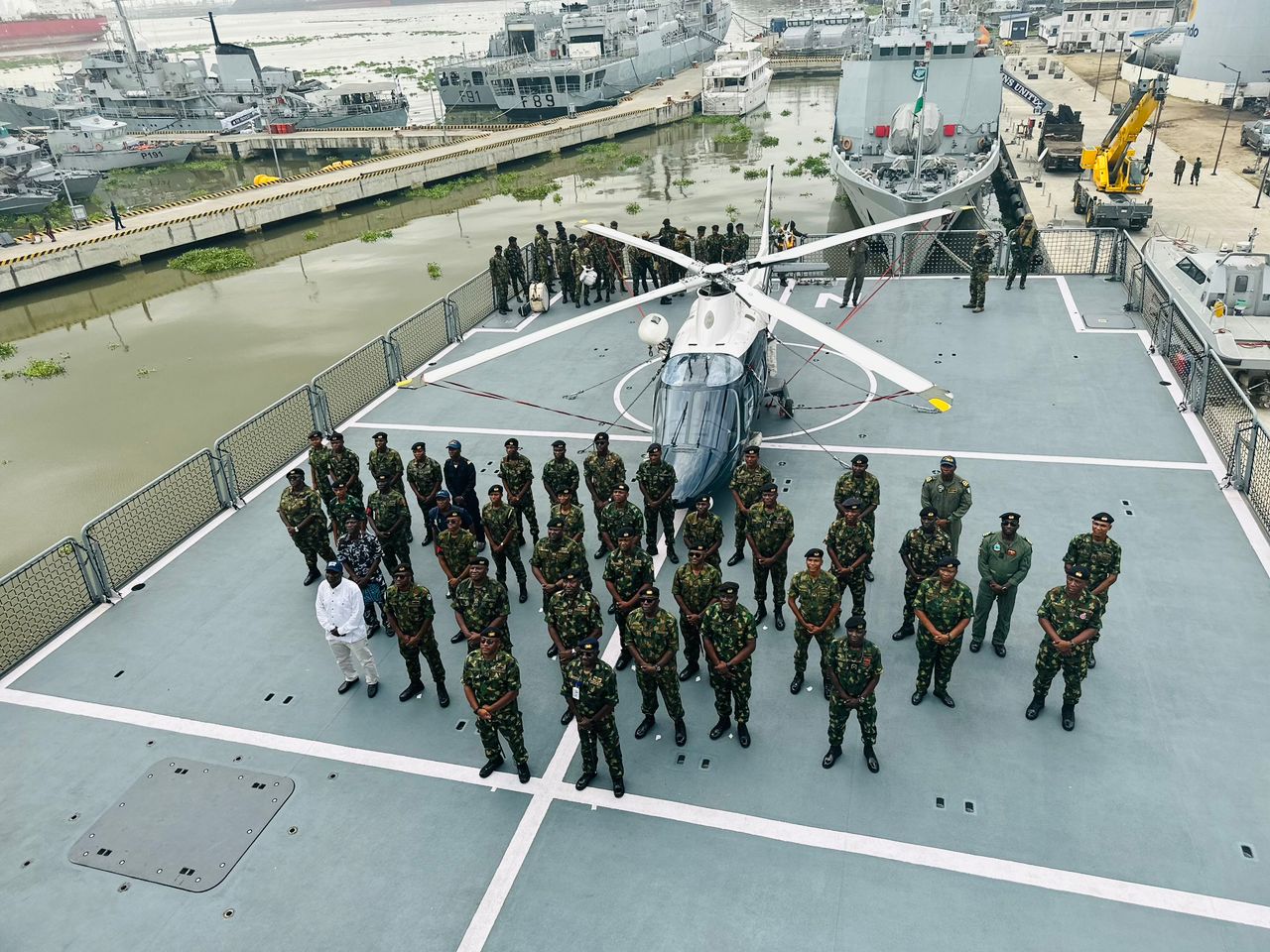
The Nigerian Navy flagged off the Western Naval Command Fourth Quarter Sea Exercise weekend, code-named EX EJA EXPRESSION.
The event included fleet maneuvers and gunnery exercises aimed at enhancing the ships’ warfighting capabilities.
Flag Officer Commanding (FOC) Western Naval Command, Rear Admiral Mustapha Hassan, highlighted that the exercise aims to combat Illegal, Unregulated, and Unreported Fishing (IUUF) and other maritime crimes in the Gulf of Guinea. Rear Admiral Hassan explained that the exercise’s name, derived from both Yoruba and English languages, signifies its purpose, with “EJA” meaning fish in English.
“The exercise is a multi-faceted outing, and the name gives an inclination of one of the ideas behind it. Illegal Unregulated and Unreported Fishing (IUUF) is well-known in the Gulf of Guinea.
“Therefore, to hone our skills in our policing role, we will train today on vertical insertion and Visit, Board, Search, and Seizure (VBSS) using our helicopters and interceptor boats,” he added.
FOC Hassan added that communication and seamanship evolutions, among other exercises, would also form part of the operation.
“EX EJA EXPRESSION will greatly enhance the proficiency of Nigerian Navy personnel in the command and also enable us to test the operational state of our machinery,” Rear Admiral Hassan said.
The exercise is conducted in collaboration with stakeholders and government agencies such as the Nigerian Maritime and Security Agency (NIMASA), the Nigerian Police, and the Federal Department of Fisheries and Aquaculture.
FOC Hassan emphasized that involving other governmental agencies would strengthen interoperability and collaboration, contributing to securing the waters and promoting a vibrant blue economy.
FOC Western Naval Doctrine Command, Rear Admiral Habilla Zakaria, who flagged off the exercise, stated its purpose is to assess the fleet’s readiness for combat situations.
“The Western Naval Doctrine Command conducts combat readiness assessments of all fleets within the Nigeria Navy to ensure they are always prepared to carry out their functions, whether during wartime or peacetime,” said Rear Admiral Zakaria, a rear admiral.
“The assessment will include maritime operations, aspects of warfighting, and evaluating the ships’ exercises to determine their major operational readiness.”
Disclaimer
Comments expressed here do not reflect the opinions of Vanguard newspapers or any employee thereof.