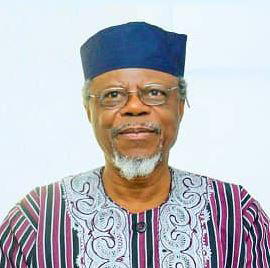
By Rita Okoye
A forum of concerned Africans put together by the Toyin Falola Interview Series has come down heavily on the current rising wave of coups in the continent, saying that the adoption of Pan-Africanism without economic development would fail to stop repeated coup d’états in African countries.
Pan-Africanism is a worldwide movement that aims to encourage and strengthen bonds of solidarity between all indigenous and diasporas of African ancestry. Pan-African thought influenced the establishment of the Organisation of African Unity (since succeeded by the African Union) in 1963. Advocates of pan-Africanism—i.e. “pan-Africans” or “pan-Africanists”—often champion socialist principles and tend to be opposed to external political and economic involvement on the continent.
This position, among several others, was made known in response to theme raised by the organizer of the platform, erudite academic, Professor Toyin Falola, in respect of the military takeover of power in some African countries. The panelists included His Royal Majesty, King Fuankem Achankeng, a conflict scientist and professor at the University of Wisconsin Oshkosh; Dr. Biodun J. Ogundayo, a professor of French and Comparative Literature at the Bradford Campus of the University of Pittsburgh, PA; Dr. Vladimir Antwi-Danso, an expert in International Security, Geo-politics, and Regional Economic Cooperation and Integration; Dr. Mary Owusu, who is a historian of ancient and modern Africa; and Colonel Festus Aboagye, a retired analyst and a consultant on UN/AU Joint Planning for AU Peace Support Operations. The Toyin Falola Interview series, as usual, was beamed and viewed on various social media platforms by over 2.5 million participants.
Disturbed by Africa’s embarrassing repeated history of coups, Professor Falola had asked if Pan-Africanism could provide a model in ending the repeated military intervention in African democracies. In her response, Dr. Owusu noted that with addressing the pressing economic issues in many African countries, pan-Africanism would fail to stop the recurrence of coups in the continent. According to her, “Pan-Africanism could not have stopped the crises leading to coups. If we have a fascination with the politics of it all without addressing the economic issues, we would always come to this position. We must put the politics and the economy together. Nkrumah realized down the line that the economics remains a very important issue. That was when he began to talk about having an economic system which works for us. What we do not have is grassroots’ participation and ownership of the system. They have different colors in different eras. In Ghana, even parliamentarians do not understand the system. Communities are left out when it comes to making vital decisions concerning themselves. We need to question the choices we have made politically. We must Africanise democracy.”
While tracking the age-long record of coups in Africa, Aboagye recommended that Africans “must confront democratic backsliding; enhance civilian oversight, promote professionalism within the military; foster dialogue and cooperation between civilian and military actors; strengthen legal frameworks for promoting respect for democratic norms; improve civil-military education; encourage community engagement to foster mutual trust and understanding; address socioeconomic factors; strengthen regional cooperation; the threat of punitive actions and military intervention should be a last resort.
“We decided to establish some laws in order to go a new path in post democratization. There was the African Union’s 2000 Lome Declaration; ECOWAS’s Supplementary Protocol on Democracy and Good Governance. This emphasized that the only pathway to political power shall be through elections which must be free, fair and transparent. Despite all of these interventions, we still continue to have both military and civilian unconstitutionalities. It tends to appear that there was resurgence. These have implications for African governance architecture as well as the security peace architecture. Indeed, this discourse is as a result of this spate. Among the schools of thought which believe that the discourse must start from the civilian leaders who employ undemocratic strategies including re-engineering constitutions to remove term and age limits basically to entrench themselves in power. There are the classical cases of Rwanda 2015, Burundi 2015, Congo 2015, Uganda 2017, Zimbabwe in 2017. From my estimates, in West Africa, we have had 11 such civilian unconstitutional attempts. Since 2003, there have been such in seven countries: Burkina Faso, two years, 2005 and 2014; Togo, 2005, 2015; Benin 2016, 2019; Guinea, 2020; Senegal, 2023; The Gambia, 2021. Indeed Gambia also has an episode this year. Such leaders have also employed very disturbingly systems of constitutional tyranny accompanied by violence, imprisonment, killings and exiling of political party oppositions especially. This is simply to meet their parochial interests.”
King Achankeng criticized the political leadership model in Africa, insisting that until local politics is people-oriented, it would be difficult to provide the necessary developments required for the people. “There absolutely ought to be no surprise when we consider the kind of leadership in Africa and what African people go through. What may be surprising were the reactions of the West and the initial reactions from ECOWAS, calling for war, supposedly to restore the democratic process in Niger. Not surprised from the West just being true to themselves. It is very surprising though was the reaction from ECOWAS. The West continues to prioritize their own needs over the aspirations of Africa. But ECOWAS called for the restoration of democratic process without looking at their own practices in the mirror. What has been most surprising is what this people have done or thought of doing when they ought to be thinking of their own practices especially in the different countries in the West African region,” he noted.
Antwi-Danso expressed the systemic nature of the crisis, warning that there was no thorough understanding of the concepts of democracy, colonialism and development. For him, “It is systemic. There is confusion between democracy, development and colonialism. These three things are working together against the stability of African nations. If you watch out, you will find out that generals are the ones carrying out the coups. The justification is clear. The state is stagnating. It is declining. Such coups are a response to the decline of the nations. If we don’t want unconstitutional change of government, then it must start with ourselves.”
Ogundayo informed that there is a larger multifaceted dimension to the crisis, saying “We constantly need to awaken or reiterate the historical connection that what is happening today is not a coincidence.”
Members of the audience who spoke included D.S. Kahyana, Edmund Abaka, Mohammed Hadi, Owusu Ansah, Chiedo Nwankwor, Adewale Sobowale, Bunmi Fatoye-Matory, Dawood Hamzah, Charles Prempeh, Bayode Omoyeni, Mohammed Tal, among others.
Disclaimer
Comments expressed here do not reflect the opinions of Vanguard newspapers or any employee thereof.