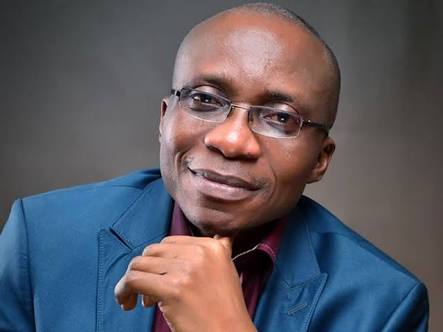
Ebiseni
By Sola Ebiseni
Tomorrow is the king of yesterday and today, all three dimensions of days. Yesterday is disrobed, unveiled, used, sucked and spent. Its worries and bitterness tasted becoming a fait accompli and the way the cookie crumbles. It was fervently looked for as the salt of the earth but in every way, pleasant or odious, it has lost its taste and its saltiness cannot be restored. In the words of the Holy Bible, it is no longer good for anything except to be thrown out and trampled under people’s feet.
Whichever way it may be romanticised in proverbs and philosophy, it is gone and irretrievable. To many, there’s nothing good about yesterday except as an object and source of diverse lessons. Yet so unmindful of yesterday is man that, in the words of Georg Hegel, German philosopher (1770- 1831) “the only thing that we learn from history is that we learn nothing from history”.
Today has no fixed structure because of its transient nature. It is bedevilled with so much anxiety to undo yesterday for more meaningful accomplishments which it rarely realises before it becomes itself an addiction to yesterday. From its break, at dawn, time races and rages against the day in realisation of its ambition in desperate resistance against the inevitable morrow.
Tomorrow is king. It is permanent, unending, constant. It is the judge of yesterday and today, the verdict of which is called history. To the Yoruba, after tomorrow, it is still tomorrow. There is no escaping it. Oba mewá, ìgbà mewá is the Yoruba philosophy of ephemerality of power and its adjuncts.
Don’t misunderstanding me as writing the epitaph of any ruler or regime. Far from it. At the appropriate time and events, in thunder, lightning, or in rain; when the hurly-burly’s done; when at the set of sun, the battle’s lost and won shall all be brought to law and courts those for who, in the words of Shakespeare in Macbeth, “fair is foul, and foul is fair, hovering through the fog and filthy air”. There are no rules worth respecting except created and dictated by them. At every juncture, there is a new rule which suits their power appetite.
To Aristotle, “man by nature is a political animal”; just like Kwame Nkrumah, unlike the biblical injunction to give the kingdom of God priority, would prefer and enjoin his Ghanaian compatriots and all to seek first the political kingdom and everything will be added to it. Neither in Aristotle’s Greece nor Nkrumah’s Ghana is it such a truism as Nigeria to evolve a mutually agreed and beneficial arrangement to guaranty to all that we stand in brotherhood, though tribes and tongues may differ.
We postulate that no amount of political palliatives, including some insulting federal political appointments for some selected individuals will ever stem the tides of agitation or cries of marginalisation.
As important as the economy is as a determinant of human survival and social stability no group has ever raised it in the agitation for better deals in the federation. Even the campaigns for fiscal federalism or resource control is, for the concerned nationalities and states, most political.
To say that the Nigerian federation is precariously on the precipice is an understatement. The solution certainly is not by force or gerrymandering by which power is invariably restricted to two of the constituent groups.
Neither incarceration, military suppression, exile nor death can deter any people from expressing their desires for political independence or orderly sense of belonging in collegiate rulership. It is a matter of structure, not of personality, be it a benevolent or strong personality.
Being so amiable Goodluck Jonathan was not good enough for Nigerians to re-elect. Instead, they clamour for change and derisively turned his civility to cluelessness.
I was recently in audience with one of the leaders who midwifed the ACN/CPC alliance. He confirmed to me how Nigerians’ unquenchable desires for change were exploited to bring Muhammadu Buhari to power.
The younger and dominant voting generation, most of who were not born between December 31, 1983 and August 24, 1984, when Buhari ruled as Military Head of State, were manipulated with stories of what Eldorado Nigeria was during his time. If for nothing else, his stern looking face was sufficient assurance that the battle against insurgency and insecurity generally was as good as won. The rest is history.
Not at any time in our history, not even during the civil war, was Nigeria so divided as it is today. Growing up, particularly during our days as students’ leaders where I had the privileges of traversing virtually all campuses in Nigeria, it was an offence punishable with rejection at the polls or impeachment for incumbents, for anyone to attempt to introduce ethnic or religious factor into our politics. The speeches at rallies, congresses and indeed the Students Representatives Council were such that you were filled with patriotic fervour to deliver the nation from all forms of primitive manipulations.
This last election exposed my generation as we shamelessly did battle with our children. It was Governor Obaseki that first drew attention to the Obidients phenomenon that our homes have been taken over politically by our children who decided to make a difference vowing not to worship at the altar of either APC or PDP.
They adopted the strategy of the #EndSARS initiative for maximum effects. It was from my generation we first derisively tagged them Obidiots, either because we could not match their mobilisation strategy or unfortunately with some tinge of ethnicity.
During the elections, the violence that greeted most centres were shamelessly wrought, not by the youths, but by adults who specialised in churning out incendiary messages that were not far from such that set Rwanda ablaze. Of course, the usual refrain was and still is that “power is not served a la carte”. It has to be snatched, grabbed and run away with. It does not matter if the polity ceases to exist.
Akin Osuntokun, my brother, friend and Director General OBIDATTI Campaigns spoke the minds of majority of perceptive observers when analysing some splashes in the fire pan these days opined that Nigerians were always too easily excited. So thirsty of action we are that any flash here and there is taken for illumination.
Even in the days of military regimes, the quest for legitimacy usually began with sacking or making scapegoats of public officers considered controversial. Not allowing the euphoria go down, it would be the turn of the Inspector General of Police and the Service Chiefs, then followed by meetings with organised Labour and traditional rulers. It is such a routine never missed by a “triumphant” political actor. No big deal, you would say.
Clowns everywhere now show themselves for political patronage. Each day as we approach the Court of Appeal Abuja for hearing of the Presidential Election Petition, one is treated to a comic spectacle of palace jesters donning some egungun attires bearing placards they hardly could read the inscriptions. In what appeared a direct message to my Lords, one of the placards read: “5 persons cannot change the decision of 200 Million Nigerians”.
The tragedy is not in the fact that such a spectacle of the absurd is allowed virtually at the door of the judiciary but that some political actors, in a democracy, would allow such absurdity be perpetrated in their names. The Yoruba call it a dance with a young goat (kid) by someone accused of stealing a missing goat. The guess is a foregone conclusion.
This time, sooner than later, shall also pass and like its immediate predecessor, only have sounds and furry recorded. Welcome to tomorrow.
Nigeria, we hail thee.
*Sola Ebiseni is the Secretary General, Afenifere and South West Coordinator OBIDATTI.
Disclaimer
Comments expressed here do not reflect the opinions of Vanguard newspapers or any employee thereof.