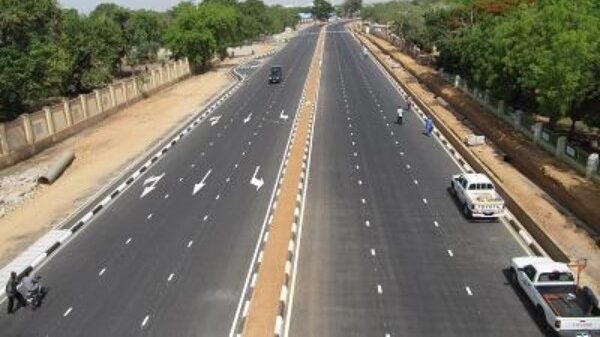
PRESIDENT-elect, Bola Tinubu, honoured Governor Nyesom Wike’s invitation to commission some projects in Rivers State last week, and a friendly banter between them threw up the question of what must be done to sustainably care for our federal roads.
Wike, who will vacate office on 29th of this month, had tabled a request in advance for Tinubu’s government to refund the money spent in constructing the federal roads and bridges that had just been completed by his government.
Tinubu told the governor the roads and bridges are at the service of the people of the state, and that he must be “lobbied” on the issue of refund.
The message here is that under the incoming regime, governors may no longer take the refund for the reconstruction or rehabilitation of federal roads and bridges for granted.
The “federal road” issue has become a syndrome over the past 24 years when some governors took the initiative of rehabilitating federal roads and bridges in their domains to make up for the Federal Government’s sloppy attitude to the maintenance of its roads and bridges.
It was the late President Umar Yar’Adua’s government that popularised this approach, which encouraged the Peter Obi administration in Anambra State to construct the 10-lane autobahn from the Zik’s Roundabout to the River Niger Headbridge in Onitsha. Other governors also took the initiative, but the whole arrangement often ended up in a mess for several reasons.
Number one is that the Federal Ministry of Works and Housing has its own priorities within its tight annual budgets which may not always include the roads and bridges done by state governors. The second is that the valuation templates adopted by the states may not always stand up to standard public procurement scrutiny, since contracts are traditional means of siphoning public funds.
Thirdly, the quality of work done is sometimes questionable, and the Federal Government is often hard put to refund on such projects.
We recommend that the incoming regime adopts massive devolution of powers as a core working principle. The good example the Muhammadu Buhari government has set with the devolution of power grids and railways should be consolidated with the devolution of all non-Trunk “A” federal highways and bridges to the states. The federal revenue allocation formula should then be amended to reflect the new power structure.
It does not make sense for state governments to abandon certain roads, even in their own urban cities, simply because they are “federal roads”.
The states must have full control of physical development in their jurisdictions. Abuja is too far away to be bothered by potholes in extreme localities.
Tinubu is right. Those who use the roads must look after them. The president and governors should sit down and work out a sustainable model of effective maintenance of federal roads.
Disclaimer
Comments expressed here do not reflect the opinions of Vanguard newspapers or any employee thereof.