*Says country requires additional 702 paediatric surgeons to address problem
By Joseph Erunke
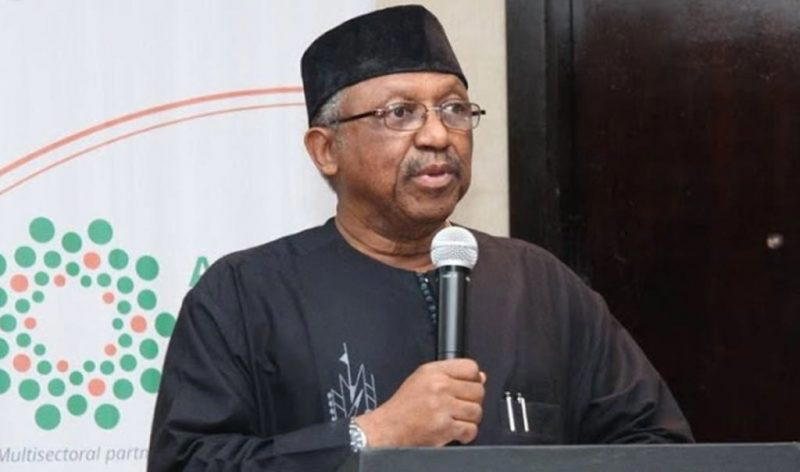
ABUJA–MINISTER of Health,Osagie Ehanire,has lamented the shortage of surgical experts in the nation’s health sector,noting that the country at the moment has what he described as “surgical workforce crisis.”
This development,he said,has resulted to a situation where there is “only one surgeon, obstetrician, anaesthetist/100,000 population against the WHO recommended 20/100,000 population.”
READ ALSO:Healthcare professionals seek investment in Nigeria’s surgical system
The minister said these, Monday,at the National Surgical Obstertrics Anaesthesia and Nursing Plan ,NSOANP, and Cleft Stakeholders’ Conference,held in Abuja.
Ehanire,who was represented by Dr Adebimpe Adebiyi,said:”Worthy of note is the fact that despite the World Health Organisation, WHO recommended surgical workforce density of 20 per 100,000 population, as at 2019, Nigeria has only 1.65 per 100,000 population indicating a surgical workforce crisis.”
“This evidence indicates that there is a severe shortage of all the professionals required to provide surgical, obstetrics,
anaesthesia and nursing care.
” For instance, there are only one surgeon, obstetrician, anaesthetist/100,000 population against the WHO recommended 20/100,000 population,”he said.
According to him,”The density of paediatric surgeons is even worse, at 0.14/100,000 children below 15 years against the recommended density of 1/100,000 children.”
“At the moment, Nigeria requires an additional 702 paediatric surgeons to address the deficit,”he said
He spoke further:” It is estimated that 65% or more of Nigerians are impoverished every year due to surgical care and 66% incur catastrophic expenditure due to surgical care. Although Health insurance exists, it covers only about 5% of the population and there’s no financial risk protection against surgical care for majority of Nigerians.
“The plan also observes that adequately equipped and fully functional facilities like children’s hospitals, surgical centers of excellence etc is central to the delivery of emergency and essential surgical care for children/adults and projects that a deliberate surgical, obstetrics, anaesthesia and nursing plan and the Strategic priorities for Surgical Care (StraPS) will address emergency and essential surgical care for Nigerians.
“Implementation of the plan will therefore strengthen existing healthcare facilities to provide emergency and essential surgical care and improve access to surgical care for teeming Nigerians in need.”
NSOANP is the Nigeria’s product of compliance with the World Health Assembly (WHA) resolution 68/15 which mandates member states to ensure that emergency and essential surgical services are integral components of Universal Health Coverage (UHC).
The WHO report states that currently, at least half of the people in the world do not receive the health services they need.
About 100 million people are pushed into extreme poverty each year because of out-of-pocket spending on health.
Reacting to this development, Ehanire said,” This is unacceptable and requires urgent attention.”
“For this to change, UHC is the way to go. Universal Health Coverage means that all people have access to the health services they need, when and where they need them, without financial hardship. It includes the full range of essential health services, from health promotion to prevention, treatment, rehabilitation, and palliative care,”he added.
He said,”The NSOANP has unraveled the huge gap existing in Nigeria’s surgical services provision. Baseline findings in the plan show that 166 surgeries/100,000 population are performed in the country against the WHO recommended volume of 5,000/100,000.”
“This implies that many Nigerians requiring Surgical services do not have access to them. Moreover, out of the meager surgeries carried out in this country, more than 85% occur at the Federal Tertiary Hospitals highlighting the inequitable distribution of good surgical facilities in Nigeria,”the minister added.
“The recently concluded Special National Council on Health (NCH) has adopted the implementation of NSOANP by the states and I have approved the NSOANP implementation committee which will be inaugurated today.
” It is my belief that the committee has the task of utilizing the outcome of this meeting to draw up a robust implementation roadmap for the country,”he further said.
Disclaimer
Comments expressed here do not reflect the opinions of Vanguard newspapers or any employee thereof.