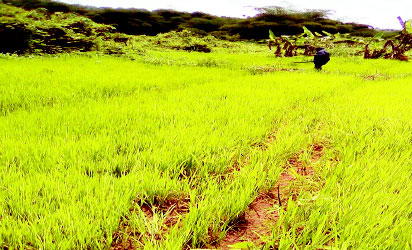
Rice farm
By Gabriel Ewepu
ABUJA – THE Rice Farmers Association of Nigeria, RIFAN, has assured Nigerians that current insecurity challenges would not stop rice production in the country.
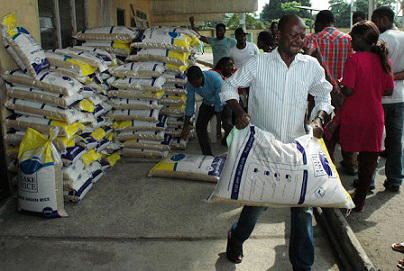
A man carries a bag of Lake Rice at the distribution centre at Teslim Balogun Stadium, Surulere in Lagos on Friday. Lake Rice distribution is powered by Lagos and Kebbi states government in collaboration with San Carlos Group incorporated.
This was stated in a chat with Vanguard by the National President, RIFAN, Aminu Goronyo, while speaking on the availability of locally produced rice in the market and its affordability.
Goronyo in his assertion about the raging insecurity in parts of the country, especially in the north, also stated that the situation would not deter rice farmers from other parts of the country to continue production of the commodity.
Okowa flags off agric support programme(Opens in a new browser tab)
He said, “Of course, insecurity is not everywhere. It won’t be possible to have insecurity virtually everywhere. There are areas that there is insecurity but the major areas where rice is being produced are free from insecurity.
“There is no state in Nigeria where rice is not being produced. For example we have our outreach in Ebonyi State, we have another one in Cross River, rice is being produced there. We have another in Abia. Rice is being produced there. In Ondo, rice is being produced there. In Nasarawa, in Sokoto, in Kebbi rice is being produced.
“The government is doing everything possible because the issue of insecurity is a government issue and the government is doing everything possible to make sure we have security in the country.
“We have about 24 mills in this country that are integrated and about 210 medium rice mills, we have 3,800 small mills in the country that mill rice to international standard.”
He further added that, “Among these mills there are those that can produce up to 100 metric tonnes per day, there are others that produce 50 metric tonnes, those that produce 20 metric tonnes and while some five metric tonnes, it depends on their size and capacity and they are everywhere in the country.
“The local rice is more in the market it us about 70-80 per cent, the ‘foreign disease’ they brought it in through the informal borders through smuggling, they use motorcycles to bring it into the country. We are producing between 7.5 to 8 million metric tonnes annually right from 2016.”
He also disclosed that rice farmers under the Anchor Borrowers Scheme were fully insured by the Nigeria Agricultural Insurance Corporation, NAIC, so even they had their farms flooded they are covered.
“The issue of flood is an act of God that nobody can stop. The only thing we can do is that farmers insure their businesses.
“Quite a number of the farmers understand that it is a government insurance which is Nigeria Agricultural Insurance Corporation, NAIC, and all the programmes under the Anchor Borrower are being insured by NAIC”, he said.
Disclaimer
Comments expressed here do not reflect the opinions of Vanguard newspapers or any employee thereof.