By Sola Ogundipe
Measles is one of the most deadly and contagious diseases known. It is caused by a virus that lives in the nose and throat mucus of an infected person. Only humans spread the measles virus, no other animal species is known to spread or habour measles. It is a vaccine preventable disorder, yet continues to afflict children around the world.
The measles virus that attacks the respiratory tract is one of the most contagious diseases known. Children are especially vulnerable to measles and 350 die from it every day globally despite the availability of a safe, effective and affordable vaccine. Measles survivors are often left with life-long disabilities, such as blindness, deafness or brain damage.
Measles is an endemic disease, meaning it is continually present in a community and many people develop resistance. However, if measles enters an area where the people have never been exposed, the result can be devastating.
How it is transmitted
Measles virus is highly contagious. It can spread through coughing and sneezing and can live for up to two hours in airspace where the infected person coughed or sneezed. If other people breathe the contaminated air or touch infected surface, then touch their eyes, noses, or mouths, they can become infected. Measles is so contagious that if one person has it, 90 percent of the people close by will also become infected if they are not immune. Infected persons can spread measles to others from four days before through four days after the rash appears.
Measles rash & Koplik spots
The infection starts with fever, runny nose, cough, red eyes, and sore throat. Three to five days after symptoms begin, a rash breaks out. It usually begins as flat red spots that appear on the face at the hairline and spread downward to the neck, trunk, arms, legs, and feet. Small raised bumps may also appear on top of the flat red spots. Two or three days after symptoms begin, tiny white spots (Koplik spots) may appear inside the mouth. The fever may spike to more than 104° Fahrenheit. After a few days, the fever subsides and the rash fades.
Symptoms
Measles symptoms can often include a reddish-brown spotty rash but usually include fever and at least one of the three C’s – cough, coryza (runny nose), and conjunctivitis. Symptoms will appear about 9-11 days after initial infection.
Fever – this may be mild to severe and can reach 40.6 degrees Centigrade for a number of days. Fever may drop and then rise again when the rash appear. Although the majority of childhood rashes are not measles, a child should be taken to the doctors if it is suspected that it could be measles.
Suspicion is stronger if symptoms do not improve, or get worse, or the fever rises to above 38 degrees Centigrade and other symptoms have resolved except for fever. Symptoms of measles can include watery eyes, sneezing, and a dry hacking cough. It takes 1-3 weeks for the measles virus to establish itself. There is no specific treatment for measles; prevention is better than cure. Pregnant women should not take the vaccine.

How infection develops
As soon as the virus enters the body, it multiplies in the back of the throat, lungs, and the lymphatic system. It later infects and replicates in the urinary tract, eyes, blood vessels, and central nervous system. Experts say it takes 1-3 weeks for the virus to establish itself. However, people show symptoms 9-11 days after acquiring the infection.
A person who has had measles before does not become infected again; cases of re-infection are very rare. However, anyone who has never been infected or vaccinated that breathes in infected droplets or is in close physical contact with an infected person is likely to become ill. Approximately 90 percent of people who are not immune will develop measles if they share the same house with an infected person.
Diagnosis
A doctor will be able to diagnose measles fairly easily if the signs and symptoms are present. A blood test will confirm the presence of the virus. In Nigeria measles is a notifiable disease. This means that doctors have to notify the authorities of any suspected cases. If the patient is a child, the doctor will also notify the school. A child with measles should not return to school until at least 5 days after the rash has appeared.
Treatment
There is no specific measles treatment. If there are no complications, the doctor will recommend plenty of rest and normal measures to control the fever and prevent dehydration (drink fluids). Symptoms will usually go away within 7-10 days. If a child has measles, the following measures may help:
Fever – if the temperature is high, the child should be kept cool, but not too cold. Paracetamol or acetaminophen are effective in controlling fever, as well as aches and pain. Children under 16 should not be given aspirin.
Photophobia – as the child may be sensitive to light, keeping the lights dim or the room darkened may help. Sunglasses may also help.
Conjunctivitis – if there is crustiness around the eyes, gently clean with a warm, damp cloth.
Cough – cough medicines will not relieve the cough. If the child is over 12, a glass of warm water with a teaspoon of lemon juice and two teaspoons of honey may help. Do not give honey to infants.
Dehydration – make sure the child is hydrated. If a child has a fever, he can become dehydrated more quickly. Encourage the child to drink plenty of fluids.
Isolation – during the contagious stage, infected children should be kept away from school and should not return to activities that involve human interaction. Non-immunized people who have never had measles should be isolated.
Vitamin A supplements – significantly help prevent complications caused by measles. Supplements are recommended for children with vitamin A deficiency and children under the age of 2 who have severe measles. As measles is caused by a virus, antibiotics will not have any effect on it. However, antibiotics may sometimes be prescribed for any additional bacterial infections that develop.
Complications
Complications from measles are fairly common and are more likely to be worse for patients who have weak immune systems, such as those with HIV/AIDS or leukemia, those with vitamin deficiency, and very young children. Adults over the age of 20 are more likely to have complications than healthy children over the age of 5.
The complications can include diarrhoea, vomiting, eye infection, laryngitis and bronchitis, Otitis media, Febrile seizure and Pneumonia. Hepatitis, Encephalitis – approximately 1 in every 1,000 patients with measles develops encephalitis and Thrombocytopenia among others.
Measles during pregnancy can cause miscarriage, premature labor, or low birth weights. If an individual is planning on getting pregnant and has not been vaccinated against measles, they should speak with their doctor.
Vaccine protection
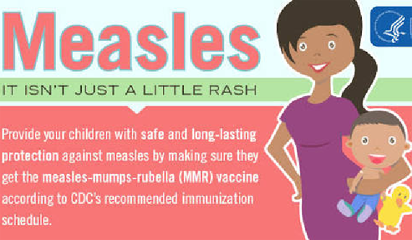
In the decade before 1963 when a measles vaccine became available, nearly all children in the world had measles infection by the time they were 15 years of age. Measles vaccine is usually combined with mumps and rubella vaccines, hence the name Measles, Mumps & Rubella or MMR vaccine. The World Health Organization recommends that children should receive two doses of MMR, the first dose at 12 through 15 months of age and the second dose at 4 through six years of age. The MMR vaccine is very safe and effective and the best way to protect children and prevent them from spreading the disease to others. The success of measles vaccination has been dramatic.
People who have already had measles are immune and will not get it again – cases of re-infection are extremely rare. For people who are not immune, there is the measles vaccine.
When should children be vaccinated?
Children should receive the MMR vaccine between 12 and 15 months of age, and then again (a booster) before entering school when they are 4-6 years old. Babies carry their mother’s immunity for a few months after birth if their mothers are immune. Sometimes babies require vaccination before they are 12 months old. This may happen if there is a serious outbreak in their area, or if they are going to travel to an area with a serious outbreak. In such cases, they can receive the vaccination from the age of 6 months and will need a booster when they are 12 months old.
Progress against measles has been significant. UNICEF and its partners have successfully vaccinated 1.8 billion children worldwide since 2000, helping global death rates to plummet by 79 per cent and saving more than 20 million young lives. But it remains deadly – some 360 children still die every day from the disease, which attacks the respiratory tract. Survivors are often left with life-long disabilities, such as blindness, deafness or brain damage. Don’t let your children be victims. Get them immunised.
Disclaimer
Comments expressed here do not reflect the opinions of Vanguard newspapers or any employee thereof.