By onome Amawhe
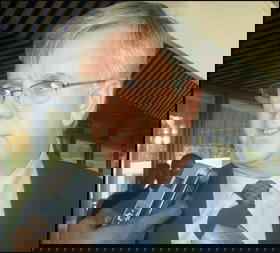
David Venn believes he has one of the most exciting jobs in the world. As boss of Spectranet, the rapidly emerging Nigerian internet solutions company, he has always believed in telecommunications. And he thinks that telecom is going to be the future of the world: “We are already there now”, he says, “with smart phones that can be used to talk to anyone in the world. It’s not magic anymore because it’s taken for granted. And I really think that telecom is going to become a part of everyone’s life much more than it has already done”.
 Indeed, telecommunications is a fascinating, fast paced industry that now influences every aspect of daily life from normal voice phone calls, connectivity to the Internet, satellite communications, surfing the web, fax transmissions, video conferencing, high speed data communications, and cable TV. The field of telecommunications is no doubt one of the most exciting occupational fields that modern society has to offer.
This perhaps explains why Venn opted out of school at 15 to join the British Telecom. His30-year on the job experience in the industry has seen him traverse the telecoms space; holding C-level positions with telecoms giants such as Vodafone, Celtel, London Interconnect and Augere. He’s also held top posts at Cable & Wireless, Optus Communications and Startec. Venn was made CEO of Spectranet a little over a year ago. His task? To pick up the business and expand it. “What I found was that spectranet had built a network that was very good and people that used it really appreciated it for its quality and speed. But then, a lot of people hadn’t heard about Spectranet very much.
When we did market research people couldn’t say what we did. Some thought we were a TV company; others thought we were a sportswear company. The name wasn’t out there and when you look at the telecommunications market, there are some very strong brands that have invested a lot of money in getting their brand names out there”. Venn further explains that prior to coming on board at Spectranet; marketing wasn’t a part of the culture of the company. He says that ‘It was more a case of ‘build a network that works well and people will buy’. Although he’s now managed to get the name out there, one of the biggest challenges is how to communicate to people what the company does and what it means to them.
The task of getting the name better known and build a solid customer enabled Spectranet to emerge with a new corporate identity that has been described as the “hallmark of a new spirit targeted at providing fast and affordable internet connectivity to Nigerians”. Spectranet emerged on the Nigerian telecoms scene in 2009, launching its revolutionary Wi-Max capability with innovative features and then very quickly realized that the technology of the future is 4G LTE. It then migrated to the new Fourth Generation (4G) Long Term Evolution (LTE) in August of 2014 affording users a 50 per cent speed increase reaching 109Mbps. Venn says the response to this brand visibility and migration has been relatively good: “I think it’s fair to say now that the biggest thing that people have seen about Spectranet is that it has a much higher profile now with the market and our customers in terms of branding and communication”.
Telecoms have always topped the list of industry sectors with the worst customer service experience. As an industry, telecom requires huge capital investment to operate. Consequently, they also require a massive customer base to break even. Since coming to Nigeria, Venn has acquainted himself with the market and he finds that customers seem to have suffered the same fate, which is; operators come along, they start off well, then they don’t plan, they don’t expand and then quality goes down and people move on the next one.
“That seems to be the pattern here in this market”, he says. And we are determined not to follow that path”. His plan is to expand the business big time and grow it from a customer base to a base ten times bigger. The company has since put in place a lot of capacity planning to make sure it sustains its capacity curve all the time: “One of the challenges that’s still left for the whole industry, not just for us, is that almost all of the 19 million internet users in this country are using the old mobile 3G technology to access the internet on their smart phones. They are yet to know what broadband is.
And I think the other challenge in the market at the moment is that most internet users don’t really understand the difference between what 4G would give them and what they are currently using. It’s really going to be a big educational exercise explaining to people what it’s about because that’s the biggest thing that’s holding back consumers from taking on the service. That’s what we have to try and get across”. Investment in 4G mobile broadband networks has fuelled Spectranet’s performance in the race to exploit the potential of this advanced infrastructure and benefit Nigerian customers in terms of reliability, service level and speed. This is why Venn thinks Spectranet is ahead of everyone in the game:
“In terms of value for money, well, we are not cheap but we are very good. We are definitely the biggest 4G operator in the markets where we operate and we intend to keep it that way”. Since Venn took the reins of the company, Spectranet has rolled out in Lagos, Abuja and Ibadan. In the first quarter of this year it rolled out in five new territories and then by the end of 2016, it would launch in another five: “2016 is a big growth year for us”, enthuses Venn “and we have managed to grow our market in such a way that we have plenty of capacity on our network.
A year ago when I came, our customers were limited in their speed. Everyone was capped at two megabits and it worked very well but we now have totally unlimited speed that has doubled our customer base in the past year and because of this, we’ve been ordering more base stations (radio towers) every month to cope with our capacity for growth. That gives us more capacity on our network.
On top of that, we are connected to four submarine cables because we buy capacity to London which is connected to the global internet which we put on to our network and then we distribute back through our 4G LTE network to our customers”. In the markets where Spectranet has rolled out, Venn noticed a huge demand for data and the abundance of capacity on the Spectranet network has enabled the company to double its customer base in these markets over the past year. One of the things Venn has learnt in the course of his career in telecoms to understand the needs of the market. In his words: “If you really understand what the market wants and what really resonates well with the market you can go out there and come up with innovative solutions. And what we are offering is very different because it’s not available anywhere else at the moment.
And I think that if you’re focused on what the customer wants then you’ll get it right; it doesn’t matter what the competition is doing”. Following the lead of Spectranet, a number of operators in the Nigerian market are now positioning to get a piece of the profitable 4G LTE action, and as such, some are doing what Venn is quick to describe as ‘muzzling in’. “That’s been done under some spectrum that’s available and which is not theirs. They are doing this because they’ve realized that they’ve got to have 4G to maintain the size of business they currently have otherwise 70 percent of their business could be wiped out in three years and obviously the job of anybody that’s got a company as large as theirs must make sure that they remain in business and then plan and strategize for the future. I think that there would be a lot of pressure on the regulator to issue licenses because everybody is waking up to the fact that data is where they need to be. And they haven’t got a future without it”.
Disclaimer
Comments expressed here do not reflect the opinions of Vanguard newspapers or any employee thereof.