By Paul Ojenagbon
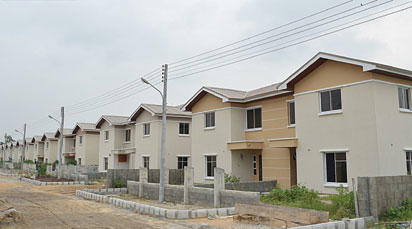
The real estate sector has taken on the harshest side of the stick for decades. Though very important, it is often the forgotten sector that takes a dismal share after all other sectors have taken their fat portions. It is a paradox of some sorts because real estate which connotes houses, roads and other infrastructural facilities that make modern living worthwhile, ought to be given the priority it rightly deserves because housing follows quickly on the heels of food as the greatest needs of man.

Estates
A man without a home is a drifter, unstable as the wind, no wonder the highest amount of social unrest can be found among the homeless in our midst. Housing, a subset of real estate conjures a metaphor of survival, some natural protection from the cruel elements of nature.
But for the activities disparate groups of private sector developers, there would have been next to zero activity in the housing scene as the government whether federal, state or local, have long abandoned this sector to the private sector operators. Long gone are the days when the government built cheap, affordable houses for the teeming low income group at local, state and federal levels. In fact, the last known effort to provide public housing dates back to the second republic that ended in 1983 when the government at the centre undertook several housing estates at the states. Some state governments also vigorously pursued their housing programmes in their various states.
Jakande houses
In Lagos for example, the Lateef Jakande administration built the popular “Jakande houses”that are now housing thousands of Lagosians. Now, when the government builds through an agency, which is even rare, their motives are just as profit driven as the private operators’.
Unfortunately, private sector operators do not have much backing of the government in several ways. Governments are hardily meeting their own responsibility of eking out access roads to link housing estates or providing the necessary infrastructure which becomes an added huge responsibility to these private sector operators. Many operators are also contending with the constraints of the Land Use Act, which long awaited amendment is yet to materialize.
Also because most components of these houses are imported from abroad, the devaluation of the naira means higher cost of construction to the operators.
When a developer finally churns out some houses from his stable, he would have transferred the added cost of the houses to the end users. How then can we have adequate and affordable houses in Nigeria, a country with a UN housing deficit of 17 million units? The picture is really grim.
The infrastructure sub-sector has not done any better. The government being the major driver here – because of the dilemma facing them, many would readily sacrifice providing infrastructure to operate and survive within the lower revenue which the reduced oil price entails.
Besides, several components of infrastructure delivery being imported from abroad will also witness price increases that will spur higher cost of infrastructure provision in days ahead.
In the light of the foregoing, this analyst sees much less activity in this area during the year especially at the centre which is desperately grappling with the insurgency menace to which mega bucks are continually being committed and it remains to be seen if it would be any different in the states. Real estate thus appears consigned to the crumbs once again.
Disclaimer
Comments expressed here do not reflect the opinions of Vanguard newspapers or any employee thereof.