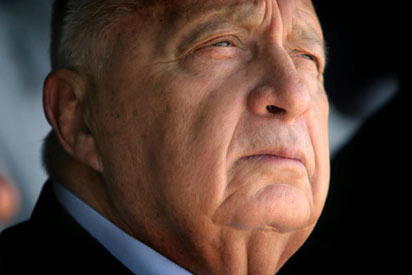
ARABS would not forget Ariel Sharon soon. The Israeli soldier, politician and statesman, who his compatriots loved and hate, in proportional measures, was to some a hero, while Palestinians call him a murderer.
He died on January 11, after eight years in coma, from a 2006 massive stroke. Born to Belorussian Jewish parents, in the agricultural settlement of Moshav, Sharon joined the Haganah at a young age and fought the 1948 First Arab-Israeli War, regarded as war of independence.
Two years later, Sharon became a national hero in another Arab-Israel conflict with Unit 101, which was specially created for retaliatory attacks in Arab territories. He commanded a paratroop brigade that was active in the Second Arab-Israeli War in the 1950s and 1960s. Sharon was a hero of the Six Day War that routed Egyptian troops at the Sinai and crossed the Suez Canal to cut off a third Egyptian military formation. The costly military operation almost earned him a court martial. His mentor, Gen. Moshe Dayan, rescued him.
He was a co-founder of Likud Party. As Agriculture Minister, under Menecham Begin, he initiated the policy of occupation. He was later Defence Minister.
Sharon’s dubious role in the 1982 massacre of Palestinians in refugee camps of Sabra and Shatila, by Christian Phalanges in Lebanon, remained a blight in his military career. Global outcry against the massacre forced him to resign. In 1998, he became Foreign Minister under Benjamin Netanyahu and in 2001, Prime Minister.
Many believe the 2000 emergence of George W. Bush in Washington with Sharon in Tel Aviv created frustrations that prompted the 9/11 terror attack in USA, as Palestinians and Arabs saw no hope of resuming the peace process. Sharon who began his premiership on a controversial note of building more settlements on the occupied territory made a sudden turn in 2003 when he endorsed the road map for peace that USA, the European Union and Russia supported. In 2005, he expelled 9,800 Jews from their settlements in Gaza and West Bank.
Yossi Klein Halevi, a senior fellow at the Shalom Hartman Institute in Jerusalem said of Sharon, “No Israeli leader left behind such a paradoxical legacy as did Ariel Sharon. When Israel expands settlements, it continues the path set by Sharon in the late 1970s and early ’80s. Yet as Israel negotiates an agreement with Palestinians that would inevitably involve uprooting settlements, it is likewise faithful to the legacy of Sharon, the only Israeli leader to dismantle settlements – twice, in Sinai in 1982 and then in Gaza in 2005.”
Sharon was interred at Shikmim Farm in southern Israel, where his second wife Lily was buried. He is survived by two sons. Arios Sharon!
Disclaimer
Comments expressed here do not reflect the opinions of Vanguard newspapers or any employee thereof.