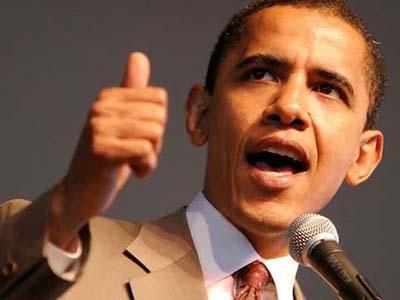
President Barack Obama: Their voices have been heard and Egypt will never be the same
Dr. Joseph O. Okpaku, Sr., yesterday, continued with theObama second time around and noted that President Obama had fewer Blacks in his cabinet than even his Republican predecessor, President George W. Bush. Read on.
Spurned Quest For Bipartisanship
By the time Barack Obama decided to run for US president, the American Congress was wracked with such partisanship that its functioning was mired in bickering and obstructionism. Undoing this was one of Obama’s prime objectives. As president, Barack Obama gave all he had and could afford, and a bit more that he could not afford, to try to build collaboration with the Republican Party. Despite the fact that he had a majority in both houses of Congress, he sought consensus.

President Barack Obama: Their voices have been heard
But he seemed to ignore the fact, well stated publicly by the leaders of the Republican Party, that they did not care to cooperate. They simply wanted him to fail. They said so publicly, and despite the glaring disservice to the American people that such a stance represented, they stuck to this goal with little room for cooperation.
The result is that they disrupted Obama’s agenda. To his supporters, especially those who themselves believed that the very reason that they had given him such clear majorities in both Houses was precisely to empower him to override any such mischief, Barack Obama squandered this rare opportunity. It is, however, important to note that Obama very much believed in his commitment to bipartisanship and that he finally gave up on it only when it became clear to him, later than it did to his ardent supporters, that you cannot make people work with you if they are determined not to. Simply, noble ideas do not always made good policy or smart politics.
As Chief Executive, you have a job to do, a promise to keep, and you act, with the support of the opposition if possible, but alone if inevitable, especially if you have the votes to do so.
The Three Types of Publics
In a broader sense, I am compelled to look at this phenomenon in Obama’s political approach as a strategic flaw. Essentially, I have always held the position, in rough essentials, that in all politics (if not perhaps in life itself) there are three groups of people, three publics: Those who would die for you; those who would kill you (not literally); and those who do not give a damn about you. Simply, unless in exceptional cases in terms of doing your diligent duty, you do not waste your time, not more than is essential, trying to woo the second group, namely those who would kill, because they had no reason in the first place to want to kill you. And the more you pay them unearned attention, the more you invest prime resources in their unrequited love, the more they want to kill you because they see your overtures as a weakness, solid evidence of the success of their hostility and shenanigans.
Instead, you devote your best efforts in pursuit of the interest of those who would die for you. They are your avant garde for your offensive, and your first line of defence when under attack. They are already loyal to you, most often at significant risk or cost to themselves. You know where they stand, right besides you. It is they who would come to your defence when the third group comes after you. Whatever you do, you do not take them for granted. The third group, those who do not give a damn about you, come second in the priority of your attention. Not stridently against you as those in the second group, they are at least theoretically open to persuasion. You engage them in dialogue, enlighten them on your dream for them and for everyone, and encourage them to take your side. For this group, a most important factor is the attraction of how much they see and appreciate (or even envy) how well you respond to the dreams and needs of those who would die for you. The promise of your bestowing such attention to them is a powerful incentive for their coming on board with you.
Put differently, you reinforce the commitment of those who would die for you because they have prior and proven loyalty, they are easy to please and they, in that most beautiful American expression, “have your back”. For those who would kill you, you of course do not want to let them out of your sight, just in case they are up to some mischief. You need to know what they are up to. And every now and then when you have some attention to spare, having assured yourself that the other two groups are well and happy, you make overtures to them. The prospect here is that some will come to realise that they had no fair or logical basis for being against you in the first place. Their reassessment of their own position or action provides the best prospect of their recanting and possibly joining you or at least becoming indifferent to you, which later option is itself a measure of victory.
For Obama especially, the dichotomy between these three publics is very clearly defined. For Barack Obama in his first term as President, the group of those who would die for him consists of the Blacks, Hispanics and other minorities, women, and young people. Those who represent the second group, those who would kill him, are the right wing extremists, including a good number (but by no means all) of the Tea Party people. In-between are all of those who do not give a damn about the president, and this can consist of a motley group of people with other interests, loyalties and preoccupations.
It is fair to say that in his first term, President Barack Obama expended an awful lot of political, emotional and other resources trying to persuade those who would kill him to rethink and come over to his side. The nobility of this effort cannot be underestimated or denied. But in the process, he left those who would die for him exposed and somewhat neglected. Most vocal in this group are the many Black Americans who felt neglected. Some of their colleagues argued that Obama was president for all America, not just for Black people. Obama is rumoured to have actually said so himself. But that begs the question. American politics is a game of taking care of your supporters.
Others argued that by focusing on improving employment and other basic public needs, the President, in taking care of the whole, was implicitly taking care of the particular. This also does not hold water. African Americans did not give all they had and more to elect the first Black President just to be packaged with everyone else in a generic grouping. There are yet those who argue that Obama could not afford to be seen as looking out in particular for Black interests. Such an argument also does not wash because if anything at all, American politics has always been predicated on the benefits of meeting the needs of the particular. If Obama can meticulously look out for the interests of Israel and its domestic Jewish constituency for whom despite these efforts he cannot seem to do enough, then surely he can look out for his own people for whom little would go a long way. Besides, having a Black man in the White House is a once in a lifetime phenomenon. If Black Americans cannot benefit significantly from it, when will they have another such opportunity?
Those who make this last argument have tended to suggest that Obama had to focus on his reelection and that such specific attention to particular interests of Black people would hurt his reelection chances. Ironically, the facts do not support this position because it is the total turnout of African Americans, and of Hispanics, women and young people as happened in 2008 that would ensure Obama’s reelection.
Besides, Black Americans and other ethic minorities that supported Barack Obama paid a price for doing so.
Dr. Joseph O. Okpaku, Sr., President and Publisher of Third Press Publishers and Chairman of Telecom Africa International Corporation, is a renowned scholar and expert of strategic development and global issues. He is regarded as a Renaissance man and a leading 21st Century philosopher.
Disclaimer
Comments expressed here do not reflect the opinions of Vanguard newspapers or any employee thereof.