By SEBASTINE OBASI
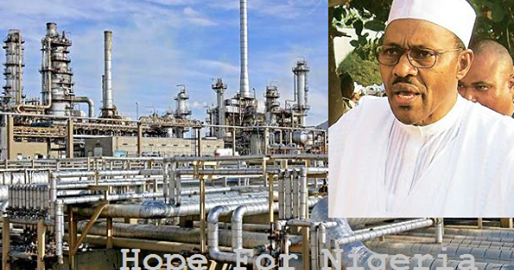
The year has gone half way. The oil and gas industry, the mainstay of the economy still appears not to be getting its bearing, with the downturn in the price of crude in the international market. Matters are made worse for Nigeria, a major oil producing country, whose four refineries, still produce below their installed capacity. The inability to meet its refining capacity has given rise to the clamour for modular refineries.
 This forms our cover in this edition, as we ex-ray the challenges and benefits of such concept in our quest to check the perennial monster of fuel scarcity. We also have our regulars, as we strive to make our readers be abreast of the happenings in the globe.
Happy reading.
s modular refinery the panacea to the recurring fuel supply and pricing crises in the country? Will the quest for modular refinery benefit Nigeria, an oil producing country, which refining capability falls far below the installed capacity of its four refineries. These have been some of the salient questions bordering both the proponents and opponents of the modular refinery concept.
The concerns have become more prevalent with the constant supply side deficiencies, price adjustments and foreign currency drains on the economy in the recent times. And these are coming at the backdrop of the inability of refinery licence holders to build any refinery.
Some stakeholders in the oil and gas industry believe that modular refinery will go a long way in addressing the challenges of domesticating the petroleum mid and downstream sub-sector while guaranteeing uninterrupted supply and stable pricing.
Anthony Ashiofu Jr. Independent Representative, Chemex Modular, owners of modular refineries and gas plants in New Waverly, Texas, United States of America, believes that the huge resource requirements in the importation of petroleum products necessitates the setting up of modular refineries in Nigeria.
He said, “In the last five years, Nigeria is said to be importing an average of 170,000 barrels of oil per day. That is a huge a gap. Nigeria needs a capacity of between 150,000 and 180,000 barrels in order to make sure we can compensate for the inefficiencies of the other refineries we have in Nigeria. Modular refinery is the way to go. We have already done one modular refinery in Port Harcourt, Rivers State.”
Explaining why funding was more of a hindrance for the execution of refinery licences in Nigeria, Ashiofu said that most of them were white elephant projects. “A lot of the licences given before were for more of white elephant projects. The funding for such projects is very huge. It is advisable to go for smaller projects that you can actually achieve funding for. Or at least source the associated funding that is required to initiate the projects.
“That can be locally, such that you are coming with 10, 15, 20, percent locally on a smaller project. Then you can scale it up. You can make your money. Once you make your money, you are now making 100 percent profit, you can begin to make sure you are able to get your expansion,” he said.
As regards the plan of the government to co-locate refineries with the existing ones, he said, “The co-location of modular refineries is a wonderful idea. One of the challenges people that want to build modular refineries have issues with is the associated works; storage tanks, civil works, because of the cost. If you co-locate them with existing refineries, all those things are already taken care of.
“I propose even a more specialised solution, which is actually identifying what the issues are. Which equipment is having fundamental chronic issue? Which equipment fails every five or six months? Which equipment has failed in six years? Identify this equipment. If it has a capacity of say, 50,000 barrels, vacuum distillation unit, VDU, per day capacity, the day it goes down, Nigeria does not have a 50,000 per day VDU, and it is zero. The output is zero.
“Why not have a 10,000 barrel per day VDU. If that is a chronic issue, so that you will never go from 50 to zero, but you go from may be 50 to 10. That way, it cushions the effect of having it failed in a larger unit. That is my perspective of how we should do the co-location,” he added.
Also, Emmanuel Ihenacho, Chairman, Integrated Oil and Gas Limited and promoter the first modular refinery in Nigeria believes that the idea of modular is long overdue in an oil producing country such as Nigeria.
“The modular refinery is an idea whose time has not just come but whose time has nearly passed. We cannot continue as a country that produces oil without capacity to refine it. If you produce oil and export all as it is the case currently, it is creating value in somebody’s economy in terms of the money you pay for the freight in carrying that oil there.
“And if you try to add value to it by processing it at a refinery that is located elsewhere, then you create additional value there. And if you take the products and put it in a ship that doesn’t belong to you, and bring to your home, you also create additional value elsewhere. So we want to capture the value that we have lost historically by saying ‘our oil is going nowhere.’ We take oil. We refine it and sell it. So we want to make the country a hub for oil processing in the continent”.
Explaining the motivation behind setting up a modular refinery, Ihenacho said that the inability to get petroleum products readily for customers necessitated his quest to venture into the project.
According to him, “People frequently call me all the time and say, ‘I want to buy some AGO,’ and I am very embarrassed to reply, ‘I’m sorry we don’t produce AGO.’ This happens because we export our oil raw to Europe and they refine it and produce AGO and we import it. So we want to change that. My motivation to invest in scalable refinery is not necessarily to make money.
“It would be nice to make money but I have a point to prove: that we can do it; that Nigeria can and it has the necessary human resources to add value to its crude. I want to pay tribute to the new DPR. They have been absolutely very professional, fully supportive of what we are doing. I had a recent meeting with them and I was very surprised how they turned up right on time, young people bristling with ideas, listening to what we had to say and making commitment towards ensuring that we work together to develop this idea of modular refinery”.
For Austin Avuru, Managing Director, Seplat Petroleum Development Corporation, Plc, modular refinery is often misunderstood by people. He said, “When you people talk about modular refinery what do you think is the meaning? We built our gas plant in a modular form. So, we designed it to come in five modules, each module being 75 Mscf/d.
We were able to put in the first two modules but put in enough infrastructure such that additional modules would just come in without any additional work. We commissioned the first two modules in May 2015, and within this year we are able to plug in three more modules and expand the plant within only a year. So our gas plant was designed such that you can bring in modules, units, and just plug in.
“So, modular refinery should ordinarily mean that you design a refinery in such a way that you can put in a unit, and if the need arises you can increase capacity by adding further units. So, you can design a 150, 000 barrels per day refinery in three modules of 50,000 barrels.
“What it means is that the ground, the tanks, power supply and all the support facilities are designed to take three modules. But you can start with one, then the additional cost of infrastructure and other two modules will be a lot smaller.” On his part, the Chief Executive Officer (CEO) of Oildata Nigeria Ltd and immediate past Chairman of Petroleum Technology Association of Nigeria, PETAN, Emeka Ene, believes that more efforts should be channeled to promote domestic refining capacity especially now that crude price is low.
According to him, “I think with the drop in crude oil price and the constraints we have on locally produced petroleum products, it is actually important to develop our domestic refining capacity because it helps us to develop and re-think our process. Already, we have been seeing a lot of steps in that direction.
“Modular refineries have been licensed, many of them have completed their detailed engineering, and moving ahead to start construction very soon. There is a big refinery that is being planned and they are moving forward with it. There have been lots of engagements with the petroleum marketers on finding better flexible models for bringing in products. There is emphasis on getting old pipeline to work so that pipeline distribution can be more efficient.
Disclaimer
Comments expressed here do not reflect the opinions of Vanguard newspapers or any employee thereof.