Talking Point

Oriire and the courage to reject compromise, by Rotimi Fasan

Oriire and the courage to reject compromise, by Rotimi Fasan

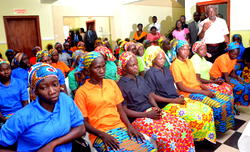
After 56 harrowing days, the 44 abductees in the Oriire community of Ogbomoso LGA are now out of the forest. These are schoolchildren and their teachers. Two of the teachers had been killed after the abduction while another was killed on their school ground. A commercial bike rider was also killed as the abduction unfolded. But […]
Visible Articles 5 10 15
When are the 2015 presidential debates?

When are the 2015 presidential debates?

ONE of the cherished traditions of developed democracies is the creation of fora for contestants to public office to sell their programmes to the electorate before live audiences. Contestants present their party’s manifestoes and planned activities on attaining power in form of debates that are often transmitted live to audiences via the broadcast media. These events are organized and moderated by select members of the mass media and others, not party partisans. This is especially the case for contestants to high offices like that of president. Since the 1960s, no presidential election takes place in America without a presidential debate. It is just a convention of American democracy that is now widely accepted and practiced the world over. It may not be a constitutional requirement but no candidate into elective office who wishes to be taken seriously spurns it.

‘Issue-based’ campaign? When, where?

‘Issue-based’ campaign? When, where?

ONE can say that the general feeling among Nigerians, even without the benefit of a survey or an opinion poll, is that the February elections will be violent. Those who say this or think this way are not without their reasons. History tells us so. Our recent political experience confirms it. Even now, the fault lines are already manifesting. There have been violent skirmishes among supporters of the leading political parties in different parts of the country. Campaign posters have been torn. Party offices have been invaded, houses have been burnt and lives have been lost.

Other side of Rev. Father Mbaka’s prayer

Other side of Rev. Father Mbaka’s prayer

REPORTS of Rev. Father Ejike Mbaka’s New Year’s Eve sermon had for a short while been generating excited responses in the media before I looked to know what it was all about. I didn’t think it worth my while to pay attention to yet another religious leader making one of their increasingly forgettable remarks on Nigerian politics and the February elections. I could see that the Rev. Father was supposed to have made what appeared to be this explosive remark at one Adoration Ground.

A prayer for my land

A prayer for my land

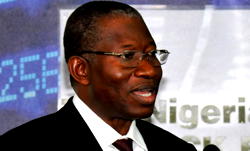
IN just over a month, Nigerians will be going to the polls to elect a new president. Even though the stakes are quite high it does not look like a presidential election is around the corner. The campaign period seems all too short. More so for President Goodluck Jonathan whose presidency seems to be running on oxygen for the few weeks left, with little room to manoeuvre to say nothing of convincing the alienated voter.

2014, Nigeria’s year of insurgency

2014, Nigeria’s year of insurgency

IT was and still is the single most talked-about issue in Nigeria in the last one year. Although its existence predated the Goodluck Jonathan administration, insurgency has been that single elephant of an issue that has dominated the room of national discourse in the last one year. It brought activists campaigning for the return of the Chibok girls out on the roads of Abuja on Christmas day 2014. It was on the lips of the hundreds of thousands of Nigerians that have been displaced from their homes in different parts of the north-east, and their families. The Pope didn’t forget to mention it in his Christmas message. And it would continue to dominate news about Nigeria until an end is put to it.

To be black, poor and vulnerable

To be black, poor and vulnerable

THERE is so much else happening around Nigeria and the rest of the world that the focus on the activities, especially failures of Nigeria’s political leaders, seems obsessive. The tendency to concentrate on Nigeria betrays what might look like a mind-closing narcissism. But then, another look at the matter would reveal that in Nigeria so much, if not everything, is tied to politics

Between Buhari and Jonathan: A straight race to 2015

Between Buhari and Jonathan: A straight race to 2015

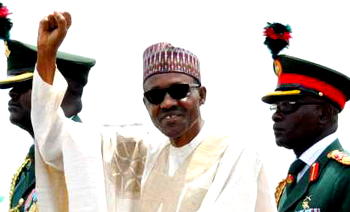
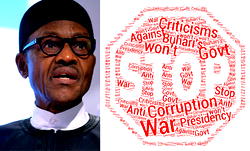
THE crowded field of presidential aspirants has been cleared up for a straight contest between two individuals, with the emergence of candidates for the two leading parties in the land, the APC and the PDP. The contest for Aso Rock Villa has come to a two horse race between Gen. Mohammadu Buhari and President Goodluck Jonathan. The 14 February, Valentine’s Day presidential battle, will be far from being a lovers’ affair when the two combatants square up for action. If anything, it promises to be full of intrigues, surprises, suspense and a lot of tension.

Iweala’s economic recipe: Not austerity but panicky measures

Iweala’s economic recipe: Not austerity but panicky measures

THERE’S palpable panic if not fear in the land. For those who know, Nigeria is heading for an economic precipice that should get all of us truly worried and looking beyond the false hope being hawked around by the Goodluck Jonathan government. The price of crude oil, Nigeria’s one and only economic mainstay, is crashing with the rapidity of a pack of cards.

IG Abba Suleiman, Tambuwal and Jonathan

IG Abba Suleiman, Tambuwal and Jonathan

THIS may not be the best of times for the Inspector General of Police, Abba Suleiman. He has been cast in what, I would imagine, is the unwanted role of chief enforcer for President Goodluck Jonathan, in his proxy war against Aminu Tambuwal. Why President Jonathan finds it difficult to come out openly against Aminu Tambuwal who, he obviously does not want to continue as Speaker of the House of Representatives, is a mystery only he can resolve. He wants to be seen as a democrat, no doubt.

Extension of emergency rule, Tambuwal and President Jonathan

Extension of emergency rule, Tambuwal and President Jonathan

If history is any guide, it almost always starts this way. Like a sick joke or high drama without an apparent plot, full of tension that nevertheless ends in tragedy. I am here talking of the violent attempt by the police to prevent Aminu Tambuwal, Speaker of the House of Representatives, from entering the House last Thursday. The House had reconvened for an emergency session to consider the request by President Goodluck Jonathan for further six months extension of emergency rule in three North Eastern states at the epicentre of insurgent unrest. The Senate which had been in session for two days to consider the same request by President Jonathan, prior to the incident at the House of Representatives, had failed to reach any agreement. Although no less tension-filled, matters had been better managed at the Senate. It was in the House that things fell apart.