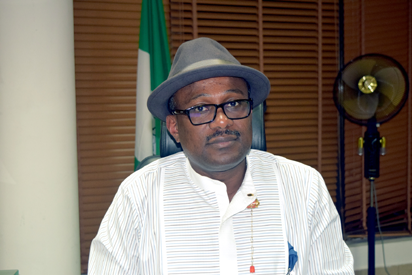
Simbi Wabote
Simbi Wabote, the new Executive Secretary, Nigerian Content Development Management Board, NCDMB, fielded questions from select journalists on the local content drive of the federal government and the plans to expand the focus. Sebastine Obasi was there. Excerpts
We will like to know the new strategy and what you are bringing on board as the new Executive Secretary of Nigerian Content Development Management Board
One thing my engineering knowledge teaches me is you have to first of all plan before you execute. While we focus on some quick wins in other to ensure continuity and maintain the relevance of NCDMB, the first thing we need to do is to take stock of how we have been able to implement the Act for the past 6 years and then ask ourselves, how well have we fared? Based on that stock-taking we will then set a baseline and then tell ourselves, these are the things we will like to pursue in the next four years that I will be in this position.
That to me is the strategic approach I will like to follow during this my tenure. I am sure the review will be a short one. Work is already ongoing. After that review, we will then set a very clear strategic direction. In the short term, we will build on some of the successes we have seen in the implementation of the Act. Some of these being the development of the pipe mills that we have all these while promised Nigerians that we are going to develop in-country.
The development of our oil and gas park, to encourage the local businesses to set up shops to be able to manufacture for the industry. We will also look at the research and development that we have in the Act. A lot of work has been done, stakeholders have been engaged and some kind of regulation have been agreed upon in terms of the research and development. We will make sure we move in quickly into the implementation stage.
The concern now is about the Nigerian Content Fund. How much do we have in that fund? How much has been disbursed and how many companies have benefitted?
That question bothers the mind of key stakeholders. I must say that the fund has grown over the years, probably, we have an approximate figure of $600 million to $700 million in the fund. As far as I am aware, the fund has benefitted about six Nigeria companies that have tapped into that fund for capacity development, but I must say it is not directly giving money to those Nigerian contractors.
It is about guaranteeing some of the loans they got from the banks. We are not a funding institution. We guarantee the loans they take from the banks. Not much has been expended from that fund for capacity development. Part of the strategy of this new Board is to come out with a very transparent process with which genuine Nigerian contractors in the oil and gas sector will have access to the fund.
Most of the contributors are asking questions about the fund and we are not oblivious of this fact. One important aspect is the establishment of the Governing Council of the Nigerian Content Monitoring Board which was inaugurated on the November 18 by President Muhammadu Buhari. That will bring corporate governance principles in the management of the activities of NCDMB and also support us in terms of the strategy we need to deploy in the area of fund management.

Simbi Wabote
It does appear that not many companies in the upstream sub-sector are contributing to that fund. What are you doing to encourage more companies to contribute to the fund?
This is important. While some people worry about the companies that have contributed, there are some other Nigerian companies that are not contributing as enshrined in the law. However, we will look at the strategies that will make them comply with the provisions of the Act. Some of it might be out of ignorance. Some of it will be out of not understanding the implications of not contributing and the mechanism to do those contributions.
We are looking at that process and I can assure you that within the shortest possible time, we will reach to all those companies that are not contributing to the fund and make them comply with the laws of the land. Having said that it is also important to give them comfort that the fund will be judiciously utilised for what it is meant.
Many of the operators have been complaining of the cumbersome process of accessing that fund. What are you going to do to make it a little bit easier for them to access it?
I think it is not the cumbersome process. The process is not clear to them. It is a bit opaque. That is why I said this Board will bring about transparency. By the time we finish with the strategy, it will be published in the various newspapers. Stakeholders will be engaged on the process we will follow to access that fund. I don’t think people have submitted their applications, none that I have seen. However, we intend to bring about that transparency within the shortest possible time.
There was a very heated debate over the review of the local content Act as regards the issue of indigenous company and Nigerian company. Could you please clarify?
I think like every legislation, it calls for review from time to time. There was an attempt a couple of months ago by the House of Representatives to review the local content Act. In the process, all stakeholders decided to make their input of what they think the Act should look like having operated it over time. I think one of the contentious issues with regards to the proposal for review is the ownership of equipment by indigenous companies.
Currently, the Act stipulates 51 percent ownership by Nigerian company or indigenous company because it is used interchangeably, but the proposed amendment which I think has not progressed too far wants those ownership to be 100 percent. The Board is not aligning with that position because we believe that in a global environment, you need to continue to encourage foreign investment into the country.
We need to encourage partnerships. We need to encourage formation of consortium and we need to encourage businesses to distribute their risks in any way that if there is a downturn in the economy, as it were today, no one company bears the total brunt of the impact. Nigeria will continue to collaborate and work with foreign companies in order to enhance our capacity in local content.
As regards the contracting cycle, you said that if a company does not get a response from NCDMB in 15 days, it is assumed the application is approved. Could you expatiate on this?
Contracting cycle time is a great concern not just to the operators, also for NCDMB and some of our sister regulatory agency. It increases the cost of doing business and it delays investment decisions. The Minister of State for Petroleum Resources charged all agencies in the oil and gas industry to ensure that they reduce the contracting cycle time as much as possible. In fact, he gave a benchmark of six months as the turnaround time for contracts.
All the agencies have been actively work on this to come up with strategies with which they will reduce the contracting cycle time. One of the strategies NCDMB will adopt is to give a time line with which if what is required of us is not received by the operators or project promoters within 15 days, they should consider that the item has been approved.
We are working to make sure that the turnaround time is drastically reduced on those items that are within our control. We are working collaboratively with other agencies to understand where the challenges are. On the other hand, we also challenge the project promoters and operators to put their house in order because we have also seen that the bulk of the delay is on their part.
You mentioned the Board and sister agencies. All of you are representing the interest of the government. The argument is can’t one agency do this job on behalf of the government?
It is important to clarify the roles of the different agencies. NAPIMS, for example is not a regulator. It is a joint venture partner to the oil and gas operators. Hence, it holds a critical stake in the business that their operators undertake. It has a joint operating agreement which it has negotiated with the various operators on the role they will play in the contracting cycle.
But NCDMB is a regulator as opposed to NAPIMS that is a joint venture partner. NCDMB also regulates NAPIMS and just to differentiate, in every country that you go, there are different arms of government that undertake different activities. It is the same government that set out regulation to check some of their activities.
Operators are still complaining of outsourcing jobs that Nigerians have the capacity to do. How do you intend to tackle the issue?
One thing we need to understand about local content is that it is not a sprint. It is a marathon. It is not something that can happen in a year, or two years. It is not something that can happen completely in five years. It is a continuous process that needs focus and tenacity to ensure that it is implemented. A lot of gains have been made in terms of local capacity development to replace expatriates that come into the country to work.
There is need to portray the gains that have been made in this sector to the world. For instance, today most of the international oil companies are being managed by Nigerians. This was not so some 7, 8 years ago, where expatriates were the managers. In addition, almost 85 to 90 percent of the employees of these IOCs are Nigerians. Therefore a lot of progress has been made in that area.
Also, today most of the owners of oil blocks and OMLs (oil mining leases) in this country are Nigerians. This never existed 7 years ago. What I am saying in effect is that Rome was not built in a day. We will continue to push the boundaries. We will continue to do everything we can to improve local content attainment in the oil and gas industry.
We need to look at the positive side and don’t think that overnight, we will eliminate expats within our midst. Don’t forget I came from an IOC. Don’t forget that in the IOCs, a lot of Nigerians are outside in various countries giving their expertise.
You are coming from an IOC. There are concerns that you will have sympathy for the IOCs. Now that you are in government, how are you going to strike that balance so that it would not seem as if you have sympathy for the IOCs?
It has been a concern, such that even my staff were also wondering on which side will I be. First of all, I am a Nigerian before I worked for an IOC. I also managed the local content in the company for 8 years, both locally and internationally. In the company, they know my antecedents in terms of where I stand on issues concerning Nigeria, as well as issues concerning my then employer, Shell.
I believe passionately in the benefits of local content, which I think Shell as an organisation, also saw the benefits of local content. I believe in the long run, local content will reduce cost. If we did not build local capacity, most of the oil companies would have packed up by now. Secondly, local content provides the opportunity for securing the assets, lives and property of the investors because there is no security you can get better than the community people that work with you.
The benefits of local content are enormous. To be fair to Shell, they also see the benefit of local content. Hence, they agreed and allowed my voice about local content to persist. Now I am working for the government to further enhance local content in the oil and gas sector.
The NUGAS project has been on for some time now. We no longer hear about it. Now that you are at the helm of affairs, what is being done to make the project a reality?
In fact, like I mentioned earlier, some of the quick wins we can focus on is the development of the oil and gas park for domiciliation of manufacturing activities. As you aware, for some time, there was a bit of lull within leadership win the board. Since my appointment, we have picked it up from where it stopped. In the next couple of days, there will be adverts in the papers for securing the site.
Most of the sites we identified have been acquired. Some of them have been cleared and sand filling is ongoing. In the next couple of days, there will be adverts for contractors to express interest to fence the facility. The detailed design will also kick off very soon. We have set a timeline on every milestone we hope to achieve in the next couple of months. Indeed it is still on the drawing board. It is going to happen. It is also very much in line with the 7 big wins that was launched by President Buhari a couple of weeks ago.
We heard that there is going to be concession for manufacturers. With what is happening in the industry, how is it going to be realised?
A team is looking at the entire process end to end taking into current reality into consideration in trying to design a strategy on how those facilities will be utilised and how they can be assessed by potential manufacturers. We are also talking actively with original equipment manufacturers, trying to partner them with local companies with a view to manufacturing some of their products as soon as the park is ready. All those discussions are still ongoing and the strategy is being developed.
You are planning to develop a clear blue print for local content and also expand local content beyond your field. What exactly are we looking at in all this?
In terms of a blue print, we will intend to do is what I have explained before and that is the strategy in the next 5 years and that will be inform of a blue print that we are going to implement. It is about how we will build capacity in the areas that we are lacking. It is about how we will enhance capacity in the areas that capacity has been existing.
It is about how we develop our research and development objective as contained within the Act and how we also understand the demand and supply within the oil and gas industry of various components that we want to make sure is manufactured currently in the country. For companies that are already existing, what do we do to keep them in business? As you know, business activities have slowed down in the oil and gas industry because of the low oil price. Investors have been shelving some projects waiting for an opportunity to come back as soon as the oil price improves.
We are also looking at opportunities that this current situation will bring. What you must understand is that by the time the price starts rising, if we don’t get Nigerian companies ready for those opportunities, they will miss out. We have been engaging actively with the various stakeholders, exchanging ideas on what strategy we need to put in place for their businesses to be sustained until when things turn around. It is a continuous engagement, continuous encouragement and continuous search for opportunity that we think can sustain them within the period of this low oil price regime.
Disclaimer
Comments expressed here do not reflect the opinions of Vanguard newspapers or any employee thereof.