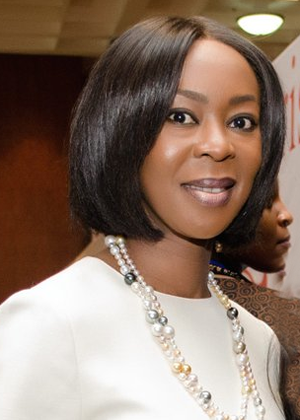
Toyin Saraki
Mrs Toyin Saraki, wife of the Senate President and founder/President of Wellbeing Foundation Africa, a Nigerian NGO focusing on gender equality, diagnoses the problem of the girl-child using the Chibok girls as case study.
For almost two and a half years, Nigeria has been living with the scar of Chibok.
In April 2014, the militant group Boko Haram entered the village and summarily abducted 276 girls from a government-run school. Fifty-seven of the girls escaped within hours of the abduction, but the vast majority remained in captivity since then. The depressing irony often ignored is that the very school the girls were abducted from was set up as a response to Boko Haram.
Scene of crime
The girls who were taken had already witnessed the destruction the group had wrought, not only in terms of lives, but in terms of opportunities as well. Their previous schools had been closed as a result of Boko Haram attacks. The school where they would be taken from was supposed to empower these girls and give them the fast-track revision needed to ensure they could still sit their exams even after their schools were forcibly closed. Instead, it was the scene of the terrible crime against them.

Toyin Saraki
Penultimate Thursday, 21 of the girls were finally released and this has to be seen as good news. But add to that the one girl who escaped Boko Haram captivity in May and the number of liberated Chibok girls makes up little more than 10 percent of those captured in 2014.
This is only the tip of the iceberg. And the Chibok incident is itself only one particularly horrendous example of a much wider abduction problem linked to the conflict with Boko Haram and similar hostilities across the continent. Since 2014, over 2,000 women and girls have been abducted by Boko Haram in Nigeria, with several other incidents recorded in neighboring Cameroon. Further east of Africa, in Somalia and Kenya, another militant group, Al-Shabab, has been linked to multiple abductions of women and children, many of whom have never been seen since.
Normalised sympton of conflict
This is not just an issue of gender. Men and boys are also regularly abducted. But it is an outrage that the abduction of women and children has now seemingly become a normalized symptom of conflict. The global reaction that followed Chibok and briefly brought the issue to the world’s attention has now died away. The story of the release of 21 Chibok girls from Boko Haram caused a brief surge in international media attention, only to quickly fall by the wayside.
The answer to how to counteract this trend is complex, as it is with the issue of sexual and gender-based violence. But there are things we can do now.
First, we have to accept there is a problem and discuss it openly. To do this, we have to talk more broadly about gender equality. Women are not a commodity to be won and lost in war. Neither are they destined to simply become wives and mothers. There is no justification for why only 50 percent of women in Nigeria are literate compared to 69 percent of men.
This hard data is mirrored by the broader discourse in the media in Nigeria and in Africa generally. For a continent that has made huge progress in the last decade, views towards women and girls have not kept pace. As women, our enduringly accepted and celebrated position as nurturers of families and custodians of the kitchen cannot be allowed to excuse being precluded or denied our right to rise to boardrooms and beyond.
Second, we must throw more resources into protecting and empowering women and girls. One immediate way of doing this would be opening up the options available to women and girls who believe they are at risk.
Fears
The reality is that females, especially in more remote or marginalized communities in countries such as Nigeria and Cameroon, have hardly any engagement with the state or with independent professionals who may be able to offer them support or flag concerns to those who could protect them. Rolling out the kind of support millions of women around the world take for granted would be a start. Support like professional pre and post-natal care, where not only women’s physical health can be addressed, would also provide an opportunity for their fears and concerns to be heard in confidence.
Child birth can be one of the few times many women are exposed to professional health workers, so the state should, therefore, empower midwives to be a gateway to support for women and girls at risk in Nigeria and beyond. The same has to be true in education. We must track the development of girls throughout their lives and ensure they have outlets they can trust.
Third, the state, in conjunction with NGOs, should do far more to monitor women and especially young girls. To spot potential threats and to intervene ahead of possible abductions. Amnesty International claimed that the Nigerian armed forces knew of the Chibok attack four hours before it happened – though the military denied this claim. This suggests the possibility that an attack had been known for even longer, yet little was done to protect those at risk.
Too often women and girls are invisible in Nigeria – in health, in education, in the workplace. If they are devalued in our society, surely we should also question whether we are taking the issue of their disappearance seriously enough as well. Chibok has brought the gender dynamic of Nigerian politics and the Boko Haram conflict brutally to the fore. We have to now confront both issues before it’s too late.
Disclaimer
Comments expressed here do not reflect the opinions of Vanguard newspapers or any employee thereof.