By Onome Amawhe
There exists a certain global community of CEOs. They believe that they possess the unlimited capability to learn and to develop themselves. Their ultimate goal is to share knowledge and experience and thus create a better world.
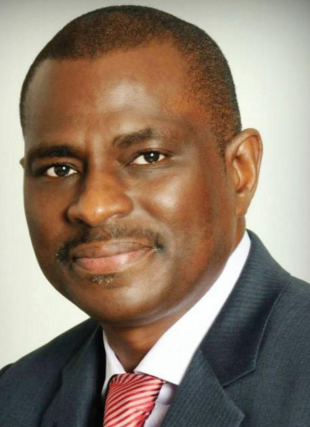
 In that league belongs Segun Ogunsanya, the helmsman of Airtel Nigeria. In his spacious and sparsely furnished office on Banana Island overlooking the Lagos lagoon, Ogunsanya told me: “I learnt very early from my father that one of the key elements of growing is your capacity to learn.
”His key principle is: “Knowledge is weightless. You can carry it anywhere you go.” He also observed: “Knowledge is perishable. If you don’t keep renewing your knowledge, it’s going to go out of date”. The strategy of renewing knowledge at every key turn in life has indeed been manifest in his seamless approach to the navigation of his career. Ogunsanya started out as an Electrical engineer before venturing into accountancy.
Prior to his current role at Airtel Nigeria, he had been CEO of Coca-Cola in three countries – Ghana, Kenya and Nigeria. Ogunsanya exudes enthusiasm and versatility. He finds that change has been seamless for him as he moved from selling Coca-Cola beverages to telecoms airtime: “That’s because of my capacity to learn.
And I really don’t care where the learning is coming from. I just think that if you’re ashamed of learning you’re not going to grow.” On his assumption of office as Airtel CEO in November 2011, his mandate was to create a good environment for “employees to deliver their best”, create a viable and profitable business and be among the key operators in the market place. “To a very large extent, we’ve delivered on those objectives. And I would like to salute my colleagues and my leadership team who all supported me in achieving almost all the core objectives that were given to me when I took over the leadership of this company.”
In the past year, the great milestone for the company was the acquisition of a 30 million subscriber base in Nigeria. With this feat, Airtel now enjoys a huge slice of the mobile subscribers’ market in Nigeria, controlling 20% of the total market share. Airtel’s precursor company, Econet Wireless, is the pioneer of the GSM revolution in Nigeria. This reason largely accounts for its strong presence in the Nigerian telecoms space.
According to statistics from the Nigerian Communications Commission, the number of mobile subscribers spiraled from 144 million in May 2015 to 146 million in June 2015. Following this lead, Mobile operators upped their new subscribers by 2.1 million in June 2015.
The subscriptions to fixed networks soared from 181,625 in May 2015 to 182,643 within the same period. “Crossing the 30 million mark is a major threshold for us,”Ogunsanya says, “and of course, we are very appreciative of all our customers who made it possible.” On the heels of the company’s milestone achievement came a number of complementing awards. They include the highly coveted Customer Friendly Operator of the Year Award.
The award was bestowed on the company for the fourth consecutive time for its consistently robust service platforms that boosts customer experience, in addition to its bespoke, innovative and affordable value-offerings. The company was also recognized by the Association of Telecoms Companies of Nigeria when it bagged a merit award for its pioneering investment in the Nigerian telecommunication industry. Airtel’s winning streak is also brought to the fore by its Corporate Social Responsibility reputation.
Since its inception, the company has recognized the importance of being socially and environmentally conscious. Consequently, it has often taken on charitable initiatives. Chief amongst its CSR initiatives is the Airtel Touching Lives programme whose aim is to “enrich Nigerians and provide succor to under-privileged members of society”. Touching Lives proclaims what the company is, what it believes in, and how it is doing business. “Touching Lives is unique and very different from what has been done in the past”, Ogunsanya says of the initiative.
“It’s not so much about money for exposure but about doing things for those who can’t pay us back. What we do is to ask different stake holders to select communities, individuals and causes that are very important to them. And then, we step in by mitigating the pains of the people and community involved so as to make that cause very productive.” He offers a case-in-point. “One of the first causes we supported was that of a man whose son was crippled.
He is a vulcanizer, so each morning before resuming his work routine; he would carry his son to and from school on his back. We stepped in by providing a wheel chair for the crippled son, making it easier for the man to ferry his son to school. These are the kinds of things we do through the Touching Lives Initiative. We cannot always completely transform lives, but simply make it easier for people and communities to cope with their problems with greater ease. I must also commend my good-hearted colleagues for also supporting causes voluntarily.
They take money from their salaries, donate clothes and their time. I believe that a great company must be a good company. And for you to be a good company, you must initiate good programs for your communities. I’m very excited about the positive things we’ve been doing to support people and communities.” Winning is not just a sudden occurrence for Airtel. Like Ogunsanya, the company has been through several learning curves. Starting out in 2001, the company has metamorphosed through names changes – Econet, Vodafone, V-Mobile, Zain and now Airtel. Since reaching its current position, Airtel has had to deal with many problems. Ogunsanya explains that the company is grappling with a number of industry issues which are not unique to his company: “We have issues of multiple taxation at different levels (local government, MDAs, state government, federal government) and we are working with all the stakeholders to minimize the pain of having to pay different taxes to different authorities at the same time. That’s a major issue for the industry”.
The advent of Global Systems for Mobile Communication (GSM) in 2001 came with great economic benefits as well as some backlash and implications. Nigerian state governments believed that Telecoms weren’t giving enough back to a society from which they made huge profits. This led to the imposition of multiple taxation. In recent months, there has been a hue and cry from Nigerian telecoms operators. This resulted in the Nigerian Governors Forum (NGF) and the Nigerian Communications Commission meeting to explore ways to check multiple regulation and taxation in the telecommunication industry. The Convener of the meeting, the boss of the Nigerian Communications Commission, Professor Umar Garba Danbatta, is himself optimistic that other government agencies are being carried along in order to improve the relationship with telecommunication service providers who are the victims of multiple taxes and regulations. On this, Ogunsanya expresses satisfaction. “We are working with government in terms of multiple taxation as there are different bodies set up by different key players in the industry to engage all the authorities. We now have a unified taxation mechanism that is still a work in progress.
Faced with all these challenges, the company still finds ways to continue to expand the network and invest in quality people.
Ogunsanya sees this as “a key indices driving growth”. Driving growth also means prioritizing rural markets by way of roll-outs. .” Though he admits Voice revenue remains stable, most of the growth he sees in the industry is coming from data. “It’s already happening in many other economies but it’s very slow here mainly because we don’t yet have a sufficiently expansive fiber network that can create a good data quality experience. But as we evolve and put more investment into the fiber infrastructure, I’m very optimistic that data will begin to drive most of the things we do in this country.”
Disclaimer
Comments expressed here do not reflect the opinions of Vanguard newspapers or any employee thereof.