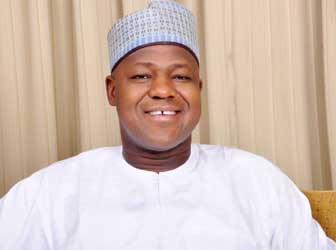
Yakubu-Dogara
By Ochereome Nnanna
IT is no longer news that peace has finally been restored in our House of Representatives. The Senate and House of Reps can now settle down and attend to the heavy workload that has accumulated in the past two months. But before we proceed with business as usual, we must take note of some of the worrisome and unsavoury things the deal for peace left in its wake. First, let us recapture the issue in brief.
On June 9th,2015, the Senate and House of Representatives were inaugurated following the letter transmitted by President Muhammadu Buhari to that effect. The new ruling party, the All Progressives Congress (APC), had wanted to take control of the leadership of the National Assembly by sponsoring some favoured senators and honourable members as presiding and principal officers of the Senate and House. In order to make it look democratically done, they conducted what they called “primaries” among APC federal lawmakers-elect. The result conformed to a script written by Asiwaju Ahmed Bola Tinubu, who is often referred to as the “National Leader” of the APC, though there is no such post in the party’s constitution.

Yakubu-Dogara
Long before the “primaries”, Tinubu had wanted the Senate President zoned to Senator Ahmed Lawan from the North East zone, while Senator George Akume from North Central was picked for Deputy President of the Senate. For the House, he wanted his longstanding acolyte, Hon. Femi Gbajabiamila to become the Speaker, while Hon. Tahir Monguno would be his Deputy.
But political nemesis caught with Tinubu. A script he wrote to make nonsense of the Peoples Democratic Party (PDP) power sharing formula in the House of Reps in 2011 through the active collaboration of Gbajabiamila as the Minority Leader came back to haunt him when his party became the ruling party. Tinubu had triumphantly installed Hon. Waziri Tambuwal as the Speaker instead of Hon. Mulikat Akande, whom PDP had wanted as Speaker to ensure that the South West zone benefited from their overall zoning formula. Tinubu’s intervention had left the South West with nothing while the North West and South East got more than their share of positions in the Federal legislature. PDP had to console Akande and the South West with the post of House Leader.
Tinubu had preened after that feat, and sent Gbajabiamila to address a press conference to hail Tambuwal’s emergence as the triumph of “merit” over zoning.
Tinubu (and by extension the APC’s) candidates for Senate President and Deputy were defeated by Senators Bukola Saraki and PDP Senator, Ike Ekweremadu. They went on to lose the positions of Senate Leader and Deputy, but the APC “rebels” conceded the post of Majority Whip (Senator Sola Adeyeye) to them. In further trouncing, their choices for Speaker of the House of Reps also lost to Hon. Yakubu Dogara and Hon. Yussuf Lasun. Tinubu and APC could no longer stomach the humiliation and prepared to “hang” proceedings in the House of Representatives unless they were allowed to install Gbajabiamila as the House Leader.
However, Dogara initially conceded the positions of House Leader, Deputy, Chief Whip and Deputy to the Gbajabiamila group but on the condition that those to occupy the positions must not come from the South West and North East, which had already taken up the posts of Speaker and Deputy in the House. Dogara pushed for compliance with the principle of Federal Character, which has always been obeyed in composing the leadership of the Senate and House of Representatives since 1999. He wanted the South East to be accommodated by conceding the position of Deputy Chief Whip to a non-ranking Rep from Imo State, while also allowing the South-South, North Central and North West to share the rest of the remaining positions. This was the formula for equity which, the constitution affirms, is necessary for national unity, stability and a sense of belonging for all.
Tinubu and his supporters wrapped their insistence of giving Gbajabiamila the House Leader position in the mantra of “party supremacy”, and made it sound like a refusal to oblige this demand would amount to the utter defeat of “the party” by APC “rebels” in cahoots with their PDP confederates.
After two months of an impasse that did not seem ready to abate, the buck returned to the table of the Leader of the APC, President Buhari. Those who were in doubt as to who is the real leader of the party have now gotten the answer to their confusion: Buhari IS the supreme Leader of the APC. If the tussle were left to Dogara and Tinubu’s Gbajabiamila alone, Dogara would have successfully divided the ranks of the “Loyalists” by installing Ado Doguwa as House Leader. The defeat of Tinubu in this power struggle in both chambers of the National Assembly would have been complete.
Buhari had to abandon his perceived neutral position to throw his weight behind Tinubu, the man who helped create the historic merger that made the APC an attractive platform for the PDP rebels to join and snatch power from the PDP. Buhari’s widely applauded neutrality exposed Tinubu’s political Achilles Heels and showed him to be anything but invincible in calling the shots in the APC as erroneously held in some quarters. It was the power of the Presidency that loosened Dogara’s clenched fist and forced him to hand over the House principal posts to Gbajabiamila – and Tinubu.
In siding with Tinubu, Buhari helped bring “peace” to the House. Everybody, including us, the helpless onlookers, had gotten tired of the fighting. But this peace has come with a heavy price: the APC failed to find space for the South East. The exclusion of the zone, which started with the presidential appointments so far, has now been extended to the Federal parliament. If not for the PDP and some APC liberals and patriots, there would be no one from the South East in the Senate and House of Reps leadership.
Funny: some think it does not matter. But it remains a pox on the conscience and track records of the president and ruling party that in their first 100 days, one of the six zones of the country was shamelessly, arrogantly, wickedly and unconstitutionally excluded from government.
Gunning after Alex Otti
THE shocking news of the assassination attempt on the governorship candidate of the All Progressives Grand Alliance (APGA) in Abia State in the April elections, Dr. Alex Otti filtered out penultimate Friday.
Gunmen had attacked his Maitama guest house, Abuja, in the dead of the night. Otti had spent the week there and left just a day before the assassins arrived. A policeman on duty was reportedly killed during the attack, and the whole house was ransacked.
Though Otti is not pointing accusing fingers at anyone, opting for the police to fish out the perpetrators, the attempt on his life is suspected to be politically motivated, given the atmosphere under which the election took place in Abia State and the ongoing election tribunal proceedings in Umuahia.
The police and other security agencies must expose the perpetrators and bring them to justice, more so as life was lost. Unmasking the culprits will help deter future attempts on others. The security agencies have a duty to protect all politicians, especially those with cases at the tribunals because desperate opponents will always be tempted to believe they can short-circuit justice by taking the law into their hands.
Otti should not be deterred. The task of unravelling the true winner of the Abia governorship election must be concluded and affirmed according to law.
Disclaimer
Comments expressed here do not reflect the opinions of Vanguard newspapers or any employee thereof.