Introduction
The National Judicial Council (NJC) has issued new “Guidelines and Procedural Rules” for all judicial appointments into superior court positions in Nigeria. The reforms seek to plug serious lapses in the former judicial appointments/elevation guidelines that made those guidelines too feeble and ineffective in achieving its aims. The former guidelines did not, and could not safeguard judicial appointments from being politicised or lobbied, or even from “institutional nepotism”.

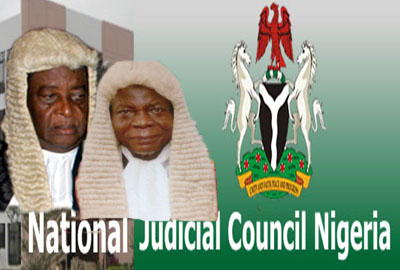
Chief Justice of Nigeria, Justice Aloysius Katsina-Alu and President of the Court of Appeal, Justice Ayo Salami
Under those guidelines, judicial appointments were undertaken through processes that were undemocratic, cloistered, elitist, and that lacked openness or transparency. This effectively led to the exclusion of otherwise eligible people from consideration for judicial office. The former guidelines could not ensure that those appointed to judicial office represented the strongest stock of talent that the legal profession could offer.
Judicial appointments are a gateway to the exercise of enormous judicial powers and authority. Where procedures of appointments are weak, flawed or vulnerable, the outcomes of the process will likely mirror those frailties and faults; indeed, some persons who get into judicial office through this means may just be accidents waiting to happen. And we have witnessed, and are still seeing, many such accidents!
Judges play a huge role in safeguarding our liberties and the Constitution has effectively made courts the guardians of the Constitution, a last line of defence; a bulwark against tyranny and oppression and a surety for good governance and the rule of law. A nation that values its freedom and its progress will clearly not allow its judiciary to be less than strong, confident and competent.
There was such a time, as legal historians say, that Nigeria’s judiciary was the Continent’s showpiece. How did Nigeria squander that legacy so voraciously? One such way, we think, is that we let government control who gets in to, and who gets locked out of, judicial office!
In July 2014, a judicial reforms conference1 (Organized by the Nigerian Bar Association, United Nations Office on Drugs and Crime (UNODC) and Access to Justice in collaboration with the NJC, (and backed by the EU and the Open Society Initiative for W/Africa) had pressed the urgency of reforming the judicial appointments system in Nigeria, concluding with a communiqué that canvassed reviewing “of the guidelines for the recruitment of judges to encourage a more transparent, competitive and merit-based system that will eliminate non-transparency in the appointment process”.
The new Guidelines respond constructively to the representations made to the NJC in this regard. Now the NJC has stepped up to the plate in a bold way. Why the Council waited for this long to do so is befuddling, given that the handwriting was on the wall in plain sight for so long. Res Ipsa Loquitur! The new guidelines strengthen the safeguards against the appointment of unsuitable persons to superior courts, promote competitiveness and openness in the selection process, as well as boosts transparency, objectivity and merit in selection steps and considerations.
This piece is not intended to examine the Guidelines in any detail but to extrapolate, broadly, the significant changes introduced by them.
An Overview of the Changes Made Openness and Transparency: The new guidelines require greater openness and transparency in judicial appointment processes beginning with the announcements of judicial vacancies, which must now be done openly, through websites of Judicial Service Commission/Committee (JSCs), notice boards of courts and the Bar, (Rule 3:1).
Merit and Competence: The guidelines require that the JSC heads make, from among the applications/nominations, “a provisional shortlist on the merits”. In determining this shortlist, the Chair of the JSC shall take into consideration “professional expertise and competence” “sound knowledge of the law”, “seniority at the Bar or Bench” and “Federal Character” or “Geographical Spread”.
When the shortlist is sent to the NJC, the Council is also required to conduct an interview of each candidate, Judge or Justice whose names have been submitted, although the Council retains the discretion of determining the mode of the interview. (Rules 3:4 and 6)
Strengthening of Safeguards: A number of measures are included for safeguarding against the consideration or appointment of otherwise unsuitable persons, such as: 1. Shortlists of candidates made by the heads of the JSCs are expected to be widely circulated to the Bar, retired and current Judges and members of the JSCs who are expected to give their opinions of the candidates’ suitability; (2) persons whose reputations have been tarnished or are low are not expected to be on the list.
The list is also forwarded to the NJC with other reports, such as medical reports and reports of security agencies. The JSCs may also make further inquiries about the candidates from “reputable sources”. The Guidelines disqualify candidates who “lobby” or “canvass” for appointments, whether directly or indirectly, or who peddle influence or engage in bad or corrupt behaviour whether in or out of court. (Rules 3:4 and 7, Rule 4:2)
New Guidelines Strategic to Rebuilding Judiciary
The reforms introduced by the new Guidelines are laudable and plug many of the gaps under the former system, gaps that nearly completely eroded the fairness and integrity of what had traditionally been a dignified and forthright process that produced by and large, respectable results. The reforms bring Nigeria’s judiciary nearly up to speed with similar reforms both in Africa and elsewhere, and particularly in England from where we have borrowed many of our judicial traditions.
They also help realize the constitutional principle that “every citizen shall have equality of rights, obligations and opportunities before the law” – section 17(2)(a).
Still a Few Gaps Remain
Yet, the new guidelines do not cover all the bases and some new procedures suffer from some of the weaknesses of the past and do not get up to the mark and cannot therefore, possibly represent our best foot forward. For example, the power given to the head of a JSC to create a shortlist from the full list of candidates who have been nominated or have applied for judicial vacancies negates the openness and transparency of the process.
Such a power can be exercised with some arbitrariness or in less-than-objective or transparent ways, and the Guidelines do not make the JSC chair accountable for how that selection was done. That power, exercised at a crucial phase in the recruitment process, and like all powers, can be used subjectively, or subversively to defeat the goals of the new system.
Furthermore, the Guidelines limit public participation in the candidate scrutiny process. When shortlists are drawn up, they are sent to a limited set of persons for their opinions about the suitability of those shortlisted. The scope of these consultations do not represent the scope of the wider community of stakeholders who can offer credible feedback on a shortlisted candidate;
persons and institutions specifically referenced in the Guidelines may, sometimes, only have limited or parochial knowledge of the character of a shortlisted candidate. It should have been better for this shortlist to be made more public; for example, by publishing them in the JSCs websites, if not through a broader media platform, so that members of the public who know those shortlisted in unique ways can support the process and weigh in on it if they want to.
Conclusion
Notwithstanding this however, the new Guidelines achieve a significant milestone and are welcome; the NJC should be lauded for making them. If faithfully implemented, the reforms will help us re-invent, re-tool and re-capacitate our judiciary for better performance.
Judges play a huge role in safeguarding our liberties and the Constitution has effectively made courts the guardians of the Constitution, a last line of defence; a bulwark against tyranny and oppression and a surety for good governance and the rule of law. The new guidelines will contribute to making Nigeria’s Judiciary strong, confident and respectable, and strengthen its role as defenders of our constitutional democracy.
By Joseph Otteh, Director, Access to Justice.
Disclaimer
Comments expressed here do not reflect the opinions of Vanguard newspapers or any employee thereof.