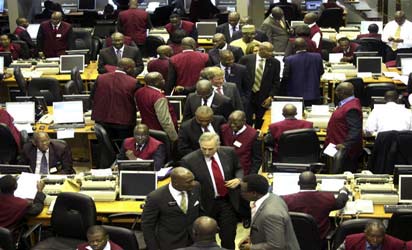
Nigerian Stock Exchange
Revelers ringing in of the new year this week need to watch out for the next day’s hangover. And investors may experience a similar feeling early in 2015 after a two-year run that has propelled U.S. stocks up by nearly 50 percent.
Headed into the last trading day of 2014, the S&P 500 has gained nearly 13 percent on the year, shaking off concerns about valuations thanks to improved economic growth and a very accommodative U.S. Federal Reserve. Add in dividends and the advance is 15 percent.
However, the S&P 500’s forward price-to-earnings multiple – based on 2015 earnings expectations – is at about 17 now, exceeding the 15-year average of about 15.
It means that a pick-up in profits growth may be essential if the market is to continue to add to its historic gains. And yet Wall Street analysts’ estimates for S&P 500 earnings growth for coming quarters are languishing in the mid-single digits.
With the Fed ready to begin raising interest rates for the first time in a decade, and the strong dollar providing a headwind for companies with overseas operations, a lot will depend on whether the recent strong growth in domestic demand can drive corporate profits higher than those estimates. Whether consumers and companies benefit enough from lower oil prices to more than offset the effects of the slide on the energy sector is also critical.
“Multiples almost always go down when the Fed raises rates – you’re going to have to depend on earnings,” said Jim Paulsen, chief investment strategist at Wells Capital Management in Minneapolis, which has $345 billion in assets under management.
The S&P 500’s forward price-to-earnings ratio sat at about 13 times at the beginning of 2013; it is now closer to 17, according to Thomson Reuters data.
Since 1940, such a level is associated with S&P returns (excluding dividends) of about 5 percent over a 12-month period, according to data from Citigroup.The high valuation concerns are starting to have some impact on trading. Stocks have been noticeably more volatile in the last few months; the CBOE Volatility Index, or VIX, has averaged 15.4 over the past 12 weeks, compared with 12.6 at the end of August.
Disclaimer
Comments expressed here do not reflect the opinions of Vanguard newspapers or any employee thereof.