*Josphat Mwaura
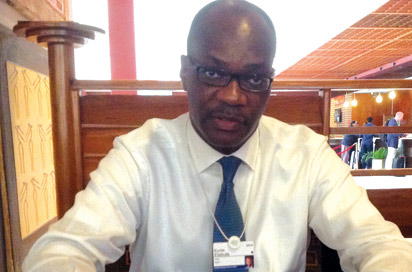
Mr Kunle Elebute is Partner & Head of Advisory Services, KPMG Nigeria. He spoke to Vanguard in an interview in Abuja. Elebute, supported by Mr Josphat Mwaura, Senior Partner and Chief Executive Officer, East Africa Region, during the interview, talked extensively on the challenges of Public Private Partnership, PPP in Africa and why the continent is not yet effectively maximising the gains of PPP.
By Favour Nnabugwu
How can Public Private Partnership be an effective vehicle for inclusive growth in Africa?
Let me start by putting this in perspective; when you look at the needs of the continent in terms of the infrastructure that we need for growth, whether you look at electricity, roads, railway, or airports, these are significant to the continent. The entire continent has what I call a significant development deficit and when you look at the resources available to the government, the government has no capacity to meet those needs and if we were to look to the government to meet those needs, then we will not be able to bring the bulk of the population in the economic net and that is where PPP comes in.
Also, if you think about it traditionally, all those were just exclusive priority of the government to invest in roads, rails, airports and over the years, the government has not invested enough in those sectors and even in the areas the government has invested, they haven’t had the cash to maintain them to the quality and standard required for growth. Many African countries have roads but the roads are not up to standard, they have electricity but it needs to be maintained properly.
So again, PPP can help to ensure that if you use private capital to invest in these areas, they can be more efficient in the government, they can actually run and maintain them properly such that the deficit that we described will not continue to grow. So we want to close the deficit but to use also private capital and expertise to build, maintain and run the infrastructure properly and sustain it.
The best example to give in this area is in the telecom space; how private capital, partnering with the government can unlock growth for the majority of people. When you look historically, telecoms are provided by state corporations and parastatals but under those regimes, the access to telephony was very limited and then we had the period of privatization where we brought in private operators and introduced mobile telephones. Now, Africa has transformed from limited 20 million access to over 700 million having access to mobile phones and then you can see how that transformed the lives of every single person. So that is just one example of how investments can transform lives and bring a lot of people into the economic bank.
The continent is yet to fully access PPP, why do you think that is so?
The PPP model has had what I will call mixed result within the continent. In some places, we have what will be considered state assets and some of these countries were hesitant to let go of the assets and we needed convinction to demonstrate that it is not so much about ownership that is important, it is access and service that are important, that it didn’t matter who owned the telecom service provider.
What is more important is the access to the service and the quality of the service that is being provided. So that is one of the issues. The second issue is that PPP framework depending on which one you are implementing, can be complex and that complexity requires skills and in some cases, we have not invested in the skills that are necessary to set up the appropriate framework for facilitating PPPs. So in some of the cases, we have burnt our fingers and as a result of burning our fingers, some governments have been hesitant to go on with some of these transactions.

*Josphat Mwaura
Apart from skills, one of the key elements and requirements for PPP is financing because as we said before, instead of government building roads or hospitals, you are now transferring that responsibility to the private sector. Private capital now needs to fund building the hospitals or building the roads and these are long-term assets and investments. So the nature of the financial market in Africa is such that most countries have short-term money; funding that cannot do one to two years type of investment but if you want to do PPP properly, you need funding mechanism that can provide funding for 10, 15 to 20 years. These are assets that will last over a long period of time and if you make financial market deep enough for investors to access and be able to raise the needed monies for PPPs and even if the government says we want to do PPPs but you have not raised the sector in a way that we can raise the capital, then clearly it is not going to happen and even when capital is available internationally, if you take foreign currency financing for a PPP venture, which the local user is going to pay you in local currency, there is a currency risk.
So these are amongst the challenges and let’s be frank, they are using more capacity on the ground in Africa so even if you say you want to build a standard road, where are the companies that will build those roads? They are mainly American or European companies or South American companies that build good roads and therefore if you want foreign companies to come and build your own infrastructure for you, they have to be able to accept the risk that is involved in that process and one of the main risks is change of government. In many countries, governments change and policies change and when policies change, the investor is at risk. So unless they see some pilot programs work successfully, they are not likely to step into the plate.
What are the fiscal imperatives for PPPs?
Well, I think you have to put a fiscal package of incentives together to make it attractive to the investor because the investor has alternatives for geography investing; so if you want to do a PPP in Africa, it is going to be compared with a PPP in India or in Brazil and if he thinks the Brazilian environment is more attractive and safer for him, he will go the Brazilian way so I guess the issue in Nigeria is if government wants to mobilise capital from private sector, they have got to put in place fiscal incentives that will make it attractive enough for them to consider Africa as a place to invest.
Remember we talked about this development deficit, so the first fiscal imperative is just the capacity of the government to finance this development deficit. That is really important. The second issue is that the risk which we have talked about that is associated with some of these projects, you do require incentives to make this more attractive to the private partner and thirdly, in some cases, if there is regime change, there is uncertainty and investors require guarantee of their investments.
Which particular sector of the economy do you think PPP can work best?
Initially, telecom was actually considered to be the most valuable asset. Now we have seen how that has transformed. The second major area is the deficit in electricity or power generation and the reason we are talking about some of these things is that it is possible to actually set out the specific project that you want to invest in, you can actually identify the cash flows, you can identify the market and you can package this in a manner that is attractive to a partner.
Then there is an area like railway construction because again, we don’t have sufficient railway coverage on the continent, you have got the trade that is already demonstrated between Africa and Europe, between Africa and China and India, between Africa and Brazil so when you look at ports, roads, railway and pipelines, these are areas that can actually be packaged and you can demonstrate the economic benefits of investing in this in terms of feasibility of these projects. So at the moment, we sought what President Jonathan called a Greenfield, even in schools.
Again, access to schooling, access to health, the number of opportunities available for public partnerships, are many.
One of the things you should know is that PPP is all about risk allocation between public and private sectors because in the past, the public will take the entire risk, the risk of contracting to the contractor, the risk of ensuring the contractor will finish the project on time, sometimes the contractor runs out of cash and abandons the project and even when the contractor finishes the project and hands it over to the government, the government is the one who has to run and maintain that asset, hospital, school, road, so PPP is about allocating risk between public and private sector in a more efficient manner than the government taking the risk themselves.
So if you can allocate the risk in a way you provide the necessary incentives for the private sector to want to participate in that venture and the government says you know my role; if it is a prison for example, my role in the prison is to bring prison inmates and once the court has said somebody is guilty, I take him to the prison but I don’t need to run the prison, I can actually outsource the building of the prison and the running of the prison to the private sector because they can do it better. Of course it is a prison, a prison is like a hotel which you check in on one day and check out in 30 years time. So that’s the thing about PPP, it is about where can you allocate risk in a way that both parties can do it in a more efficient manner than the government doing it on its own.
In Nigeria for example, all the ports have been concessioned and are being run by the private sector, there are some international airports that are also under the private sector, railway lines, roads, bridges. So the scope of PPP is enormous but it is all about allocating risk, when the risk is too high on the private sector, you will never get private capital and that means government should do it on its own but when you can allocate the risks between both parties then you can do PPP. So PPPs can’t be used for every single situation, it is only when the risks can be allocated between both parties that you can use PPP. So if I am constructing a standard road for example and the traffic is not there, somebody has to guarantee that traffic and if the guarantee costs more than building the road, why not allow the government build the road themselves?
Challenges still abound in PPP for Africa, what are the challenges and how best can we harness the strength in PPP?
We mentioned a number of them in terms of legal framework for example, skills to start up PPPs, I have mentioned things like financing for example even the capacity of private sector to actually deliver those PPPs for example so there are a number of challenges and the capital market as well. But I think we need to do one or two projects successful, if you do a bad project, a lot of people will say this thing can’t work which will give an excuse and in doing so you need to have expertise within Africa to locate the risk, that is one thing we at PMD do very well because we do have a fairly large group of practitioners in this sector based in South Africa and we are trying to replicate what is in South Africa to Nairobi and also into Lagos.
Today we have about 50 professionals in the continent; we want to grow to a 100 professionals across the continent in different sectors. So once we have the skills we can help the government to actually structure this kind of thing and even if the government employs somebody else to do the structuring for them, we can help to actually identify the misses, raise the finally scene and put the petals together.
So like we said power is one area for example but if you see in Nigeria, government has privatised, in Kenya for example Kenya is raising money to expand its whole network because they need more power so there are things already happening in the continent of Africa even though it is not as quick as wanted but the reality of life is that you can’t move quicker than the skills available.
One of the challenges with those who are unfamiliar with the continent will be coating the political risk and unfortunately I used the term unfamiliar with the continent deliberately because when you sit in the world economic forum or when you sit across a table with the private actors many do not understand the specific projects that they are dealing with. Already today there are hundreds of practitioners; private partners who are working within the continent and reaping benefits.
For example Kenya and Nigeria are facing more or less similar problems right now but we have got people in the energy sector, we have got our railways under constructions, we have a port construction in progress. So there are a number of people who will be looking at what I call the superficial risk but not understanding the value and that is part of the challenge so we have to tell the story and that story is required to be told by people who are sufficiently prepared in the government, acquiring the right skills, the right advisers to work with them, to package this story properly and to be realistic as well because you can’t be projecting numbers for traffic or for consumption of electricity or for telephone usage that are not realistic. So that’s where the technical advice is required or even in terms of the procurement process because eventually when you want to bring in an operator, a player or builder you need somebody with the capacity to help you evaluate that so that both of you are very clear on the transaction you are getting into.
In the financial market, the government has a role to de-risk the sector because you need long term financing, you need 15, 20 years money at fairly low interest rate to make it attractive enough to make projects bankable and if you don’t have the right mechanism to make projects bankable, nobody will come to the table. So it is a mixture of different things, management risk, political risk, risk of the sector itself, having the right skill, the right legal framework, having the right financial market. So it is a complete package of different things that will make it successful.
Disclaimer
Comments expressed here do not reflect the opinions of Vanguard newspapers or any employee thereof.