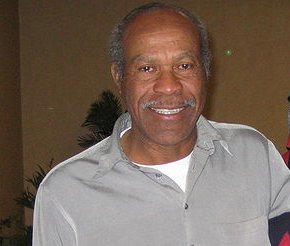
Lee Evans
Athletics Federation of Nigeria has banned legendary Lee Evans, the first human being to run 400m under 45 seconds.
Lee Edward Evans is a winner of two Olympic gold medals and was unbeaten in his hay days of track and field, performing his feat at the 1968 Olympic Games in Mexico.
He admitted giving an athlete food suplements and that incurred the wrath of Athletics Federation of Nigeria who insisted that it was wrong to do that without the consent of the team doctor. He will be ineligible to coach any athlete for four years. Abass Rauf, another coach who who was found guilty of administering banned drugs to an athlete was banned for life. The evidence against him was direct and that against Evans circumstantial which could see the American appeal or challenge the verdict in court..
The verdict was reached by the federation’s anti doping committee which met at the Obafemi Awolowo University Ile-Ife on February 17, 2014. They found the coaches guilty of giving a youth athlete performance enhancing drugs.
In a release on athleticsnigeria.com Evans and Rauf were said to be guilty.
The panel headed by Dr. Ken Anugweje, with Femi Ayorinde and Eric Cambell, an American, as members and James Eakyns as secretary discharged and acquitted the third accused Tony Osheku.
The athlete, a minor (name withheld) told the panel that Abass took her to a medical doctor who injected her with an unknown substance despite the fact that she was not sick.

She claimed she collapsed after the injection and when she was revived, she asked the coach why he brought her to be injected and he said she should have confidence in him and that he could not harm her. He also warned her not to disclose what happened to anyone although she confided in her mother.
She revealed that Evans introduced her to food supplements and amino acid and a sport drink when she was in Lagos State training camp.
Osheku told the panel he was not aware that Evans gave the athlete any subtance whether prohibited or not
Evans admitted he gave the athlete supplements (amino acid complete and metabolic infusions) between February and March 2013. He tendered the supplements he gave to the athlete and concluded that he gave the athlete the substance because women need supplements for their health and that the substance given were not prohibited.
Abass admitted he took the athlete to their family doctor for treatment for malaria when she complained of feeling feverish but she was never injected by the doctor, rather she was given tablets.
On cross examination, Abass contradicted himself by saying that the injection was given in the doctor’s apartment and not in the hospital
The panel concluded that Evans and Abass gave the athlete performance enhancing substances and that these substances may have been responsible for the analytical findings in her urine.
The panel was convinced that the analytical finding in her urine was not due to her fault or negligence and having provided substantial assistance to the panel by mentioning the coaches who gave her the subtances.
Osheku was exonorated because he had no knowledge of the substance given to the athlete.
The panel established that Evans gave the athlete supplements without the knowledge or consent of the medical doctor and assistant coach attached to the Lagos State Athletics team and concluded that it was not impossible that the substances he gave to the athlete could have been laced with prohibited substance found in the athlete’s urine. The panel therefore recommended a four year ineligility period taking effect from date of hearing February 17, 2014.
Abass was found guilty of administration of prohibited substance to a minor athlete and told the athlete not to tell anyone that she was injected without being sick.
He tried to conceal the truth by lyng to the panel thereby attempting to mislead the panel.
This case is viewed seriously particularly because a minor is involved. He also tried to mislead the panel who therefore recommended a lifetime period of ineligibility with reference to Article 10.3.2 of the code.
Disclaimer
Comments expressed here do not reflect the opinions of Vanguard newspapers or any employee thereof.