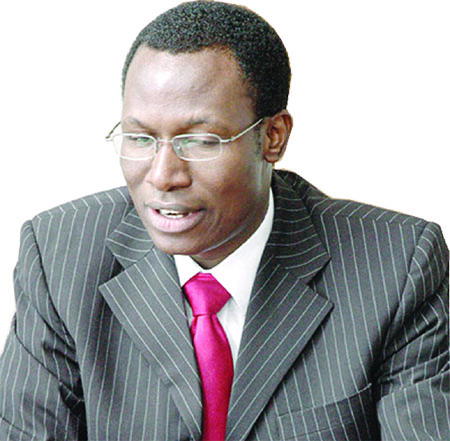
Gbenga Adebayo
By Prince Osuagwu
PRESIDENT, Association of Licensed Telecom companies of Nigeria, ALTON, Engr Gbenga Adebayo has not hidden his desires to see the Nigerian Telecom landscape lead the world market, if possible. This, according to him, is why he could hardly keep quiet when things are not going the right way in the sector.
In this interview, Adebayo warned that the country should not gloat at the usual attribute of the fastest growing economy in the emerging markets because if we do not fashion ways of consistently staying on top, the tide may sweep past us and to play catch-up in a technology driven world economy is hardly the best decision for a forward looking economy.
Having come to the last quarter of the year, how will you say the telecom industry performed so far?

*Gbenga Adebayo
There has been a lot of progress recorded in the Nigerian Telecoms sector in 2012 and2013. However, they have been challenging years. The industry witnessed sustained sporadic attacks on infrastructure by insurgents. This was the first of its kind, sudden and totally unexpected. It is a timely reminder that the telecoms industry is a part of the larger Nigerian economy and not immune to the wider socio-economic issues the country, Nigerian citizens and the larger business community are facing on a daily basis.
As you are aware, the industry is grappling with the common challenges of multiple taxation and regulation, power, theft and the dearth of supporting infrastructure, amongst other issues. The industry has over the past decade developed a certain degree of competence to manage these issues. For instance, operators have and continue to invest extensively in infrastructure, building transmission and power networks which are outside our core competence to ensure that we are able to deliver services to meet our license obligations. Due to the rising incidence of security issues, operators have now had to go through a learning curve to build and develop robust security networks. In simple terms, operators have built extensive power generating networks at a huge cost to ensure availability of service, and now operators have to build extensive security networks to support operations.
So are you saying operators have been left alone to address all these industry challenges?
I am not saying so. In fact, we have enjoyed immense support from government and the relevant agencies. The main point, however, is that the telecoms industry is not immune to the environment in which we find ourselves. With the extensive footprint the telecoms industry has had all over the country, our industry challenges are a lot more complex to manage.
I will give as example the extractive industry whose footprints are limited to where the natural resources are found. Companies in the extractive industry have to grapple with challenges limited to those areas. Telecoms operators on the other hand are forced to deal with issues which cut across geographical and geopolitical boundaries. If a local government or state is under siege, telecoms operators are also under siege.
Does that mean that the industry’s existence is currently threatened?
Well, yes, I will say that our sustainability as a successful industry is threatened. When I say successful industry I would like to point out that our successes as an industry can be measured by the giant strides we have recorded in the past decade. From a waiting time to connect a line of 9 months to 3 years to a connection within five minutes. In addition, the industry has been a shining example of foreign direct investment.
It is also an example of government’s successes in liberalization of utilities. If you believe that the telecoms industry has been successful, imagine how the power sector reform will impact lives in Nigeria when implementation is concluded. The telecoms industry has created thousands of jobs. We have created a value chain of suppliers and a support structure that indirectly creates jobs, pay substantial taxes and other levies to government.
The Industry also provides support and acts as the backbone for other major areas of the Nigerian economy such as the banking and financial sector. We have supported government in achieving a lot of its policy objectives. Take for example the SIM registration exercise which has been one of the most successful attempts to create a viable national database of Nigerian citizens. Operators have invested huge sums of money and committed extensive resources to deliver this database to the government with the full support and commitment of the NCC.
Looking at all these I would say if the industry is not adequately protected by effectively addressing the challenges I earlier mentioned, it risks a major collapse. Even a partial collapse of the Nigerian telecoms industry will have a huge impact on the socio-economic fabric of Nigeria.
So what is the industry doing to avert such collapse?
Well we have continued to work with our regulator, the NCC and the Government to find solutions to address our challenges. One of the many initiatives we are working on to address these challenges is getting the assets and infrastructure of the telecoms industry declared as Critical National Infrastructure. Just like the Oil & Gas Sector which has had its critical infrastructure protected by the Petroleum Production and Distribution (Anti- Sabotage) Act 1975.
By extension, we are working to achieve a similar protection for the telecoms industry through legislation to secure CNI in the best interest of the country. We strongly believe that until this legislation is passed, telecoms infrastructure and the industry as a whole will remain challenged.
You mentioned the SIM Registration exercise. Nigerians are wondering what has happened to all the data they provided?
Like I indicated, it was the first successful attempt to create a credible national database of Nigerian citizens, albeit phone subscribers. The SIM registration remains a continuous exercise. For example any new SIM card purchased is registered and the information uploaded to the NCC database. For the registrations that have already been done, our members have uploaded these data to the NCC database and are working with the NCC to ensure a robust reconciliation is done.
Disclaimer
Comments expressed here do not reflect the opinions of Vanguard newspapers or any employee thereof.