By Adeola Badru
A newly launched Education Sector Plan (2026–2030) for Oyo State has been described as a strategic roadmap providing clear direction for educational progress, infrastructure growth, and learning improvements across the state over the next five years.
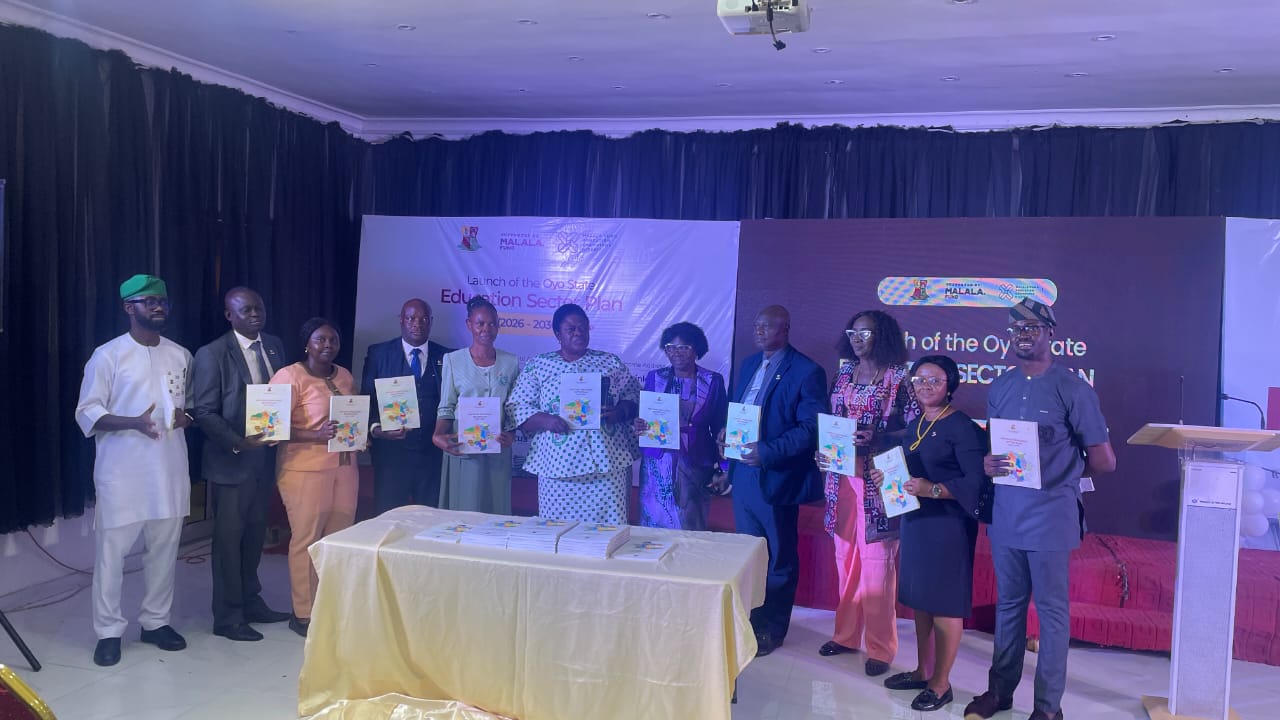
The official launch yesterday at the Ibadan Business School, Ibadan was organised by the Oyo State Ministry of Education, Science and Technology in collaboration with the Education Champions Network (ECN) and supporting civil society partners, with funding support from the Malala Fund.
Speaking on behalf of Aid for Rural Education Access Initiative (AREAi), one of the key partner organisations, Programme Manager, Ifeoluwa Adewole highlighted that the plan establishes a structured framework against which progress can be accurately measured through 2030.
“The importance of this plan is that we now have a clear map towards developing the education sector within Oyo State.“
“There is a benchmark to look forward to so we can assess what needs to be achieved between 2026 and 2030.”
Emphasising the collaborative nature of the effort, she explained that partnering directly with the state government was essential for long-term ownership and sustainability.
“If the Oyo State Government does not take full ownership of this, implementation will be difficult. It is essentially their project, and civil society groups are working side by side with them to ensure its adoption,” she added, noting that non-governmental organisations serve as a vital bridge between citizens and government.
Delivering the keynote address on behalf of the Commissioner for Education, Science and Technology, Mr. Olusegun Olayiwola, the Permanent Secretary of the ministry, Mrs. Toyin Oyinloye, described the plan as a framework for systemic transformation.
The ministry reaffirmed the government’s commitment to working alongside development partners and civil society to translate the plan’s objectives into practical, measurable interventions that improve access, quality, and inclusiveness.
Representing the Malala Fund, Executive Director of YouthHub Africa Rotimi Olawale pointed out that the document was specifically designed around the real needs of school children in the state.
“Education remains the bedrock for lifting communities out of poverty. This plan was developed through multi-sectoral collaboration involving the Ministry of Education, sister ministries, including Planning, Health, Women Affairs, and the Disabilities Commission—and various civil society organisations.”
He stressed that the success of the document will ultimately rely on action, noting: “The plan will not implement itself; the most crucial phase begins now.”
Highlighting the inclusive drafting process, YouthHub Africa emphasised that public school students, both boys and girls, were actively involved in consultations to ensure the voices of young beneficiaries directly informed policy priorities.
Also underscoring the joint process, Consultant for the Education Sector Plan and Executive Director of Onelife Initiative Sola Fagorusi noted that the document was the product of over a year of continuous dialogue, inter-departmental reviews, and broad stakeholder engagements.
“The Education Sector Plan is not just a document; it is a unifying framework bringing together the shared aspirations, priorities, and commitments needed to advance education in Oyo State between 2026 and 2030,” he said, adding that wide distribution of printed copies will ensure all stakeholders share a common direction for monitoring and accountability.
Disclaimer
Comments expressed here do not reflect the opinions of Vanguard newspapers or any employee thereof.