By Michael Tidi
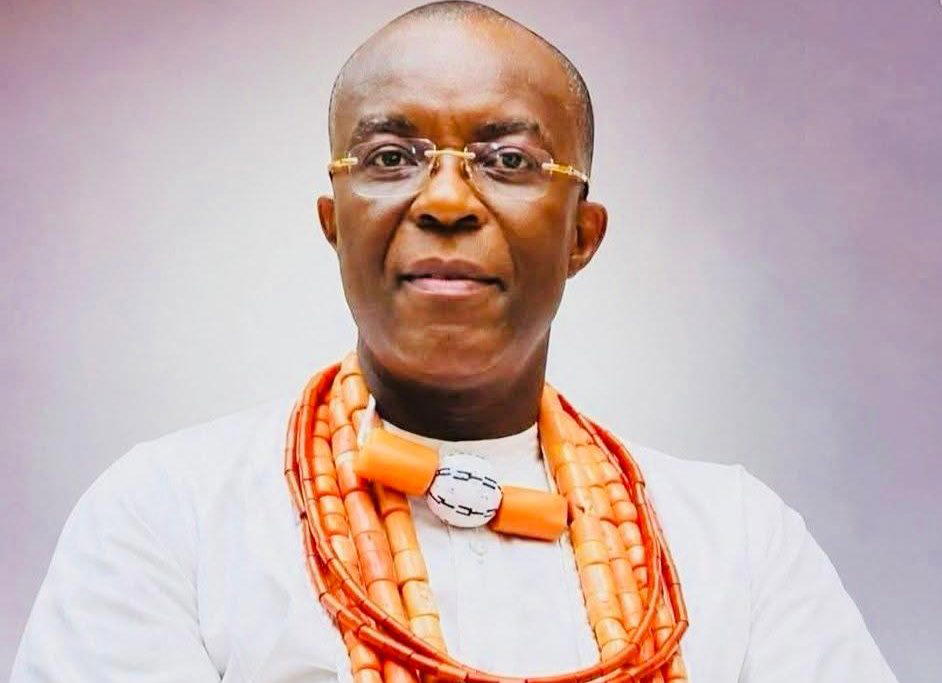
Some deaths are private tragedies, confined to the walls of a family home. There are others that become communal losses because the life of the deceased was woven into the history of a people, an institution or a political generation. The death of Chief Dr. Joseph Sisanmi Otumara belongs to the latter category. Dr. Otumara died in Warri on Friday, June 12, 2026, at the age of 65, after a period of illness. His passing has brought grief to his family, the Warri Kingdom, his friends and associates, and the political family in Warri South with which his name became closely associated. On September 5, when his remains are committed to mother earth, Warri will not merely be burying a former local government chairman, commissioner or prominent chief. It will be bidding farewell to one of the men who helped shape a significant part of its political history.
John Donne wrote that “any man’s death diminishes me, because I am involved in mankind.” The passing of Dr. Otumara carries that meaning for Warri South. To many, he was Dr. Otumara; to others, Osuelele. He was a doctor, politician, public servant and traditional chief. But beyond these descriptions was a man who had acquired political relevance long before many of us entered the arena. By the time my own political journey brought me deeply into Warri South politics, Otumara had already spent years building relationships, navigating political currents and contributing to the establishment and sustenance of the political family that I would later become part of. He belonged to an earlier generation, and his footprints were already firmly embedded in the political terrain.
Dr. Otumara was a three-time Chairman of Warri South Local Government Council, serving in 1996, 1997 and from 1999 to 2002. Years later, I would occupy the same office. I was not his immediate successor, as several political generations had passed between his tenure and mine. Another chairman has since succeeded me. That is the curious arithmetic of power: the office remains while the occupants change. No one owns public office. We occupy it for a season and hand it over.
Otumara’s influence went beyond the council chair. He emerged as the political leader of the Warri South Political Family and contributed to its establishment, growth and sustenance. His leadership was built through participation, organisation, relationships and experience. Politics is not only about elections; it is also about people, institutions, networks and memory. Otumara understood this.
His public service career tells the story of a man whose usefulness transcended administrations. Governor James Ibori appointed him Commissioner for Special Duties and subsequently Commissioner for Housing. Under Governor Emmanuel Uduaghan, he was appointed Commissioner for Health, bringing his medical background directly into public healthcare policy. In that capacity, Otumara played an important role in programmes including the Free Under-Five Healthcare Programme, Free Maternal Healthcare Programme and Free Rural Healthcare Programme. These initiatives sought to bring healthcare closer to children, pregnant women and rural communities. His contribution to the development and growth of the Delta State University Teaching Hospital, Oghara, is also part of that record.
His political journey continued into the administration of Senator Dr. Ifeanyi Arthur Okowa. In 2015, Otumara served as Director-General of Okowa’s governorship campaign. It was a position of considerable responsibility and an indication of the confidence reposed in his political judgement and organisational ability. Former Governor Okowa, in his tribute after Otumara’s death, described him as “a great statesman, a great politician and community leader” and recalled that Chief Otumara “played a great role” in his race to Government House, Asaba. Those words carry weight because they came from the man whose political journey Otumara had helped steer. Behind electoral victories are people who work away from the cameras. Otumara was one of those men.
The relationship with the Okowa administration did not end with the 2015 campaign. During Okowa’s first term, Otumara served as Special Adviser on Health. In the second term, he was appointed pioneer Chairman of the Board of the Warri, Uvwie and Environs Development Agency, WUEDA. He was subsequently retained in that position when Governor Sheriff Oborevwori assumed office and reconstituted the agency’s board in 2023. He remained Chairman until his death. That continuity was significant. His experience was considered valuable enough to be retained even when the political leadership of the state changed.
He was also the Obarisuwa of Warri Kingdom, a title conferred on him in 2016 by the late Olu of Warri, Ogiame Ikenwoli. It is a poignant turn of history that the Olu who bestowed that honour has himself since joined his ancestors, just as the man he honoured has now followed him. The passage of time reminds us that titles and offices are temporary, while institutions endure. Otumara’s public life therefore extended beyond party politics and administration into the traditional institution and cultural life of his people.
Institutional memory was perhaps one of Otumara’s greatest qualities. He remembered people, events and political turns. He could tell you not only what happened but why it happened and who stood where when it happened. A conversation with him could begin with Warri South politics, travel through Nigerian and African history and end in geopolitics. He was, in the best sense, an encyclopedia of the people and times he had encountered. In a political culture where yesterday is sometimes forgotten whenever it becomes inconvenient to today’s ambition, such memory was an asset. He understood the value of remembering where a political journey began.
My relationship with him, like most human relationships, was not without its complexities. We did not always see every matter from the same angle, but that does not diminish my appreciation of his place in the political history we shared. I write as someone who came later, participated in the political family he helped build and eventually occupied the same office he had once occupied. There is one conversation with him that remains particularly memorable. When I became Chairman of Warri South at 37, there was an assumption in some quarters that I was the youngest person ever to occupy the office. Otumara corrected that impression, telling me that he had been younger than I was when he first became chairman. It was history reminding the younger man that no generation arrives on virgin soil.
There is another reason his passing resonates so deeply. INEC’s timetable for the 2027 general elections is now in operation, and the campaign period has commenced. The 2027 contest is no longer in the distance. It has begun. Candidates and political parties are taking their messages to the people, seeking support and building coalitions. It is precisely at such a time that the value of a man like Otumara becomes apparent. Here was a man who had directed a major governorship campaign, distinguished himself as a political tactician, led a significant development agency, and spent decades immersed in the people, politics and currents of Delta State. His experience would have been needed. His counsel would have been valuable. His institutional memory would have mattered. But as the 2027 campaign gets underway, Dr. Otumara will not be there.
The campaigns will go on without him. Political strategies and questions of alliances, reconciliation and succession will be considered without his long memory. That is one of death’s painful ironies: we often appreciate a person’s value when circumstances arise that require precisely what he had to offer. Otumara had seen friendships formed and tested, alliances built and broken, generations rise and give way to others. He knew the actors and history behind many of today’s stories. Now that voice has fallen silent.
This is why his death should not be reduced to the politics of succession. There will be time for political calculations. There will be time for the political family to determine its next direction. For now, September 5 should be about farewell, family and the Warri Kingdom. The politics will still be there when the mourners return home. That is the irony of political life: politics survives politicians, institutions survive officeholders and the chair survives the chairman.
Dr. Otumara leaves a substantial public record: three terms as Chairman of Warri South, service as Commissioner for Special Duties, Housing and Health, leadership of a major governorship campaign, service as Special Adviser on Health, pioneering leadership of WUEDA, service to his political family and a place within the traditional institution of the Warri Kingdom. But records are only one part of legacy. He also leaves memories of political battles, friendship, mentorship, conversation and assistance. No man is remembered in exactly the same way by everyone who knew him, but some men become impossible to exclude from the history of a place. Otumara is one of those men.
Every generation is a bridge between what came before and what comes after. Otumara belonged to a generation that helped shape the political landscape we inherited. Those who came later have a responsibility not merely to occupy the spaces left behind, but to understand the history that produced them. I remember him as a man who was already part of the story when many of us arrived, as the political leader of a family whose foundations he helped establish and sustain, and as one of those voices we would have needed to hear as another political chapter unfolds.
History has a way of correcting our sense of importance. Dr. Otumara played his part. He served the council, Delta State, his political family and the Warri Kingdom. He built institutions, influenced people and participated actively in the affairs of his time. Now his own time has come to an end. There will be time for politics. There will be time for succession. For now, there should only be farewell.
Farewell, Dr. Otumara. You were part of the story before many of us arrived. You helped write chapters that those who came after you inherited. And now, as another political chapter is being written, one of the voices that could have told us where the earlier pages began has fallen silent. We will have to listen to the silence and remember.
May your soul rest in peace.
…Tidi, economist, lawyer and public policy scholar, is the immediate past Chairman of Warri South LGA. .
Disclaimer
Comments expressed here do not reflect the opinions of Vanguard newspapers or any employee thereof.