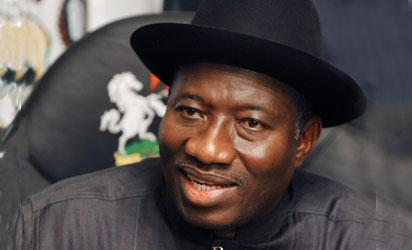
President Goodluck Jonathan
By Obi Nwakanma
The president recently made changes at the top echelon of his national Security advisory staff, and this has, not unexpectedly, attracted all kinds of reactions, most of it, frankly dilatory and ignorant. On return from his Brazilian jamboree, the president summarily removed former National Security Adviser, General Owoeye Azazi, whom he replaced with Mr. Sambo Dasuki, a retired Colonel of the Nigerian Army.
He also removed the Minister of Defence, and there has not been any replacement yet. For a while though, speculation was rife that General Gusau, former National Security Adviser was penciled down for Defence. The president’s later reaction in response to questions about these changes suggests that he had relieved these men of their duties, not because they were not hardworking, but because the fight against Boko Haram and other terrorist groups required a new strategy.
It was part of that new strategy to bring Sambo Dasuki, son of the deposed Sultan Ibrahim Dasuki of Sokoto, and former military aide to General Ibrahim Babangida. Mr. Dasuki presumably is to design the silver bullet against Boko Haram. But there are no silver bullets in these matters. There were muted noises of disagreement about the president’s choice and its timing. General Azazi himself in a powerful parting shot basically accused the president of Nigeria of pussy-footing on national security issues.
Azazi revealed that he had sought the clearance of the president to bring in and interrogate a former Nigerian military Head of state over suspicions of his involvement in the unfolding terrorist campaign. The president, Azazi said, not only rejected his proposals but accused his National Security Adviser of an attempt to compromise and bring down his presidency. I did not know what to make of Azazi’s statement and claims.
First, the National Security Adviser to the president does not determine who to interrogate and how. He formulates policies and advises the president on national security protocols. The National Security Adviser has no field operational function so to say. The key field operators on national domestic and foreign security remain the heads of the Nigerian Intelligence and secret Services.
The heads of these services determine, through their operational capacities the threat levels that confronts Nigeria, and using both covert and overt means, anticipates and hopefully nips such threats in the bud. It should therefore be the duty of the Director of the State Security Services – the SSS , the domestic intelligence arm of the Nigerian Secret Service, to determine who to arrest, interrogate, or place under surveillance based on well-grounded rather than whimsical evidence.
If the head of this agency has such an iron-clad proof that a former Head of State of Nigeria has met, is connected, and provides even abstract logistical support to a terrorist group currently attacking the foundations of Nigeria, that agency must seek a presidential clearance to bring in the subject for interrogation.
But the proof must be iron-clad, otherwise, the president is profoundly correct to reject any moves to violate the person and privacy of a former Head of state. However, the president fails if he thinks his office is higher and requires greater protection than the Federal Republic of Nigeria. By that I mean, he must consider every actionable intelligence, and act with conviction and courage, when such is provided to him by the agencies constituted to protect the nation.
In this matter, and as this Boko Haram issue grows more complex, there can be no sacred cows. All legitimate options must be on the table. In any case, there are many who see that by ceding his National Security leadership to o
fficers with connections to General Babangida, Goodluck Jonathan has become an unwitting proxy to a very powerful faction of the Nigerian elite.
Worse still, he may have been railroaded into handing over Nigeria’s national security and defence infrastructure to a faction capable of raising the stakes in this cat- and-mouse game of terrorism.
Is Sambo Dasuki the right man for the job? Well, the president has sought clearance from his American principals, and the US has endorsed Sambo Dasuki. So, Sambo Dasuki is alright – he is made in America.
What I find quite increasingly intriguing is how Nigeria’s domestic national security issues have become a matter for American intervention. And here I was thinking all the while that Nigeria was a sovereign nation.
Last week, Nigerian Christians even called for the US blacklisting of Boko Haram as a terrorist organization, as if that act alone, guarantees the safety of Nigerians in their own country. So, the Americans name Boko Haram a terrorist organization tomorrow, in what particular way does it stop the attacks on Nigeria? Of course American reluctance to blacklist Boko Haram, is a very intriguing fact in itself.
This has led many to increasingly suspect, that on this Boko Haram question, there is far more than meets the eye. Yes. The Nigerian media, without the real tools to go beyond the surface and investigate this phenomenon has also, I must confess, brokered more myth than reality.
No newspaper editor or National Security reporter can truly say that they know anything beyond the general surface, or that they have sources within the intelligence community, that might tell them exactly what Boko Haram is. The media lapped up the profile quickly provided to them about Sambo Dasuki, but where does he fall within the equation?
What is say, the connection between Sambo Dasuki, who was once wanted for coup plotting in Nigeria, with the current Sultan of Sokoto, whose own career in Nigeria’s military Intelligence Services, having served as military attaché in the Nigerian Embassies in Saudi Arabia and Pakistan, in the crucial years in the formation of Al-Qaeda, and his presumable contacts within Pakistan’s dreaded ISI is both intriguing and vital.
How does it play out? The Sultan is either an asset or a powerful adversary. In the general context of developments in Africa from Egypt, to Sudan, Somalia and Mali, where does the elite of the Islamic North – I make this clear distinction with the Christian North – fit in the developing situation, particularly given their historical alliances with the powerful Islamic forces in that conurbation?
We must study the history of the Jihadi movement starting with the Mahdist movement in Sudan and Dan Fodio Jihad in the 18th century, and its current Wahhabi roots in Saudi Arabia. Are we in the grip of a 21st century rebirth of these movements? These are questions that we must somehow answer because frankly, I do not think that the president is getting a broad, global, and strategic picture of these evolving situations.
Disclaimer
Comments expressed here do not reflect the opinions of Vanguard newspapers or any employee thereof.