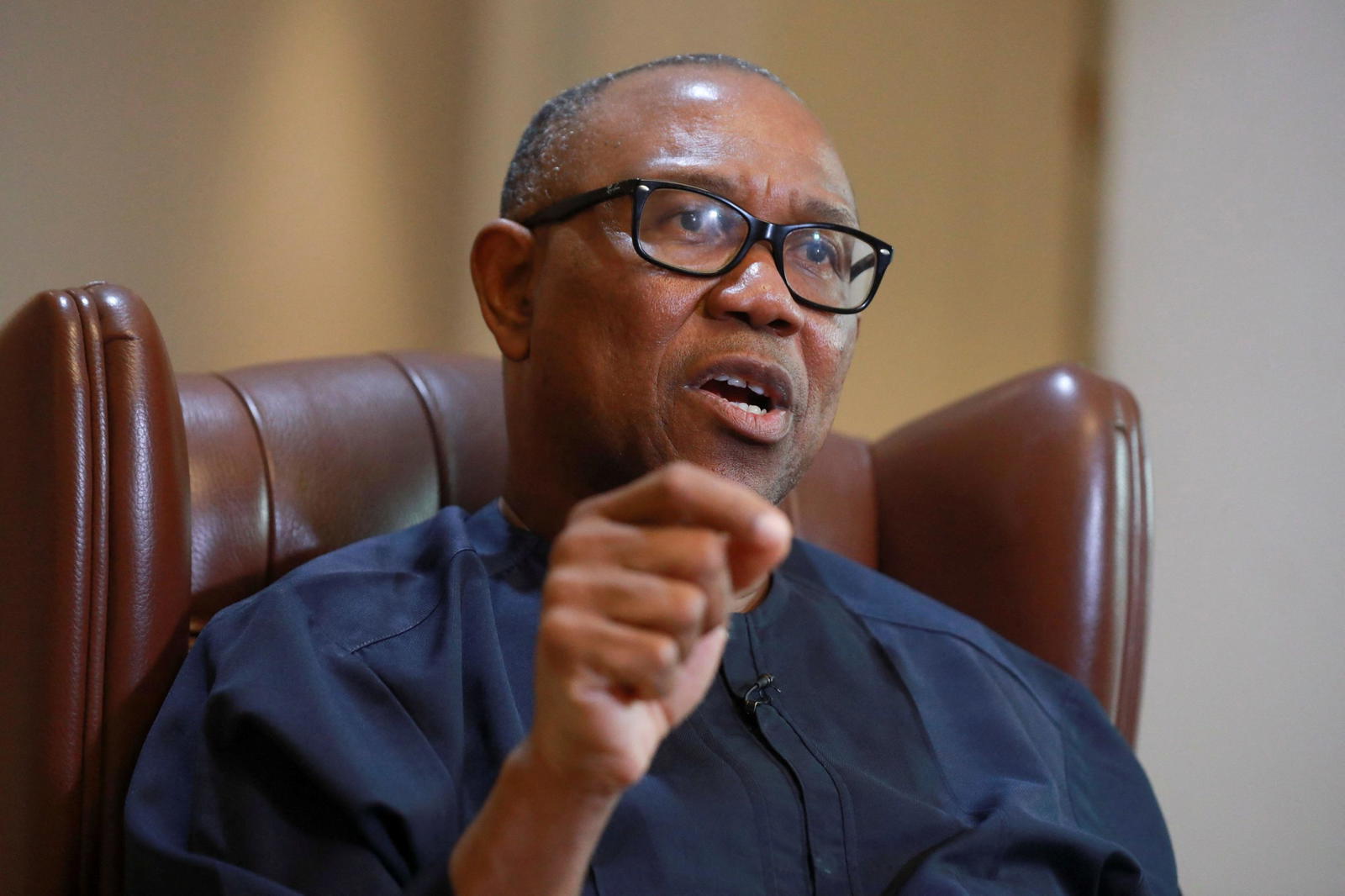
Peter Obi
By Henry Umoru
ABUJA — Former Labour Party presidential candidate, Peter Obi, has criticised the Federal Government’s response to recent comments by the Catholic Bishops’ Conference of Nigeria (CBCN), urging President Bola Tinubu to view the bishops as trusted voices offering constructive feedback rather than political opponents.
Obi said religious leaders play an important role in reflecting the concerns of ordinary Nigerians and should not be attacked for expressing their views on national issues.
In a statement issued by his media office and signed by spokesman Idris Zekeri, Obi said the Catholic Church has consistently served as a moral voice in the country by commending governments where necessary and speaking out on issues affecting justice and the public good.
He noted that other religious organisations, including the Christian Association of Nigeria (CAN), the Nigerian Supreme Council for Islamic Affairs (NSCIA), Jama’atu Nasril Islam (JNI) and the Supreme Council for Shari’ah in Nigeria (SCSN), have also raised concerns over the country’s economic and security challenges.
According to Obi, governments should welcome constructive criticism rather than regard dissenting opinions as political opposition.
Drawing from his experience as governor of Anambra State, he said engagement with traditional rulers and religious leaders, including those who criticised his administration, contributed to improvements in governance, particularly in education and healthcare.
In the statement titled “When a Government Declares War on the Truth,” Obi described recent criticisms directed at the Catholic bishops and Cardinal John Onaiyekan following their remarks on national issues as unnecessary.
He argued that Nigeria’s security, economic and social challenges require open engagement with differing views instead of attacks on individuals and institutions that raise public concerns.
Obi also recalled that during the military era, religious leaders were able to express their views on national issues without being vilified, citing Pope John Paul II’s 1998 visit to Nigeria, during which the late pontiff publicly advocated democratic governance and the release of Chief Moshood Abiola.
He further questioned what he described as inconsistency in the Federal Government’s approach to the Catholic Church, noting that while President Tinubu attended the inauguration of Pope Leo XIV in Rome, some government officials and supporters later criticised senior Catholic clerics over their comments on national affairs.
Obi maintained that issues such as insecurity, inflation, unemployment and poverty affect all Nigerians regardless of religion or ethnicity.
He added that feedback from religious leaders provides government with valuable insight into the experiences of citizens at the grassroots and should be considered in policymaking rather than dismissed.
According to him, listening to such perspectives can help bridge the gap between government policies and the realities faced by many Nigerians.
Disclaimer
Comments expressed here do not reflect the opinions of Vanguard newspapers or any employee thereof.