By Olayinka Ajayi
The Minister of Industry, Trade and Investment, Dr. Jumoke Oduwole, has said that Nigeria’s Fast Moving Consumer Goods, FMCG, sector is a reflection of how the country’s economy works.
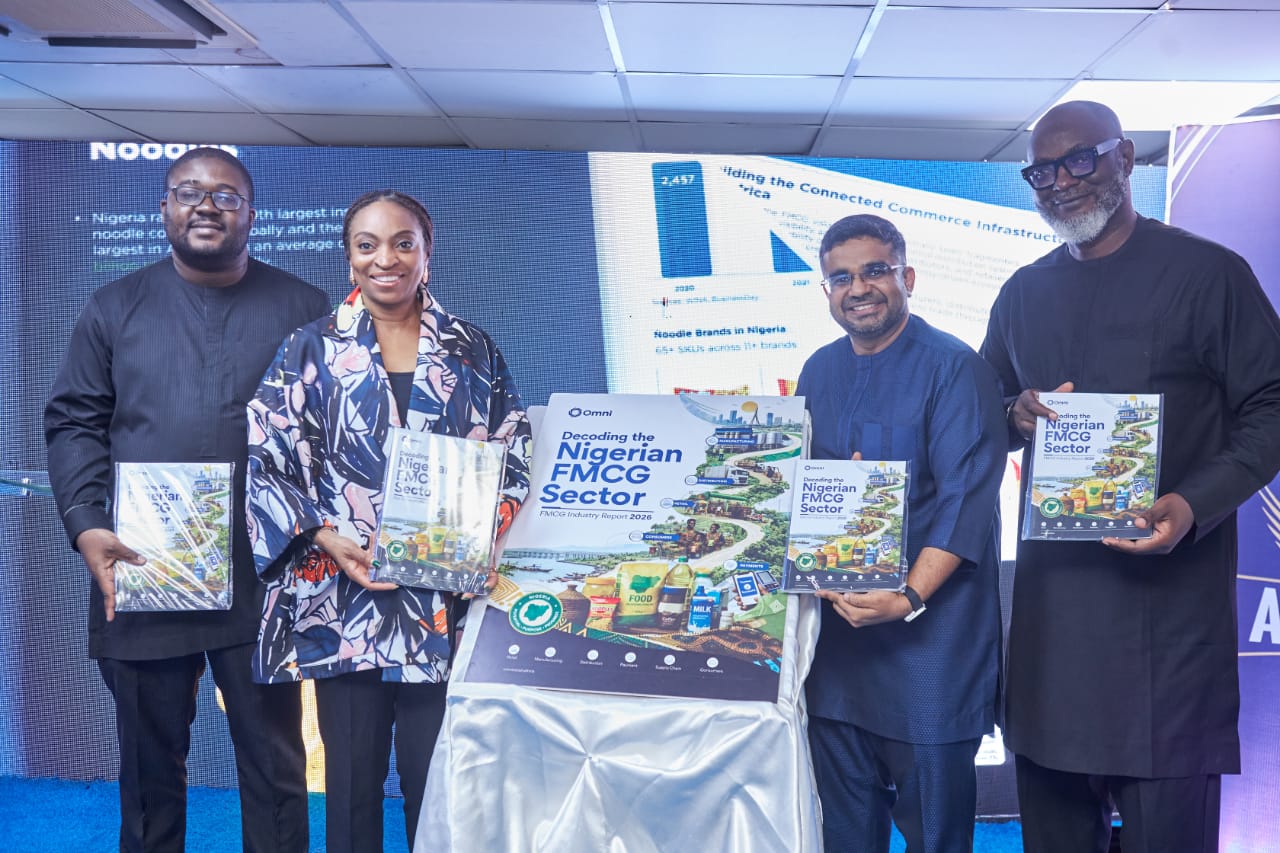
Speaking on Friday at the Omni Insights Forum, Oduwole said data always helps support government policies as she commended Omni for its 2026 milestone report marking 7 years of transforming trade in Nigeria.
She explained that FMCG connects agriculture to manufacturing, manufacturing to logistics, and logistics to retail every product on the shelves.
Oduwole said, “It’s not only a celebration of your achievement. It is also an opportunity to reflect on the future of Nigerian commerce, the resilience of our enterprises, and the role of technology, data, and innovation in building a stronger, more inclusive, and competitive economy. And so it is a pleasure to join you to launch this critically important report on Nigeria’s fast-moving consumer goods sector, because data is really what supports government in all that we do in the policy space, and so thank you for doing this.
“Nigeria’s FMCG sector is far more than a commercial category. It is one of the clearest reflections of how our economy works every day. It connects agriculture to manufacturing, manufacturing to logistics, logistics to retail, retail to winners of Nigeria, and of course all enabled and embedded through technology.
“So behind every product on the shelf is a value chain of farmers, processors, manufacturers, transporters, warehouse operators, wholesalers, retailers, market women, young entrepreneurs, financial institutions, and technology providers. And when these sectors grow, jobs are created, supply chains are deepened, local production expands, and households benefit from better access to essential goods.
“At the center of this ecosystem is Nigeria’s micro, small, and medium-sized enterprises.
“Nigeria’s more than 14 million MSMEs account for the overwhelming majority of businesses in our economy today, and power approximately 80% of retail transactions across the country, largely through informal channels. Across markets, neighborhood stores, distribution channels, and retail networks, these enterprises ensure that goods reach households in every part of our country.
“They are the foundation upon which our consumer economy is built, and I’m glad that you’ve taken them from being invisible to access to credit, to formalization, to innovation, to putting them on the map. To SMEDAN, more than 500,000 MSMEs have now been captured in the national MSME database, strengthening formalization and improving the ability of government to design better targeted support. We’re also seeing the transformation of the retail and distribution landscape.
“Traditional wholesale systems are being complemented by technology-enabled distribution platforms, digital commerce, embedded finance, direct retail models, and app-smart delivery networks. These innovations are improving visibility, reducing inefficiencies, expanding access to working capital, and helping small retailers participate more effectively in commerce. It is exactly why reports such as this one are being launched.
“Good policy requires good evidence. Good investment decisions require empirical data. Strong markets require visibility.
“And this report will help bring sharper insights into the structure, opportunities, and constraints of Nigeria’s FMCG ecosystem. Under the leadership of President Bola Tinubu, government is implementing a comprehensive reform agenda to strengthen Nigeria’s productive capacity, expand trade, attract investment, support enterprise growth, and create sustainable jobs.
“At the Federal Ministry of Industry, Trade, and Investment, our mandate is clear: to build an enabling environment where businesses can invest, produce, trade, export, and scale.
“These reforms are already supported by measurable outcomes. Nigeria recorded approximately $6 billion in non-oil exports, representing 11.5% growth. With access of $1 billion, which is nothing to be sneezed at, over $50 billion in investment commitments in the term of this administration have been facilitated across priority sectors.
“The Bank of Industry recorded approximately N636 billion in total disbursements, including N56 billion in MSME loans and N5.2 billion in grants.”
In his opening remarks, CEO of Omni Deepankar Rustagi thanked the Minister for taking time to join the 7th anniversary.
He said, “Your presence reflects the growing importance of commerce, trade, and entrepreneurship in shaping Nigeria’s future.
“There is a simple belief that guides much of what we do at Omni.
“We believe if you want to understand the direction of an economy, follow the movement of goods. Look at what consumers are buying. Look at what retailers are stocking.
“Look at what distributors are trading. Look at where capital is flowing. And you begin to understand where the nation is heading.
“Because retail is where economy becomes real. Long before economic statistics are published, before reports are written, and before headlines are made, millions of transactions are already taking place across different shops, kiosks, markets, and neighborhood stores throughout Nigeria”.
Disclaimer
Comments expressed here do not reflect the opinions of Vanguard newspapers or any employee thereof.