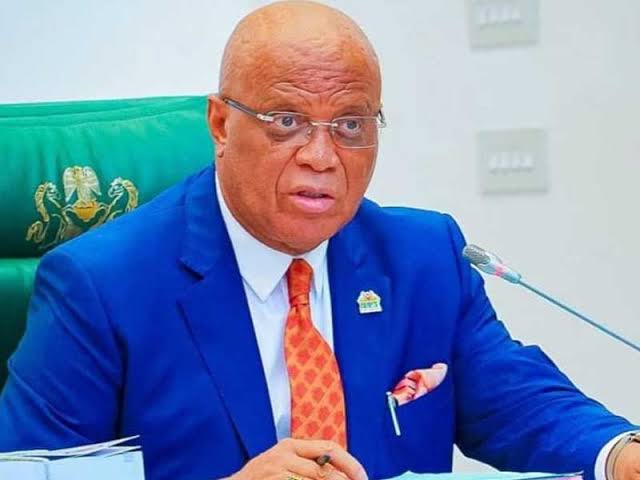
Gov Umo Eno of Akwa Ibom State.
By Uko Etim
UYO—The Special Assistant to Governor Umo Eno, Venerable Richard Peters has dismissed claims of financial opacity, insisting that Eno’s administration spends only within budgetary provisions duly approved by the State House of Assembly.
Peters who responded to a live radio programme on Tuesday in Uyo, said that every kobo expended by the current administration is tied to clearly defined budgetary allocations, adding that spending outside legislative approval is legally impossible.
Recently, criticisms have trailed Eno’s administration over “humongous” spendings.
But the the aide said, “Before rushing to sensational claims and graphic insinuations, it is important to ground the conversation in the basic realities of public finance and governance. Government spending does not occur in a vacuum or at the whim of any individual,” the aide stated.
He explained that no state government has the legal authority to spend beyond its appropriation without supplementary processes approved by the legislature, noting that Governor Eno operates strictly within that framework.
Peters further disclosed that Akwa Ibom recorded a fiscal performance index above 80 percent in 2025, according to regulatory and oversight bodies that track revenue inflows, expenditure patterns, and development outcomes.
“With several indicators already pointing to improved budget performance this year, it becomes difficult to sustain claims of financial mismanagement without evidence drawn from official records,” he said.
According to him, the state’s budget performance documents, expenditure breakdowns, and allocation details are in the public domain and accessible to journalists, analysts, and citizens through verified government channels.
He questioned what critics were demanding that was not already available, stressing that accounts of state revenue, federal allocations, derivation funds, and expenditure profiles are documented and published.
The aide added that governance communication has been consistent through sectoral briefings by ministries, departments, and agencies, as well as regular media engagements highlighting ongoing projects and policy milestones.
He maintained that major investments such as housing schemes and road infrastructure spanning over a thousand kilometers are funded from the same monthly inflows being questioned by critics.
“Governance should be assessed through evidence, documentation, and measurable outcomes, not through emotional slogans or misleading graphics,” he said, urging critics to review published budgets and audited reports instead of making rhetorical accusations.
Disclaimer
Comments expressed here do not reflect the opinions of Vanguard newspapers or any employee thereof.