…as Nigerian teachers earn global recognition for groundbreaking classroom research
By Joseph Erunke
The British Council has declared that Nigeria’s quest for quality education can only be achieved through evidence-based teaching methods, innovation, and research-driven reforms, warning that assumptions and outdated practices can no longer address the complex challenges facing classrooms.
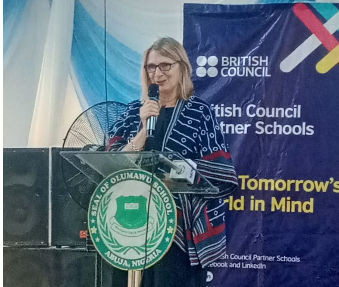
Country Director of the British Council in Nigeria, Donna McGowan, made the assertion on Tuesday in Abuja during the British Council Action Research Grants Showcase, where outstanding Nigerian educators were celebrated for pioneering research projects that are transforming teaching and learning outcomes.
McGowan stressed that while increasing access to education remains a priority, the real challenge lies in ensuring that students receive high-quality learning experiences capable of preparing them for an increasingly dynamic and technology-driven world.
She said education systems globally are under growing pressure to equip learners with critical skills for the future, insisting that sustainable school improvement must be anchored on research, data, and practical classroom evidence rather than speculation.
“The future belongs to schools that are evidence-driven, learner-centred, inclusive and wellbeing-focused,” McGowan declared.
According to her, the British Council’s Action Research Grants Programme is empowering teachers and school leaders to identify challenges within their classrooms, develop practical solutions, measure their impact, and share successful strategies with colleagues across the education sector.
She noted that some of the most significant educational reforms often begin as small, locally driven innovations that eventually influence broader policy and practice.
The British Council chief explained that the initiative is part of a global programme designed to help educators investigate and solve context-specific challenges affecting teaching and learning.
Through the British Council Partner Schools network,comprising more than 2,600 schools across 40 countries, including over 400 schools in Nigeria,educators are connected to a worldwide community committed to educational excellence.
McGowan highlighted the remarkable achievement of Enobong Imaha, an English teacher at Pegasus School in southern Nigeria, who emerged as one of only 12 researchers selected globally during the programme’s inaugural research cycle in 2023.
According to her, Imaha’s research on sustaining positive classroom culture through teacher development triggered professional training programmes, school reforms, and increased student participation, leading to improved behaviour management, learner wellbeing, and stronger academic outcomes.
The educator’s success has since earned her a role as a global mentor, supporting fellow researchers in different countries.
The British Council also recognised three Nigerian educators selected under the 2025–2026 Action Research Grants Programme for tackling pressing educational challenges through innovative research.
Among them is Chinedu Vincent Okoro of Olumawu School, Abuja, whose study examined how mindfulness techniques, including breathing exercises and yoga sessions, could reduce academic stress and improve concentration among secondary school students.
McGowan said the findings demonstrated significant improvements in students’ emotional wellbeing, classroom engagement, and learning readiness.
Another award recipient, Ayotomi Fasuyi, Principal of Charles Dale Memorial International School, Port Harcourt, investigated the impact of the Online Support for Schools (OSS) platform on teacher performance. Her research found that 97 per cent of participating teachers completed the digital learning modules, underscoring the growing potential of technology-driven professional development in strengthening classroom practice.
Similarly, Innocent Katule, a Mathematics educator and Assistant Coordinator of Continuing Professional Development at Deeper Life High School, Opete Campus, Delta State, explored strategies for combating Mathematics anxiety among students through targeted teacher-development interventions.
His research contributed to the creation of more supportive, engaging, and learner-friendly classroom environments, particularly for students struggling with the subject.
Reaffirming the British Council’s commitment to educational partnerships, teacher development, research, and international collaboration, McGowan commended participating schools and researchers for their creativity, leadership, and dedication to improving educational outcomes across Nigeria.
She called for stronger collaboration among governments, schools, communities, and development partners to drive meaningful reforms capable of transforming the country’s education system.
During the event, the researchers presented findings from their respective studies, offering practical solutions to some of the most pressing challenges confronting schools, from student wellbeing and academic stress to teacher performance and mathematics anxiety.
The showcase underscored a growing consensus among education stakeholders that the future of Nigerian education lies not merely in expanding access to classrooms, but in empowering teachers with the research tools and innovative practices needed to deliver measurable learning gains.
Disclaimer
Comments expressed here do not reflect the opinions of Vanguard newspapers or any employee thereof.