By Ayo Onikoyi
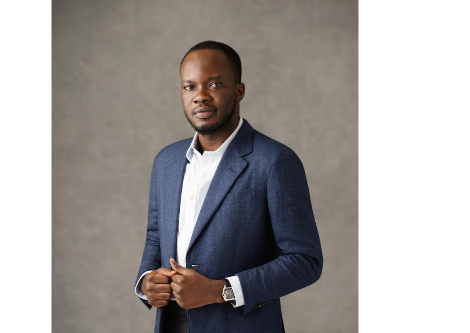
Ifelade Ayodele, a Nigerian fintech entrepreneur, does not describe himself as a founder first. He thinks in systems, in patterns, in the quiet relationships between problems and the structures that sustain them.
It is a mindset that traces back to his earliest training in Physics at the University of Ibadan, where he learned to see complexity not as chaos, but as something that could be understood – then rebuilt.
Born in 1993 in Ilorin, Nigeria, Ayodele was raised in a conservative household, an environment that emphasised discipline, education, and quiet ambition. Those early influences shaped both his intellectual curiosity and his measured approach to decision-making. Even then, there was a consistent thread: a tendency to question how things worked, and why they often didn’t.
His academic path reflected that instinct. At the University of Ibadan, he earned a Bachelor of Science degree in Physics, grounding himself in analytical thinking before expanding into business with a Master of Business Administration (MBA) from HEC Paris. He was a recipient of the TY Danjuma MBA Scholarship for African students at top global MBA programmes.
Ayodele’s career began in the banking sector at Stanbic IBTC in Nigeria, where he gained early exposure to financial systems from the inside. A move into venture capital followed, offering insight into how ideas are evaluated and scaled. By the time he joined Accenture in the United Kingdom as a management consultant, he had developed a layered understanding of both institutions and innovation.
Yet, it was not within boardrooms that his defining insight emerged. It came through movement – across countries, currencies, and constraints.
“Each time I travelled, especially within Africa, I saw the same friction,” he reflects. “Moving money was harder than it should be.”
The observation was not purely analytical. As a student, Ayodele had been on the receiving end of remittances from family abroad, an experience that made the inefficiencies of the system tangible. Small amounts carried outsized value once converted, highlighting both the power and the limitations of existing financial structures.
That dual perspective—both as participant and observer—would eventually shape his decision to build.
In 2023, he founded Blaaiz, a cross-border payments platform designed to simplify how money moves across regions. At its core, the company provides cross border payments solutions and white-label infrastructure including fiat and crypto-native rails for money movement across Africa, Europe, USA, Canada, and Asia.
But for Ayodele, the company is less an endpoint than an expression of a broader philosophy.
“I am interested in access,” he says. “What systems allow people to do, and what happens when those systems don’t exist.”
This framing places him within a growing cohort of African founders focused not just on products, but on infrastructure. His approach is measured, with an emphasis on building deliberately rather than scaling noisily.
That restraint has been shaped by experience. Moving across industries—from banking to consulting—has reinforced the importance of clarity in decision-making.
“You have to know what you are optimising for,” he says.
“Otherwise, you spend time solving the wrong problems.”
It is a principle he applies to leadership as well. Ayodele is intentional about building teams that reflect multiple geographies and competencies, recognising the diversity of the markets he operates in. At the same time, he remains pragmatic about constraints such as regulation and market fragmentation, treating them as conditions to navigate rather than barriers to avoid.
There is, in his thinking, a quiet rejection of the idea that ambition must always be loud. Instead, he gravitates toward durability – the kind of progress that is less visible in the moment but more consequential over time.
“The real question,” he says, “is whether what you are building will still matter in ten years.”
It is a question that sits at the centre of his work, but also extends beyond it. For Ayodele, building is not just about solving present challenges; it is about anticipating future ones and creating systems that can evolve accordingly.
In that sense, his story is still unfolding – not as a finished narrative, but as an ongoing process of refinement.
What is already clear, however, is the orientation behind it: a preference for depth over speed, structure over spectacle, and purpose over noise.
And in a landscape often defined by urgency, that may prove to be its own kind of advantage.
Disclaimer
Comments expressed here do not reflect the opinions of Vanguard newspapers or any employee thereof.