By Progress Godfrey
ABUJA—Nigeria and its development partners are stepping up efforts to tackle water scarcity, warning that poor access is deepening inequality, slowing productivity, and constraining economic growth.
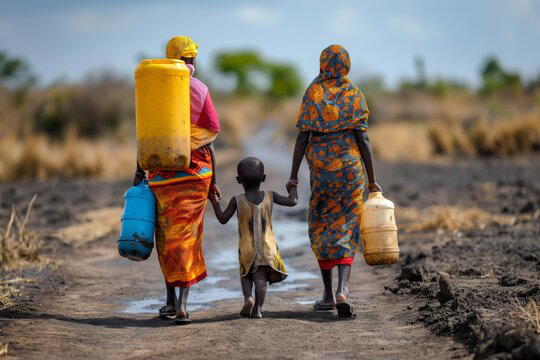
The alert comes as the country joins the world to mark World Water Day 2026, themed “Water and Gender,” highlighting the disproportionate burden borne by women and girls in managing household water needs.
Speaking at a commemoration event in Abuja on Wednesday, Permanent Secretary of the Federal Ministry of Budget and Economic Planning, Dr Deborah Odoh, emphasised that water remains central to Nigeria’s development trajectory, supporting agriculture, health, energy, and community stability.
“Yet, as we reflect on current realities, we are reminded that access to water is not only a development issue but also a matter of social equity—one that disproportionately affects women and girls. Across many communities in Nigeria, women bear the primary responsibility for water collection and household water management. This often comes at a significant cost to their time, health, education, and economic opportunities. The theme of this year’s World Water Day therefore calls us to confront an important truth: that achieving water security must go hand in hand with advancing gender equality,” Odoh said.
She highlighted initiatives like the Lokoja Dialogues, which aim to bridge the gap between national policy and community realities. She said these efforts align with national priorities, tackling issues from clean water access to irrigation deficits, climate variability, and resource conflicts, all of which affect economic growth, food security, and human capital outcomes.
She stressed that inclusive development must therefore guide national planning and budgeting frameworks, stating that the ministry’s planning and budgeting frameworks are increasingly guided by data, evidence, and the lived realities of Nigerians, particularly vulnerable and underserved populations.
UN Resident Representative, Ms Elsie Attafuah, provided a global perspective, highlighting the scale of the water crisis. She said 2.2 billion people worldwide still lack safely managed drinking water, as women and girls spend 250 million hours daily collecting water.
Attafuah added that in Nigeria, 78 per cent of households without on-site water rely on women and girls for collection, who spend three to five hours each day on this task, limiting their opportunities for education and income generation.
“From the very beginning, this is not just a story about scarcity, but about who absorbs that scarcity.. Men typically interact with water when it becomes economic, while women interact with water as a condition of daily survival. By the age of 15, a girl may have spent thousands more hours on survival labour than her brother,” she said.
The UN resident rep added that integrating water with energy systems can immediately transform lives. Her words: “When the system begins to work, when water and energy come together, the transformation is immediate. Time returns. Women recover three to five hours each day. Girls’ school attendance rises by 20 per cent. Health improves, with infections falling by 73 per cent. Household savings rise to 15,000 Naira each month. In production, output triples, and value increases fivefold.”
CEO of Lokoja Dialogues, Polly Alakija, stressed the importance of community-led solutions. She described a four-step methodology beginning with deep listening to communities, followed by expert working groups, field evaluation, and pilot projects designed to be scalable and bankable.
“Water challenges are not abstract. They are lived every day in communities across Nigeria and across the region. If we are to fix the system, we must start from the local and build solutions that reflect real needs and real realities,” Alakija said.
She further emphasised that sustainable change requires collaboration with local authorities, development partners, and communities to ensure equitable access to water, linking it directly to productivity and social development. She expressed optimism that the outcome of the event would begin a new path.
Disclaimer
Comments expressed here do not reflect the opinions of Vanguard newspapers or any employee thereof.