By Ibrahim Hassan-Wuyo, Kaduna
A citizens’ advocacy group has expressed support for President Bola Ahmed Tinubu’s oil and gas sector reforms, describing them as necessary steps toward long-term economic stability despite their associated short-term difficulties.
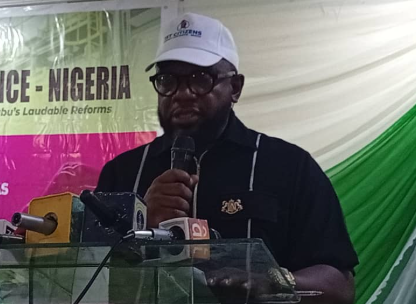
Speaking at the 1st Citizens Engagement Conference (North-West Edition) held Monday in Kaduna, the Co-Convener, Mallam Nasir AbdulQuadri, said ongoing reforms under the Petroleum Industry Act (PIA) 2021 and the removal of fuel subsidy had ushered in what he called a “legal, fiscal and institutional reset” for the petroleum industry.
According to AbdulQuadri, although the reforms have created “temporary discomfort,” they reflect “strong political will” and are aimed at steering the country toward a more sustainable economic future.
He explained that deregulation of the downstream sector is attracting private investment, supporting refinery rehabilitation, and encouraging modular refining. He added that the establishment of the Nigerian Upstream Petroleum Regulatory Commission (NUPRC) and the Nigerian Midstream and Downstream Petroleum Regulatory Authority (NMDPRA) has contributed to efforts to improve transparency and accountability.
AbdulQuadri also noted that the expansion of gas as a transition fuel and the creation of Host Community Development Trusts (HCDTs) are beginning to show positive signs in oil-producing areas.
He urged Nigerians to support ongoing reforms, emphasizing the need for constructive civic engagement.
“For reforms to succeed, citizens must see themselves as co-authors of progress, not as detached observers,” he said. “My call for unity is not a call for blind loyalty. Responsible citizenship requires demanding transparency and accountability with a sense of national purpose.”
He stressed that the reforms go beyond fuel pricing, describing them as part of a broader effort to modernize the sector and reinforce confidence in Nigeria’s economic potential.
Earlier, Professor Usman Muhammed of Kaduna State University, in a presentation at the conference, raised concerns about policy continuity and the sustainability of the administration’s economic agenda beyond 2027.
He noted that governance challenges—including policy inconsistency and infrastructural gaps—continue to limit the full potential of Nigeria’s oil and gas industry, despite the country’s 37 billion barrels of crude reserves and 209 trillion cubic feet of natural gas.
Citing production figures, he observed that crude output between 2019 and 2024 averaged 1.4 to 1.67 million barrels per day, below the 1.8 million barrels per day OPEC quota. He also referenced economic indicators such as inflation and unemployment as signs of underlying structural constraints.
Professor Muhammed described the PIA 2021 as a major milestone that has enhanced fiscal discipline and transparency, particularly with the commercialisation of the Nigerian National Petroleum Company Limited (NNPCL). However, he said production efficiency and local content development remain limited due to enforcement gaps and institutional bottlenecks.
Comparing regulatory effectiveness globally, he said Nigeria scored 63 out of 100 in regulatory efficiency, compared to Norway’s 92 and the United States’ 90, underscoring the need for stronger coordination and technology adoption.
He listed oil theft, pipeline vandalism, and bureaucratic delays as critical challenges that must be addressed for Nigeria to fully benefit from its petroleum resources.
“Prosperity beyond 2027 will not depend solely on oil production levels,” he said. “The key will be how effectively Nigeria strengthens regulatory institutions and diversifies its energy base.”
Professor Muhammed further recommended expanding the Nigerian Content Development and Monitoring Board (NCDMB) and establishing gas-based industrial hubs to boost local participation, reduce unemployment, and enhance value addition.
He concluded that while the oil and gas sector remains central to Nigeria’s economy, achieving sustainable impact will require a combination of regulatory reforms, technological upgrades, and inclusive governance.
Disclaimer
Comments expressed here do not reflect the opinions of Vanguard newspapers or any employee thereof.